

Restoring the land after wildfires
What one WWF-Canada staffer learned during a field visit to the B.C. interior
Read More
August 20, 2026

Episode 11

33 min
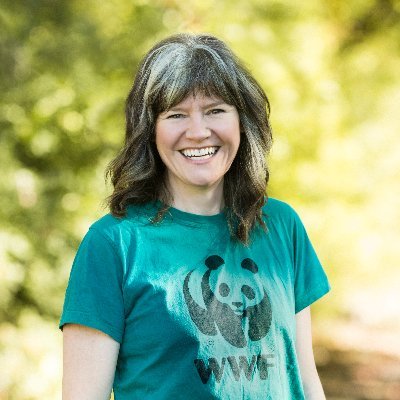
President & Chief Executive Officer - WWF Canada
Listen on


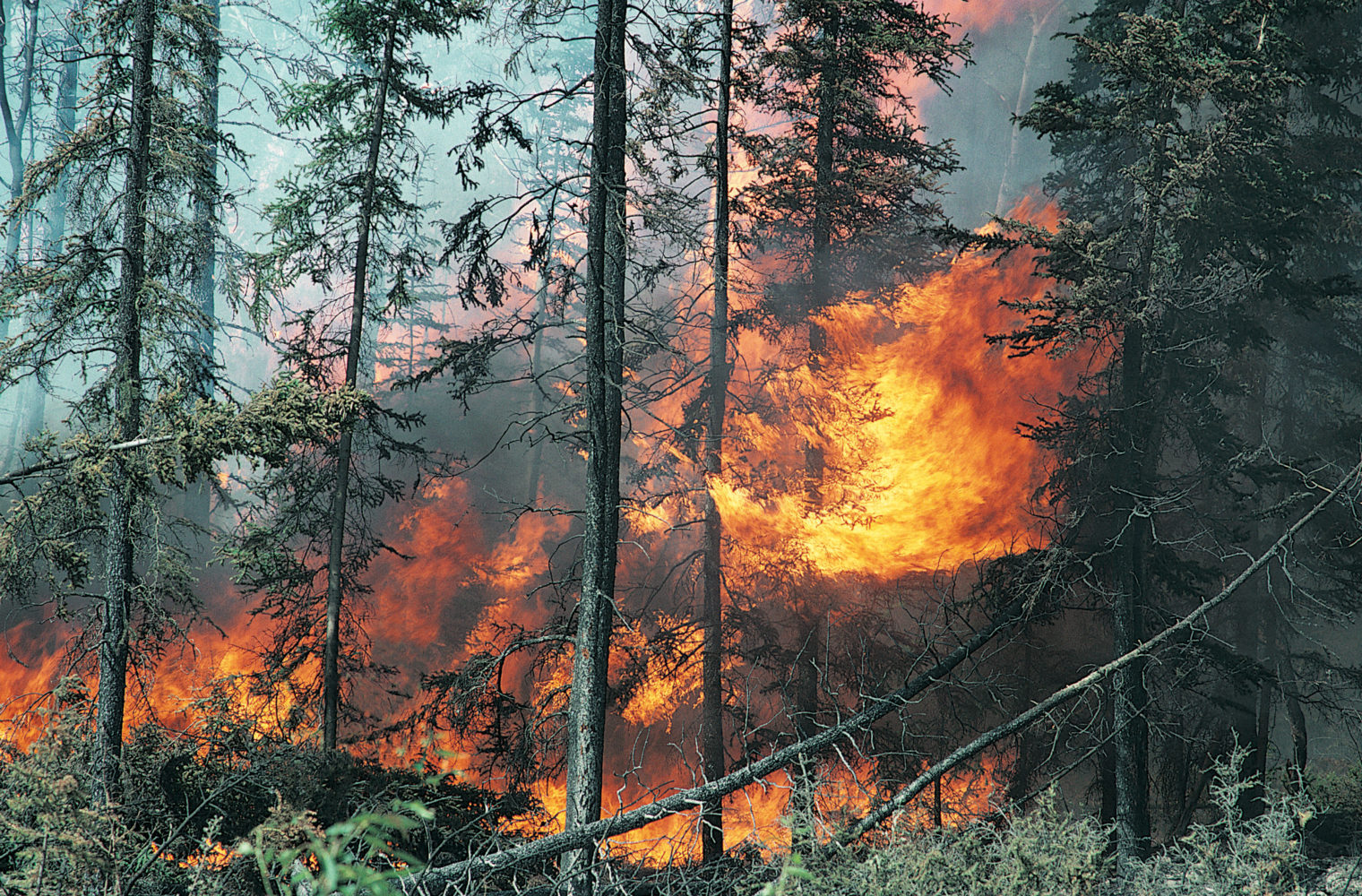
What if preventing catastrophic wildfires starts with rethinking our relationship with fire?

“The public still needs to learn a lot more about cultural burning... There's many different nations across Canada and around the world. Each First Nation knows their land and uses fire in their way. So there’s that need for education that that fire has been used on the land. And if we don't use fire on the land, then, we're going to continue to go down this path of less water and more fire.” -Joe Gilchrist
For thousands of years, Indigenous communities across North America have used fire as a tool to care for the land. In this episode of Good Nature, Megan Leslie is joined by Joe Gilchrist, a Secwépemc Nation fire keeper and former wildfire firefighter, to discuss the role of cultural burning in maintaining healthy ecosystems and reducing the risk of wildfires and the widespread damage they can cause. Drawing on his lifetime of experience with fire, Joe explains how carefully planned burns can restore habitat, welcome back biodiversity, build resilience against a changing climate and renew traditional food and medicine sources, Follow the conversation, from the history of cultural burning — and its criminalization by colonizers for more than a century — to the overcrowding of forests to the growing global movement bringing Indigenous fire stewardship back to the land.
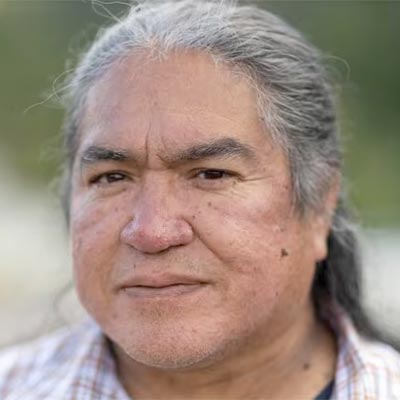
Joe Gilchrist
Former wildfire firefighter
Joe Gilchrist is a firekeeper and former wildfire firefighter from Skeetchestn Indian Band, a member of the Secwépemc Nation, whose traditional territory is located in B.C.'s Central interior. He is an expert on all aspects of cultural burning and fire in general, and has travelled around the world to speak with people about the power of fire to protect forests.
Megan Leslie
President and CEO of World Wildlife Fund Canada
Megan Leslie is President and CEO of World Wildlife Fund Canada. Since taking on this role, Megan has led WWF-Canada’s bold 10-year plan to Regenerate Canada by expanding habitats, reducing carbon in the atmosphere, lowering industrial impacts and, as a result, reversing wildlife loss and fighting climate change. She is also passionate about engaging Canadians to take action for nature.
JOE GILCHRIST: We're learning that around around our globe that people are the same. You know, people need to eat. People need to breathe. People need clean air and clean water. And you know, fire is central to all of that.
MEGAN LESLIE: Hello, and welcome to Good Nature. I'm your host, Megan Leslie. In each episode of this podcast, we talk to the people who give me hope for the future of nature and wildlife. And this is part two of our miniseries, “Creative Solutions to Climate Impacts”. Last episode was all about floods and forest restoration, and today we're getting into wildfires, but not in the way that you might expect. Now, fire is a natural process in many ecosystems. It can help maintain healthy forests and increase biodiversity. Indigenous peoples around the world have been using controlled fires to manage land and vegetation for thousands of years. In fact, the criminalization of those cultural burning practices in the late 19th century has been a big contributor to the increase in wildfires that we've seen over the last decade. So today I'm chatting with Joe Gilchrist. He's a fire keeper from Skeetchestn Indian Band, a member of the Secwépemc Nation, whose traditional territory is located in B.C.'s central interior. Joe is an expert on all aspects of cultural burning and fire in general, and he's traveled around the world to speak with people about the power of fire to protect our forests
JOE GILCHRIST, SECWÉPEMC NATION FIREKEEPER
MEGAN LESLIE: Joe Gilchrist, welcome to Good Nature. I'm really excited to talk about wildfires with you. And I wanna talk about you and your work, and I think a lot of people who will be listening or watching might not have a full understanding of what your work really looks like. So why don't you tell us what is a fire keeper, and what does that role mean in your community?
JOE GILCHRIST: Well, it has many different roles, but basically it's just being able to look after fire and to use fire as a tool or fire stewardship and Indigenous land stewardship.
MEGAN LESLIE: Okay. I'm gonna come back to that “fire as a tool” in a minute. But I wanted to ask you, before you became a fire keeper, I know that you were a firefighter for 30 years. Tell me about that transition. How did that happen?
JOE GILCHRIST: Well, it actually happened before I became a firefighter. I started learning young, at a young age about fire and, like I'm talking about five, six years old. And we lived in a house that only had fire heat and fire to cook on. And so we, we did our laundry, we heated water, we boiled water, you know, did all that stuff, cooked, cleaned. 365 days a year we had fire, so I learned about fire safety and at nighttime we sat around the fire and told stories and stuff like that. And so talked lots about cultural burning and things like that. So as I grew up, you know, I saw the adults using fire on the land in different ways, and they would start fires for deer hunting habitat and for, you know, just burning the fields around the house to keep the houses safe from wildfire. Just getting rid of the old grass and bringing back new grass in the hay fields and stuff too.
MEGAN LESLIE: Do you think that, being both a fire keeper and a fire fighter, has that impacted your personal relationship with fire? It sounds like you've had a long relationship with fire.
JOE GILCHRIST: Yeah. So, definitely in wildfire fighting, you learn to control the fire, like I was saying. And you mix that with cultural burning and, so now I can start a fire in the springtime or the late fall when it's cooler. You know, you can choose the day that you want to burn and be able to control the fire so it doesn't get away, which is a huge thing because, you know, people are afraid of fire. And if you can control it, by picking the right days to burn and the right conditions that you're able to control the fire, then you build trust. And that's gonna be the biggest thing, is the trust factor and for the public to learn that we're living in a fire-inclusive environment across Canada where fire is needed, and it's been taken away for, well, in B.C., it's just over 100 years now.
MEGAN LESLIE: See, I have to admit, I didn't know that here in Canada, late 19th and early 20th centuries, colonial governments made Indigenous cultural burning illegal as, you know, as part of other policies to try and control Indigenous lands and assimilate Indigenous people. I actually didn't know that even cultural burning was made illegal. What has been the impact of that prohibition on the land?
JOE GILCHRIST: Oh, it's been huge on the land. You know, we're seeing the rivers wash away, the edges of the streams, for creating poor fish habitat. We're seeing the buildup of fuels, which is creating extreme fire behavior. We're seeing the loss of our animals that we hunt and our berries and medicine that we pick, mushrooms. We're getting more forest than there used to be. The forests are thicker. They're using up more water, so the ponds are drying, so frogs and turtles are disappearing. I know that a lot of people don't like mosquitoes, but, you know, mosquitoes…
MEGAN LESLIE: They’re part of the ecosystem!
JOE GILCHRIST: Yeah, mosquitoes, you know, there was dragonflies, there was swallows, there was this whole system, you know, bats and things like that, that fed on the mosquitoes. So, you know, when the ponds dried up too, then, you know, so now our rivers, our lakes are getting algae and getting too warm. So huge cascading effect from that cultural burning, yeah.
MEGAN LESLIE: No kidding. Yeah. Thanks for painting that picture. I think for non-Indigenous people like me, we need to really understand that First Nations and Indigenous peoples around the world have been using fire to shape and protect the land for thousands of years, like you said at the beginning, use it as a tool. So you've just described some really terrible effects of not being able to do cultural burns. Do you think things have been changing over the last couple of decades in B.C. and across the country? Is it getting better?
JOE GILCHRIST: I think the last five years has really began to change, and there's still a lot more that needs to happen. You know, we're not burning nearly as much as we need. And I think that the public still needs to learn a lot more about cultural burning in their area and the Indigenous people. You know, there's many different nations across Canada and around the world. You know, each First Nation knows their land and uses fire in their way. So there's that need for education that fire has been used on the land, and if we don't use fire on the land, then, you know, we're gonna continue to go down this path of less water and more fire.
MEGAN LESLIE: Mm-hmm. So the land that you know, the land that you're living on and working on, what do you look for when you're deciding whether a place is ready for fire?
JOE GILCHRIST: Well, it's not me that totally decides. It's the community or it's a family. So then I would go and look at it and just let them know what I think and then, you know, make a decision and then go ahead and control the fire so it doesn't get away, you know, just to scare a lot more people.
MEGAN LESLIE: So once you've identified that land, can you share how, like, what does a cultural burn actually look like? What are the next steps?
JOE GILCHRIST: For me, I look for control areas like a river or a road or a path.
MEGAN LESLIE: Oh, okay.
JOE GILCHRIST: If there’s none of that, then I'll use a black line, it's called. So a black line is where it's just continuous fuel, but I'll light it, say, earlier in the morning when the fire is less active. I'll do maybe three meters at a time, and let it burn about a meter wide, then I'll put it out. And once it's burned black, and then it won't burn again. So that's why it's called a black line.
MEGAN LESLIE: Interesting. Yeah.
JOE GILCHRIST: So do three meters at a time and just keep on going until I have the control line that I need for my burn. Then, as the day heats up, the black line is not big enough. So I would burn about, around 15 centimetres inside the black line, and I'll let it burn to the black line so that's slowly increasing the size. Then as it gets wider, I can start making my lines bigger. So once I got it six metres, then I know that it won't jump.
MEGAN LESLIE: With a successful burn, after a successful burn, what are some of the things we might notice on the land, either short-term or long-term?
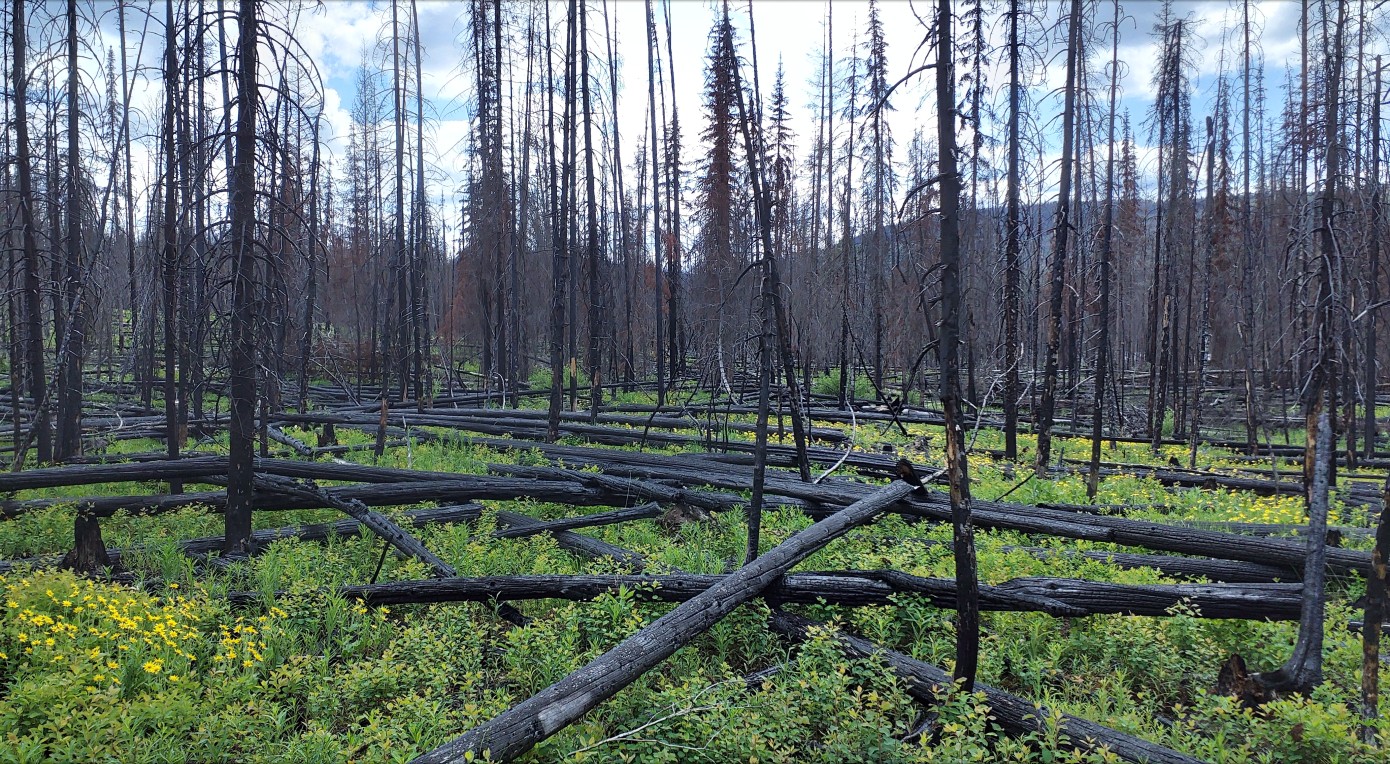
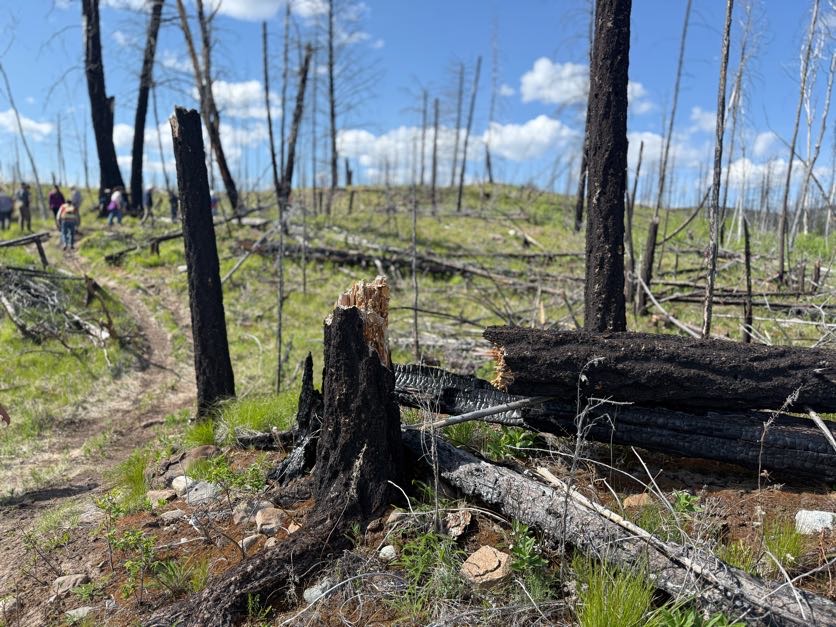
JOE GILCHRIST: Well, in the short term, the ground will be black, and, you know, it'll look like a fire burned there. The small debris and stuff will be burned if it's early springtime, and the larger debris will still have moisture in it, so it'll still be there mostly. But the black attracts the sun's heat, and the moisture from the wintertime is still in the ground, and so that's perfect for seeds. And then, it doesn't take long, and then it'll start to green up with growth. And, you know, there could be seeds that have been in there for over 20 years or more just waiting for the perfect conditions. You know, fire hasn't been used for so long and those seeds are just waiting. So there might be stories from elders that say, "Oh, we used to go and pick these plants here," and they haven't seen them there for a long time. And then you do the burn, and then all of a sudden those plants are back.
MEGAN LESLIE: Wow.
JOE GILCHRIST: So the long term, I guess, is that, like I was saying, you know, the plants sprout and flowers. And the targeted species that we want to burn, you know, we get rid of the old stuff, and then the new starts to come up. So yeah, you really see a new flush of growth happening.
MEGAN LESLIE: Yeah, it's not like those modern super hot fires that just scorch everything. This actually is bringing the life up.
JOE GILCHRIST: Actually, yeah, you're also getting rid of, like, tons of fuel. You know, you can do it by hand, but it'll take hours and hours and hours. But that's why we say fire is a tool, right? So, you know, you can burn it and, you know, the fire does the work for you.
MEGAN LESLIE: That rebirth or regeneration that we were just talking about where the new plants come up, how long does that take to happen?
JOE GILCHRIST: Well, generally when you do it in the spring, there's gonna be spring rains that come too, so it almost starts like, right away as soon as the, right after the fire goes out.
MEGAN LESLIE: Really?
JOE GILCHRIST: And the heat hits the ground and the seeds react, it's just as fast as that, like maybe one, two weeks, you can start to see the growth coming.
MEGAN LESLIE: Yeah, it's really regenerative. Joe, over the last decade or so, climate change has really contributed to wildfires becoming more frequent and intense, not just in B.C., across the country, and really around the world. And you know, we just have to think to last summer or the summer before, these summer skies filled with smoke. We read about First Nations communities and entire towns having to evacuate, and some of our audience, I'm sure, has had to evacuate themselves. That growing crisis around forest fires, how do you see that through the lens of your work as a fire keeper and firefighter?
JOE GILCHRIST: Definitely I see it differently, and I see it kind of sadly, I guess, because I know that if we did the work that we need to do, that there wouldn't be fuel for these big fires, right? And I see that the budget for the wildfire branch is extremely high, like close to a billion dollars. And, you know, if they spent half that much money or, you know, even the same amount of money on prevention, wildfire mitigation, cultural burning, we wouldn't be having these issues with fire, you know, smoke just costing billions and billions of dollars in tourism, in people being evacuated, damage to buildings, and roadways shutting down, power getting burned out and turned off. So, you know, air traffic, all those issues around smoke and fire is, it's huge, eh? And if we did our work on the land and controlled the amount of fuel, especially around communities first, that we wouldn't be having these issues as badly. I think that with climate change and heating and wind events, that things are going to be getting worse and worse.
MEGAN LESLIE: Now I know you've had the opportunity to travel all over the world and talk about Indigenous-led fire stewardship and also learn from others. When you talk to people in all of these different places, do you see similarities? Do you see differences in how they're thinking about wildfires?
JOE GILCHRIST: Oh, yeah, I see a very strong yearning by Indigenous people around the world to get the ability to use fire on the land again. And, you know, my brothers and sisters in Australia and South America, the US, Mexico, I was in Central America, and I was even in Rome, Italy, and met people from Nepal and Algeria. So a pretty good scope of around the world. And yeah, the need for getting fire back on the land is huge. And, you know, the Indigenous people know the benefits from it, the benefits for themselves, but the biggest benefit is getting rid of the fuel and, you know, not having the fuel on the ground for the summertime when these wildfires hit. You know, whether it's a vehicle accident, a lightning strike, or anything that might happen that would cause a wildfire. It's better to have a cultural burn when you can control the time and control the fire.
MEGAN LESLIE: Yeah. That word yearning, that was a great word. I think we saw some of that ourselves here at WWF-Canada. We recently collaborated with Gathering Voices Society in B.C. and then Australia's Firesticks Alliance in the WWF-Australia office, and we hosted a cultural fire knowledge exchange. So it included fire practitioners from Unist'ot'en First Nation, and they came together in Australia, and then here in Canada, to do that kind of a knowledge exchange. And that word yearning came through. I wanted to ask you, because you've been on cultural fire knowledge exchanges as well, and how do these international exchanges help advance Indigenous fire stewardship in both countries?
JOE GILCHRIST: Well, I think we're learning that, around our globe, that people are the same. You know, people need to eat. People need to breathe. People need clean air and clean water. And, you know, fire is central to all of that. And, you know, we've advanced as people. You know, we can flip a light switch on, and we can go to a tap and have clean water, hopefully. But that clean water comes from somewhere, right? If our environment out there is polluted, then we need to do a lot more work to get clean water. But if we have a good environment, then, you know, the water is a lot cleaner, and the air is a lot cleaner, and, you know, we have food and all that kind of stuff. So, you know, we have to look after the land around us, the environment around us, and, at the same time, you know, it'll look after us.
MEGAN LESLIE: Imagine if Indigenous fire stewardship was fully supported and reintegrated into how we manage landscapes and steward fire here in Canada. And then I’d love you to tell me what that looks like.
JOE GILCHRIST: Well, it's back to a lifestyle, not only living on the land, but, I guess, being able to read the land and get back the stories and the songs of Indigenous people from the land that, how the land used to be and what used to grow there. And across the land, across the Pacific Ocean to the Atlantic Ocean, if Indigenous people were allowed to use fire again, then we would all be a lot safer, I guess, from wildfire during the summertime.
MEGAN LESLIE: Thinking about this, imagining something different, I wanna ask you, what are your hopes for the future of fire management in Canada?
JOE GILCHRIST: Well, I hope to educate the youth, Indigenous youth and non-Indigenous, that fire is needed to keep us safe and to keep the land more productive and safe for us. I would hope that not only do we get comfortable using fire on the land again, across the nation, but work towards building crews or societies that use fire on the land and have that education for it to continue, you know, I guess, forever. You know, that Indigenous people will again connect with the land and the knowledge of why they need to use fire on the land and be able to apply it continuously, right? And, you know, restart those songs and stories, you know, stories like when things were burned last and why it was burned and when it needs to be burned next time, right? And that just keeps going and going and going. So the effect is that people will be a lot safer.
MEGAN LESLIE: Well, I hope for that future, too. Now, Joe, on this show, I'm gonna change gears a little bit, because we end every interview with a series of questions, I see you laughing already, called the Trail Mix. So I'm gonna ask you some quick questions and you're gonna give me some quick answers. Are you ready?
JOE GILCHRIST: Yup.
MEGAN LESLIE: Okay. What is your favorite B.C. wildlife species and why?
JOE GILCHRIST: That's a really good question. For right now. I guess, I really like elk, I guess. For one thing, I'm a hunter. For another thing, if you have healthy land, then you have a healthy elk population. They're just a large magnificent animal, and it's kind of like a tie between moose and deer. So if the elk have good land and good food and they're healthy and strong, then so are the moose and so are the deer. So the elk is right in the middle.
MEGAN LESLIE: Wonderful. Now, Joe, if you were a tree, if you were a tree, what tree would you be?
JOE GILCHRIST: Well, there's two different kinds, but I guess I would say birch. The Indigenous people say it's the tree that the human body is made out of. Anyway, so if you have healthy birch, the medicine and everything that you have in that birch tree is also medicine for human people. So birch needs water. Birch needs good land near the water areas and stuff like that. So if you have healthy birch and then you have healthy people.
MEGAN LESLIE: And what is your favorite nature sound?
JOE GILCHRIST: Ah, my favorite nature sound I think is early morning and, where I live in Skeetchestn, it's really quiet and, you know, the highway's a long ways away and everything. So we have some cottonwood trees and stuff where the—And I have apricot trees, so the birds are in there. And so when you wake up early in the morning and the birds start to sing and all that kind of stuff, I think, you know, a little bit of a breeze and stuff like that going through the leaves, and I think that's my favorite sound.
MEGAN LESLIE: Amazing. You might have answered my next question with that answer, but we'll see. What's your favorite place to spend time in nature?
JOE GILCHRIST: I think my favorite place would be the alpine. Up high.
MEGAN LESLIE: Oh, okay. Tell me.
JOE GILCHRIST: Just, like right now, as soon as you said that, I got a vision of, like, crystal blue water, you know, and rocks and moss and grass and a blue sky, you know. And the water is aqua, aqua color, eh? So, you know, maybe some patches of snow here and there.
MEGAN LESLIE: Joe, what's one thing everyone can do to help promote Indigenous fire stewardship?
JOE GILCHRIST: Just realize that Indigenous people have used fire for thousands of years and that the disruption of not allowing Indigenous people to use fire has been pretty short. It's only been 100 years. So it can be brought back and they just need to realize that everywhere, in North America and around the world, that Indigenous people used fire on the land. So, you know, you can go without it, but we're starting to see the effects of extreme fire behavior if we don't.
MEGAN LESLIE: And they can start by listening to this podcast because you've done such a great job of painting a picture of Indigenous fire stewardship. Thank you so much for sharing that with us and for joining us on Good Nature.
JOE GILCHRIST: All right. Awesome.
MEGAN LESLIE: It can be hard to stay hopeful these days. So I wanna call up some of my amazing WWF-Canada colleagues about the things happening in their world that give them hope for the future. So, today, I'm calling Ryan Godfrey, WWF-Canada's resident botanist. Let's call him on the orca phone and see what's going on in his world. Okay, Ryan, tell me something good.
RYAN GODFREY: Hey Megan, it's a good day for good news, I got something for you, you ready?
MEGAN LESLIE: I am so ready, tell me!
RYAN GODFREY: Okay, so, you know about coastal ecosystems. You know how important they are for storing blue carbon. Yeah?
MEGAN LESLIE: Of course.
RYAN GODFREY: And you know that coastal ecosystems face multiple threats including climate change and other forms of habitat destruction.
MEGAN LESLIE: Yeah…this doesn’t sound good so far.
RYAN GODFREY: Well, the good news is we've got a solution to that and it has something to do with I.O.N.s.
MEGAN LESLIE: Ugh, gosh. This sounds really complicated and like, chemistry class. What is going on?
RYAN GODFREY: Okay, I don't mean chemistry ions, I mean like an acronym, I.O.N., “In Ocean Nursery”.
MEGAN LESLIE: Love it. Okay. I don't know what it is, but tell me. Sounds great.
RYAN GODFREY: So picture a hammock, and now grow it to 100 meters long and stick it in the ocean. And along all of the threads of that hammock imagine that locally and source-identified kelp are growing.
MEGAN LESLIE: I can picture this.
RYAN GODFREY: Okay, so now imagine that salmon fry are swimming through the baby kelps and using it as a nursery and other organisms are using this as a habitat. See, because one of the problems is there's a lot of areas, coastal regions, where kelp isn't growing because it's an urchin baron. Maybe you've heard of this, have you?
MEGAN LESLIE: The urchins are eating the... Does that sound right?
RYAN GODFREY: You're right, that's exactly right. The urchins, when there's an overpopulation of urchins, which happens when there is not enough sea otters, uh huh, uh huh?
MEGAN LESLIE: The whole circle of life here!
RYAN GODFREY: The whole ecosystem thing happening, those urchins will chew down the holdfast, the kind of root part of the kelp, so they make it impossible for kelp to grow, and you end up with what's called an urchin barren. So we're putting these in-ocean nurseries over top of the urchin barrens, and then the kelps can grow. Can be harvested and then transplanted into places that need to be restored.
MEGAN LESLIE: I didn't know you could transplant kelp.
RYAN GODFREY: Me neither, but you can! And they're doing it. And we're helping to support this. This is work being championed by the Redfish Restoration Society in partnership with the Ploquiat First Nation near Tofino. And it's a first of its kind restoration strategy that has never been done in Canada before. And it is happening right now.
MEGAN LESLIE: It sounds exciting. So they are growing the kelp. The kelp is being habitat as it's growing. Then they're transplanting the kelp and then it turns into habitat in a new place.
RYAN GODFREY: And then you can regrow more kelp on the I.O.N.
MEGAN LESLIE: Gotcha. Amazing. Oh, thanks for demystifying the whole ion thing for me. And Ryan, this is really good news. Thanks so much.
RYAN GODFREY: Cheers!
MEGAN LESLIE: Thanks again to today's guests, Joe Gilchrist and Ryan Godfrey. And thank you for joining us today on Good Nature. You can stay up to date on what's going on at WWF-Canada and find out about new episodes of Good Nature by signing up for our newsletter, Living Planet News. And if you have any thoughts on the show, ideas for episodes, or questions to share, leave a comment or email us at goodnature@wwfcanada.org. We'll see you soon.
Thoughts on Good Nature? Share your feedback by sending us an email at goodnature@wwfcanada.org, or fill out the form below.