LIZ HENDRIKS: Everyone can do restoration. It is not an obscure term. Plant your balcony plants and, you know, restore your backyard. It's great for managing flooding at a property level. So there's lots. There's the large scale, you know, that big carbon restoration, those big hectare numbers, and we all have a role and relationships to build.
MEGAN LESLIE: Hello, welcome to Good Nature. I'm your host, Megan Leslie. In each episode of this podcast, we talk to the people who give me hope for the future of nature and wildlife. As our listeners probably know by now, I'm the CEO of World Wildlife Fund-Canada. Sometimes I think the name of this organization can be a little misleading because, while wildlife is our middle name, a lot of our work is actually more focused on the habitats and ecosystems that allow wildlife to survive and thrive. So I want to take this opportunity to talk to a colleague of mine here at WWF-Canada who knows more about protecting and restoring habitats than anyone else I know, and that person is Liz Hendriks, our vice president of restoration and regeneration. Liz is joining us to talk about all things habitat restoration: what it is, how it works, and why it's such a crucial part of the future of Canadian nature and wildlife.
MEGAN LESLIE: Liz Hendriks, thanks for joining us on Good Nature.
LIZ HENDRIKS: Thank you, Megan. I'm so excited to be here today!
MEGAN LESLIE: Okay, Liz, you know that here at WWF-Canada, we do this really important report on wildlife populations, the Living Planet Report Canada. And people are usually surprised to hear that wildlife populations are on the decline here in Canada, and they're declining because wildlife needs habitat to hunt and forage and raise their young. But, at the same time, we have all this space in Canada, all this land, and we have the longest coastline in the world. So how can it be that wildlife don't have the habitat they need?
LIZ HENDRIKS: I know, it's nuts because we have this beautiful bountiness and then these really scary trends. So I think it's really simple. Our cities and our towns and our highways take up the habitat, and when we build and use the resources we need to have a successful life, we take up animals' and nature's habitats that they need to live and thrive themselves.
MEGAN LESLIE: So we're taking up their habitat as humans. Are we also, are there ways that we are, you know, kinda wrecking or destroying their habitat as well?
LIZ HENDRIKS: Absolutely. I just imagined a Pac-Man. [laughter] The Pac-Man's eating up habitat. We are, you know, it's important. We need the resources, and we are spreading out too wide and spreading out too thin and using the habitat that nature needs to thrive and be successful in themselves. And when we use nature, there's a risk to that nature.
MEGAN LESLIE: Right. So protection of habitat is really important, but we also need to restore habitat. And you and I know restoration is the bread and butter of what we do here at WWF-Canada, but I think, for a lot of people, the concept of restoration can feel a little abstract. So kick us off. When we say restoration, what are we actually talking about?
LIZ HENDRIKS: So I often think protection is around this idea of if we protect nature, if we put a fence around it, it will be okay over there. But restoration, I imagine, we take the resources, we take that habitat, we take nature, but we can also bring it back. I almost think of it as when I ask my kids to clean up their room, we can help support nature to come back. It's like, let's make sure we're cleaning up after ourselves after we build the road, after we build the electrical hydro lines, and nature will protect us in turn. We can talk about, also, the importance of, and one of the really exciting aspects of working with our Indigenous partners, is not just protection or restoration. It's not this black-and-white thinking. It is this coexistence, and, you know, we see it with Indigenous protected areas.
LIZ HENDRIKS: There is both building back nature as well as protecting and stewarding. So I often think of it actually as just a continuum. It's restoration of, maybe it's a plant on a balcony, and then it turns into a backyard, and then it turns into restoring parkland, and then you might protect it, but you also have to steward it. You have to maintain a relationship like all of our relationships. So it is really that continuum of care.
MEGAN LESLIE: I really like that idea of the continuum because you could restore to a point where maybe that habitat is flourishing, and then you could protect.
LIZ HENDRIKS: Yes, absolutely. And then also, it's not static. Everything's interconnected, so wildfires, while they're increasing, are part of nature. So you might have protected an area, a fire comes through quite naturally, then you have to steward it and restore it. And so it is this ongoing relationship that doesn't end because we are all nature.
MEGAN LESLIE: Right. Now, to this restoration idea, I have to admit, for a long time, before I started working at WWF-Canada, I thought that restoration was just tree planting. You know, we're just gonna plant trees and everything will sort of take care of itself. But I understand now that the reality is a lot bigger than that. So what does real-life restoration look like?
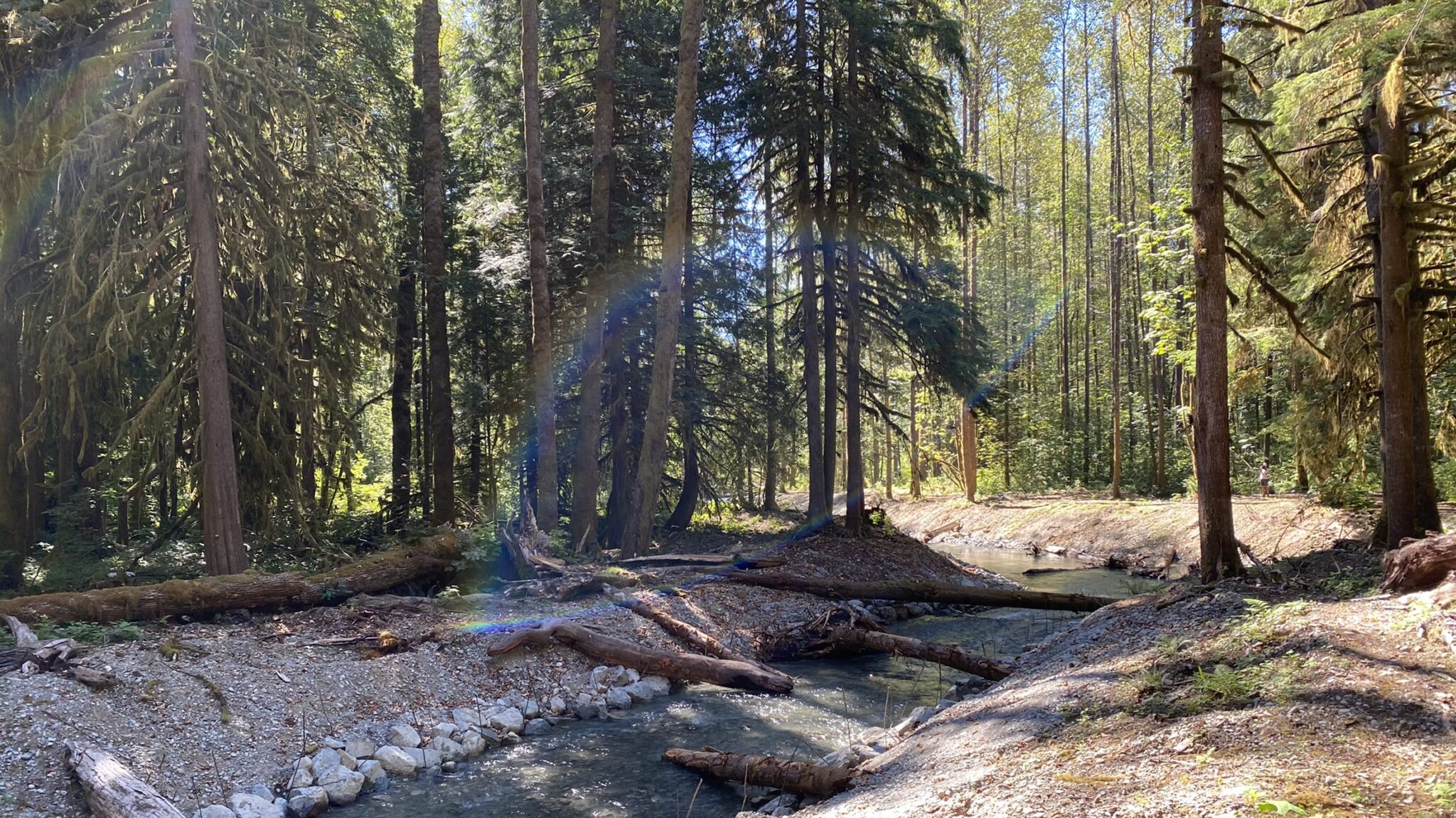
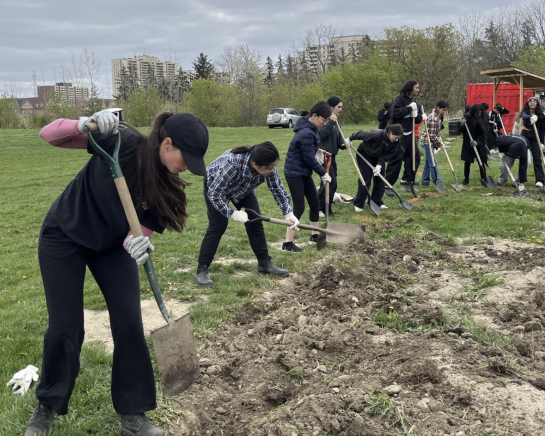
LIZ HENDRIKS: Real-life restoration can be anything from, like I said, that plant on somebody's balcony to a bee pollinator plant, bee balm, to, as you mentioned, large-scale tree planting restoration, or it could be river restoration to help with flooding. So there is a huge range, and rather it being one type of activity. We can think of it as a buffet of activities. Some of my favorite projects are actually the tree planting with the river restoration, because then you're doing, you're protecting the river and you're stabilizing the soil, and it's helping with flood mitigation, it's helping with soil health, it's helping to manage soil pollution, potentially, or carbon capture. So it provides all of these services. The more activities you can include in a restoration project, the more you build resilience back into our nature.
MEGAN LESLIE: Now I know we're doing some of this work in partnership with Katzie First Nation, specifically river restoration. Can you tell us a little bit about that work?
LIZ HENDRIKS: Absolutely. So for the Katzie First Nation, salmon are part of their family. So when we first began our conversations years and years ago, 'cause these are slow partnerships that develop, they were really keen on bringing their family home, back to their land. The traditional territory of the Katzie First Nation is part of a river low land, like a riverbed. There was a huge landslide, and it blocked a lot of the streams and rivers on their traditional land. So it began with, if you can imagine, large machines that removed soil, put rocks along the shoreline, and so it was almost like an industrial project because of the machinery that was required. But what that did, within a year, by clearing away the landslide, the impact of the landslide, we saw salmon return almost immediately. It was so exciting. And since then, the project has evolved to that tree planting, to wildlife monitoring. There's been an increase of bears returning.
MEGAN LESLIE: Really?
LIZ HENDRIKS: And they feed on the salmon, and so they bring the salmon onto land. And actually, we're finding carbon dumps because where they feed on the salmon, the salmon then deteriorate into the soil, so you're seeing more carbon-rich soil, and you're seeing just overall ecosystems improve. But I also wanna say about that work, it's about returning salmon. It's about returning family to the land. It's about stewardship. They have this amazing stewardship program now. Katzie are now working the land in a Land Guardian program. But also, they're finding their history on the land as well, so their historical knowledge is coming back as well, and that really speaks to this idea that restoration is about relationship building.
MEGAN LESLIE: Oh, that's a perfect example.
LIZ HENDRIKS: One of my favorite projects. Not that I have any favorites. I love it all.
MEGAN LESLIE: I was just gonna say, not that we have favorites!
LIZ HENDRIKS: We do not have favorites.
MEGAN LESLIE: It's a special enough story. I actually wanna flag for viewers and listeners, if they wanna learn more about this story, we have another podcast called This is Wild, and there's an entire episode on this Katzie river restoration for salmon and bears and carbon, and the whole web of life, so folks can check that out. Now salmon, hey, that's a good species for a link here, because I wanted to ask you about marine restoration. I think people can imagine restoring land, maybe restoring rivers like you said, but we also do a lot of marine restoration work. Can you talk a little bit about how that works?
LIZ HENDRIKS: Yes. And it’s a great link because salmon eventually go back out into the ocean and provide services and are part of the marine ecosystem.
LIZ HENDRIKS: And so we do have active blue carbon restoration work.
MEGAN LESLIE: Blue?
LIZ HENDRIKS: Blue carbon. So what is blue carbon? Planting trees is a type of carbon project. Planting eelgrass, kelp, that's a blue carbon project. And so this is about restoring coastal lands for carbon. The coast and eelgrass and kelp beds provide massive amounts of carbon capture and hold the carbon into the ground, so similar to trees. It's like the marine version of the tree. But also, it protects the shoreline. So, as oceans rise, as storms become more erratic and are causing flooding and damage to our shorelines—and property damage, to be perfectly honest—kelp beds and eelgrass beds, they protect the shoreline against that damage that storms can cause to properties or to shores or to nature or to our communities even. So really important in terms of protecting our lands.
MEGAN LESLIE: Yeah. We think, I mean, if you look into this kind of work, you automatically think about trees and grasses, but that's fascinating that eelgrass could do something like this, too, protecting us, creating habitat, being a carbon sink. You kind of don't think about the coasts in that way.
LIZ HENDRIKS: I know, and often, we think about, you know, tree planting's really important to protect us against flooding in our communities. But also, planting eelgrass is really important to protect us against flooding along our coastlines. And so all of these parts of nature really help to serve, for lack of a better word. I don't love the word serve, but help, to help communities thrive, and we can help nature thrive as well.
MEGAN LESLIE: So Liz, a couple of weeks ago, we had former environment minister Steven Guilbeault on Good Nature, and we asked him about the nature strategy that the Canadian government announced at the end of March. So as you know, that strategy is a response to goals that were set at the UN Biodiversity Conference in 2022. And so one really important thing that happened there, Canada committed to protecting 30% of our lands and waters by 2030. And we hear about it a lot. Oh, protecting 30% by 2030, 30 by 30. What about restoration?
LIZ HENDRIKS: So restoration is in there too. It's often forgotten. 30 by 30 is both a protection and a restoration goal. So our government is there. They're thinking, "Oh no, we have to make restoration a priority." Of course, I always wanna see it really explicitly spoken about because that's just where I'm at today. But yeah, it's a really important tool, and I think our government can recognize the importance of restoration in both meeting our climate goals as well as our biodiversity goals.
MEGAN LESLIE: So if we're committed to restoring 30% of so-called degraded lands and waters, I have a hard time imagining what that even means. Do we know how much area that is? What does that mean?
LIZ HENDRIKS: What does it mean?
MEGAN LESLIE: You're the expert, not me!
LIZ HENDRIKS: This is what keeps me up at night, I am telling you. We, globally, people are really trying to find a better way of measuring restoration, right? It's not…Western science is a black and white box of if you take out a dam or restore one hectare of forest, then that's what you've restored. Except for—one hectare, that's easy to measure. You can even have a measuring tape out and say, "This is what we've done." Except for that isn't the area benefited, that isn't the area impacted by the work you've done, right? There's better air quality that moves around. There's better water quality downstream. And so how can we better measure the overall area impacted? And as Indigenous elders I've worked with said to me, "Liz, how do I measure the return of my family? How do I measure, their sweeping hand over this land, my relationship with this land?" And so WWF and our team is working really hard at balancing that act of, there is more than Western science can describe, and it's important to be accurate, and it is important to understand that area benefited or the area we've actually restored. But also, there is more to that story that we just don't have the knowledge, too. And so we're working really hard to really understand it and tell it in an honest manner that celebrates all of these connections.
MEGAN LESLIE: There's more to it than just the Western science, and that's a great example, what happens when salmon come back, when the family comes back? And you said that we're trying to figure out how to measure restoration. It's more than just that hectare. How do we do this in an honest and transparent way and capture these other things that we value? With that measurement, I guess, how do we measure success? Is the success that the trees are growing? Is the success that the salmon have returned? Maybe I'm answering my own question here. It’s probably all of those things.
LIZ HENDRIKS: I think it's all of it. I think this is where I am so grateful we're an international, national organization, and we really support ground level work, and that success is largely driven by our partners on the ground who say, "These are the values that are important to our communities." When we work with municipalities, when we work with companies, when we work with Indigenous partners, landowners say, "These are the values we wanna see. We wanna see salmon return." In New Brunswick, we work on the Wolastoq watershed. They are really focused on mitigating really scary flooding that happens frequently. And so those are really important values to the people in those communities on the ground that are faced with the consequences of a habitat and nature that's been destroyed. And so really working with communities to service their needs at that point.
MEGAN LESLIE: So Liz, I've been asking sort of the technical aspect of measuring. I wanna stick with some technical questioning here because we know that a lot of ecosystems in Canada have been negatively impacted by human behavior and also climate change. Some of these ecosystems have been impacted more than others. Probably some have more potential to recover than others. And I wonder, you know, I wonder, do we do the low-hanging fruit? Do we go to the easy sites first, or do we put in the hard work of the really difficult sites? I guess what I'm asking is how do you determine if a place is a priority for restoration?
LIZ HENDRIKS: Our science, research, and innovation team has done some fantastic work around restoration analysis, and it has helped us understand where there's both wildlife benefits and carbon benefits. And so some of our programming, such as our nature and climate grant program, focuses on those regions where we know we'll get the largest wildlife and nature benefits, as well as carbon benefits, with the restoration we're doing. We also know everyone can do restoration. It is not an obscure term. Plant your balcony plants and, you know, restore your backyard. It's great for managing flooding at a property level. So there's lots. There's the large scale, you know, that big carbon restoration, those big hectare numbers, and we all have a role and relationships to build.
MEGAN LESLIE: Mm-hmm. Those partnerships and those relationships really come through in the way you talk about our restoration work, and when I see the work we're doing at WWF. It must mean a lot to you with all of these amazing community members coming together to bring their ecosystems back to life. Do you have any stories that you could share with us about those kinds of partnerships?
LIZ HENDRIKS: Restoration is a story of hope, and I think because we all have a relationship with the natural world, whether it's you've spent summers camping or you just love walking at your local park or a school program that you planted a pollinator garden or you pass a neighbor's yard and you enjoy a tree that's blooming. So the reason why I love this work so much is community members. It is driven by positive impact. There is so much potential in the field of work we do to be fighting against something or working to change legislation that just seems overwhelming. But actually, restoration turns that script upside down and says, actually, we're working towards something positive. We're working towards a new way our community can be. And because everyone has those connections, there is often, like, it's a upswell, a groundswell really, of support generally for those projects. And so people really are motivated to get the work done. A few years ago, I was in downtown Toronto, and we'd supported an Indigenous organization to have, they had access to a small space along the Humber River, and they were doing a seed orchard and it was like, "Liz, do you wanna come see this site?" And I said, "Okay, sure. Of course. Yes, always. Let me get out there." And it was, you know, off a busy street, and I—why we set the time during rush hour, but, you know, fight traffic, middle of summer, fight the smog, park the car. I'm like, "Where am I? What is going on?" And I walked this, like, small path along the river. It wasn't even marked. Like, I was with someone who'd been there before, and, like, this small path in downtown Toronto, and it was this beautiful oasis where they were returning back to their native, their language. They were, you know, using it for medicine. They were using it for teaching purposes. It was just…they were creating seeds to, you know, use in other parts of their community, and it was just this, such a powerful story and example of that restoration as a way to reconnect, as a way for hope. It was really just so touching. And, you know, I had a finger, a baby finger part of the whole process, but it just felt so empowering.
MEGAN LESLIE: I love that. Thank you. Now, for some background for folks who are listening, in 2024, WWF-Canada launched an initiative called Mission Restoration, and this is a collaboration with land holders and rights holders across Canada so that they can work together to increase restoration efforts and keep up with those 30 by 30 targets we were talking about earlier. And then Liz, last year we created the Catalyst Fund, and we put in $500,000. This is an investment to help boost some of that amazing restoration work happening around the country. So first of all, can you talk about the impact that that fund is having already?
LIZ HENDRIKS: I know. This is so exciting. So large scale restoration is required. If we wanna meet our global commitments to restoration, we need big numbers. And so yes, the Mission Restoration effort is about bringing together large scale restoration efforts, and also demonstrate that it's happening. So often people get in their silos and they're like, "This isn't happening. There's nothing being done. Well, we can't do this." It's happening everywhere. And so this is about bringing a collective together, showing the movement of effort, and the Catalyst Fund is about catalyzing that work. What we found in our efforts from 2020 to 2024 when we launched Mission Restoration was, oh, no one's connecting the dots. Let's make sure we're connecting the dots. And as we began connecting the dots, we thought, oh, there's a lot of people, because this is a story of hope, want to do this work, but they just need that little something. They just need a little shove. And so whether it's, hey, we just need a little bit of funding to understand a land use plan, or we just need a little bit of funding to buy native seeds, and we can do all the planting ourselves. We just need a little bit of funding to help support volunteers to remove invasive species so that the plants we do have, we can plant. And so this past year, we're funding 10 to 15 projects across the country that are really catalyzing the restoration movement and saying, hey, we're gonna give everyone a little boost, a little, you know, raise the water levels up for everyone.
MEGAN LESLIE: And I mean, 500,000 in restoration dollars, like, it's a lot of money to me, but that's not a lot of money in restoration dollars. So that's amazing that it's just these little boosts.
LIZ HENDRIKS: Just these little boosts, little targeted investments can really both motivate and help get groups to that next level.
MEGAN LESLIE: Well, I was gonna ask you what you expected to see from this in the future, but I'm gonna change the question to hope, because that's your theme. What do you hope to see from this in the future?
LIZ HENDRIKS: I have been working in this field for close to 20 years, and I've had the best fortune to both live and work across this country. And we've got it going on. People want to invest in their communities. People love nature. I love going camping and seeing new Canadians out there, multi-generation families, you know, backcountry, parks in the city. Like, people just, when faced with challenges to our communities, we stand up for our communities in this country. And Canadians want…nature is part of our value set. And so I want to that value better represented in actions, and I want to match and meet the government working towards these global commitments because, well, we can say, oh, this isn't just about Canada. This might be, you know, about creating resilient communities, resilient ecosystems. It's also about a resilient world or globally, right? And so I think there is this real opportunity. We have this great momentum, and I wanna see it going to both match where Canadians are at in their values and where we can be with our government and with our global commitments. We're not quite there yet. I wanna see more, but we can get there, and I think it's a real value for Canadians, and we can be doing more.
MEGAN LESLIE: Well, from planting that one native plant to large scale restoration to international commitments by the federal government, restoration kind of captures it all, and there's a lot of hope in there.
LIZ HENDRIKS: It is. It's amazing.
MEGAN LESLIE: Okay, Liz, next up on this show, we end every interview with a lightning round of questions called the Trail Mix. So I'm gonna ask you some quick questions and you are gonna give me quick answers. Are you ready?
LIZ HENDRIKS: I'm, like, ready for this. My competitive edge is coming out, Megan.
MEGAN LESLIE: Okay. This is a new side of you. I don't know this Liz.
LIZ HENDRIKS: I'm like, somehow, one-on-one questions I can make competitive. Let's do this.
MEGAN LESLIE: Number one, what is your favorite place to get out in nature in Canada?
LIZ HENDRIKS: Everywhere. What?
MEGAN LESLIE: You are not winning this competition.
LIZ HENDRIKS: Can I do it by province? Okay, no. I will say, I've started rowing, as you know, so Lake Banook is one of my favorite places. But I will say the land in which I grew up on will forever be in my genetic makeup and cells.
MEGAN LESLIE: And that is where?
LIZ HENDRIKS: Southern Ontario.
MEGAN LESLIE: Number two, what is the most underrated Canadian wildlife species?
LIZ HENDRIKS: Lady slippers.
MEGAN LESLIE: It's not wildlife, Liz!
LIZ HENDRIKS: What do you mean?!
MEGAN LESLIE: But it's plant life.
LIZ HENDRIKS: Fine. Okay, wait…
MEGAN LESLIE: Okay, tell me about the lady slipper.
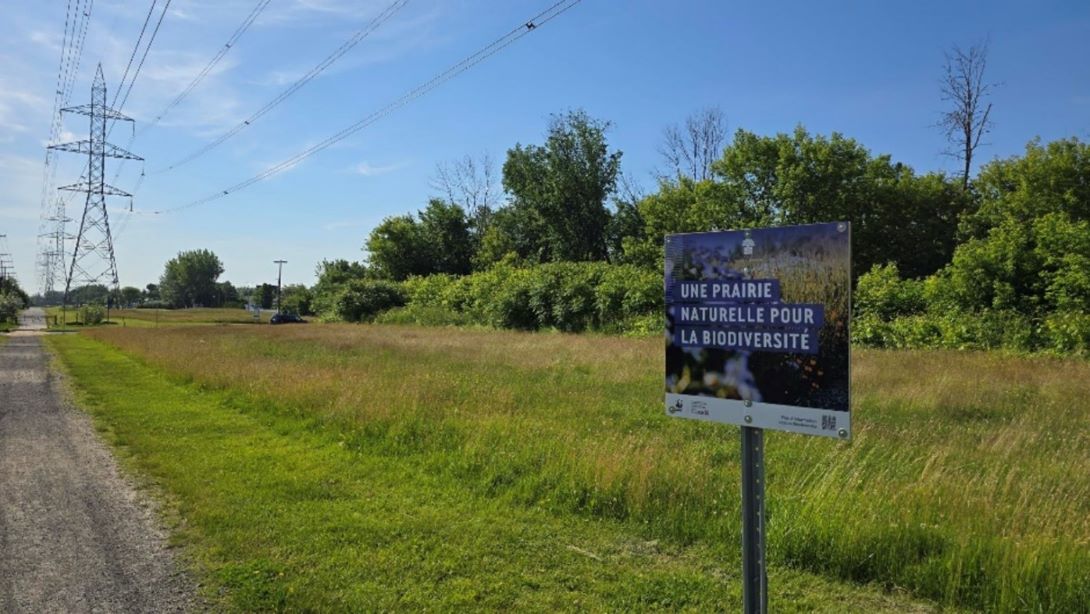
LIZ HENDRIKS: So twice a week, I go walking in, actually, I think it's a hydro lane, hydro corridor, but the forest around it is protected, so I go walking twice a week, and the lady slippers, because it's spring upon this recording, haven't come out yet, and I keep going out to like, have they bloomed yet? Have they bloomed yet? The black flies have bloomed this morning on my morning walk. The black flies were there. The lady slippers were not.
MEGAN LESLIE: No problems with black flies.
LIZ HENDRIKS: No problems with black flies.
MEGAN LESLIE: Okay, so I will ask you a question about wildlife again.
LIZ HENDRIKS: Oh, um, sandpiper!
MEGAN LESLIE: Oh, okay. Tell me about the sandpiper.
LIZ HENDRIKS: They're so cute. Come on. They're cute and fluffy. And they’re fast.
MEGAN LESLIE: Well, yeah, that's a good answer. Now, if you could be a Canadian wildlife species, what would you be? Not a black fly.
LIZ HENDRIKS: No.
MEGAN LESLIE: Not a sandpiper.
LIZ HENDRIKS: Probably a beaver.
MEGAN LESLIE: Oh. Can I ask why?
LIZ HENDRIKS: Because I love water.
MEGAN LESLIE: Mm-hmm. You do.
LIZ HENDRIKS: I love being in the water, and I love to work. I'm a work person. I'm a workhorse. It's just who I am. I can't deny it.
MEGAN LESLIE: That is perfect. That is a perfect answer. What is the best season for enjoying Canadian nature?
LIZ HENDRIKS: Every single season. I lived overseas in a place that didn't have seasons when I was in my early 20s, and it made me just love seasons because by the time one season's over, I'm ready for it to be over, and I'm so excited for the next season. I am a child of the seasons.
MEGAN LESLIE: I agree now, Liz, what is one thing everyone can do right now to help restore Canadian lands and waters?
LIZ HENDRIKS: Okay, I'm gonna give you three things. I think you can build a relationship, just get out in nature. You can learn about your local favorite species, have one, how to grow it, and then you can plant, and you can get involved in restoration projects wherever you are. You can do stuff on your own yard. You know, there's also the planting side of things.
MEGAN LESLIE: Great. Liz Hendriks, thank you for joining me on Good Nature!
LIZ HENDRIKS: Thank you for having me. I feel good-natured now.
MEGAN LESLIE: That's our goal.
LIZ HENDRIKS: It's amazing.
MEGAN LESLIE: Now, it can be hard to stay hopeful these days, so I want to call up some of my amazing WWF Canada colleagues about the things in their world that give them hope for the future. And today I'm calling Ryan Godfrey, WWF's resident botanist. Let's call him up on the orca phone and see what's going on in his world. Hey Ryan, tell me something good.
RYAN GODFREY: I've got great news for you, Megan. Are you ready for it?
MEGAN LESLIE: I was born ready. Give it to me.
RYAN GODFREY: Okay, here we go. Did you know that a zebra (swallowtail butterfly) was spotted in Toronto for the first time in over a century?
MEGAN LESLIE: We don't have zebras. And you muttered something at the end there. What are you talking about?
RYAN GODFREY: Okay, okay, the muttered part was important. Always read the fine print. It was a zebra swallowtail butterfly that was noticed in High Park in downtown Toronto for the first time in over a hundred years. And this is a beautiful butterfly, fairly large, with striking black-and-white striped colouration. Very, very easy to identify. And it was a photo of this butterfly was uploaded to iNaturalist by just a regular old person who was walking through the park!
MEGAN LESLIE: So are they really rare or is it a habitat issue or are we just not good at spotting them?
RYAN GODFREY: It is a rare thing. So, like I said, entomologists do surveys of High Park every year and this butterfly did show up on surveys back in the early 1900s, but hasn't been seen in this area for a really, really long time. And the reason for that is that their host plant is not there. Now, if you listened to This Is Wild, the episode about monarch butterflies, then you will know that monarchs aren't the only ones with a special host plant relationship. Every butterfly has a special host plant. And for zebra swallowtails, that plant is a pawpaw.
MEGAN LESLIE: Right! I've heard of these.
RYAN GODFREY: We love pawpaws. They're like a tropical thing, they have an amazing fruit, tastes kind of like a cross between a mango and a banana, and those plants are mostly found in, actually, like Central America, South America, but they made their way north in a variety of different ways, we think. Science and Indigenous knowledge have different stories of how they might have arrived here in the Great Lakes region. Some people say it was mastodons or other large animals. Some people say that it was the ancestors of the traditional Indigenous folks that live here now, who traded and migrated up and down the Mississippi and brought them here. But what happened was the zebra swallowtails followed the pawpaws as they moved north and made their way all the way up here. But then, during European colonization, pawpaw and a lot of other native plants were removed and sort of decimated in the area, and so the zebra swallowtails left. But we've been replanting, we've been regrowing, we have been putting pawpaws, and native plants have been coming back onto the landscape and now the host plant-swallowtail interactions are coming back, too! And so we've found a zebra swallowtail is back in action here in Toronto and I'm so excited about it.
MEGAN LESLIE: You are right, it isn't just good news, it's great news. Thanks so much.
RYAN GODFREY: Cheers.
MEGAN LESLIE: Thanks again to today's guests, Liz Hendriks and Ryan Godfrey. And thank you for joining us today on Good Nature. You can stay up to date on everything happening at WWF-Canada, including this podcast, by signing up for our newsletter, Living Planet News. If you're interested in Canadian nature news, then it will definitely be an excellent addition to your inbox. And if you have any thoughts on the show, ideas for episodes, or questions to share, please leave a comment or email us at goodnature@wwfcanada.org. We'll see you next time.