STEVEN GUILBEAULT: Protecting the good conditions of life on earth should not be a partisan issue. Unfortunately, climate has certainly been caught in these culture wars. I think we need to all be careful collectively to make sure that it doesn't happen to nature.
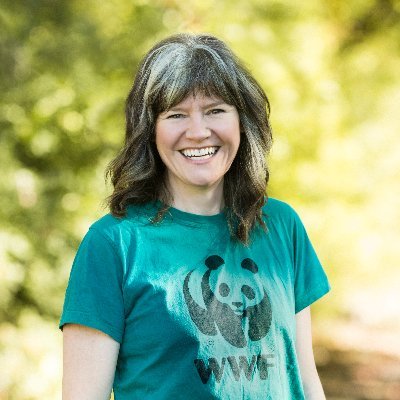
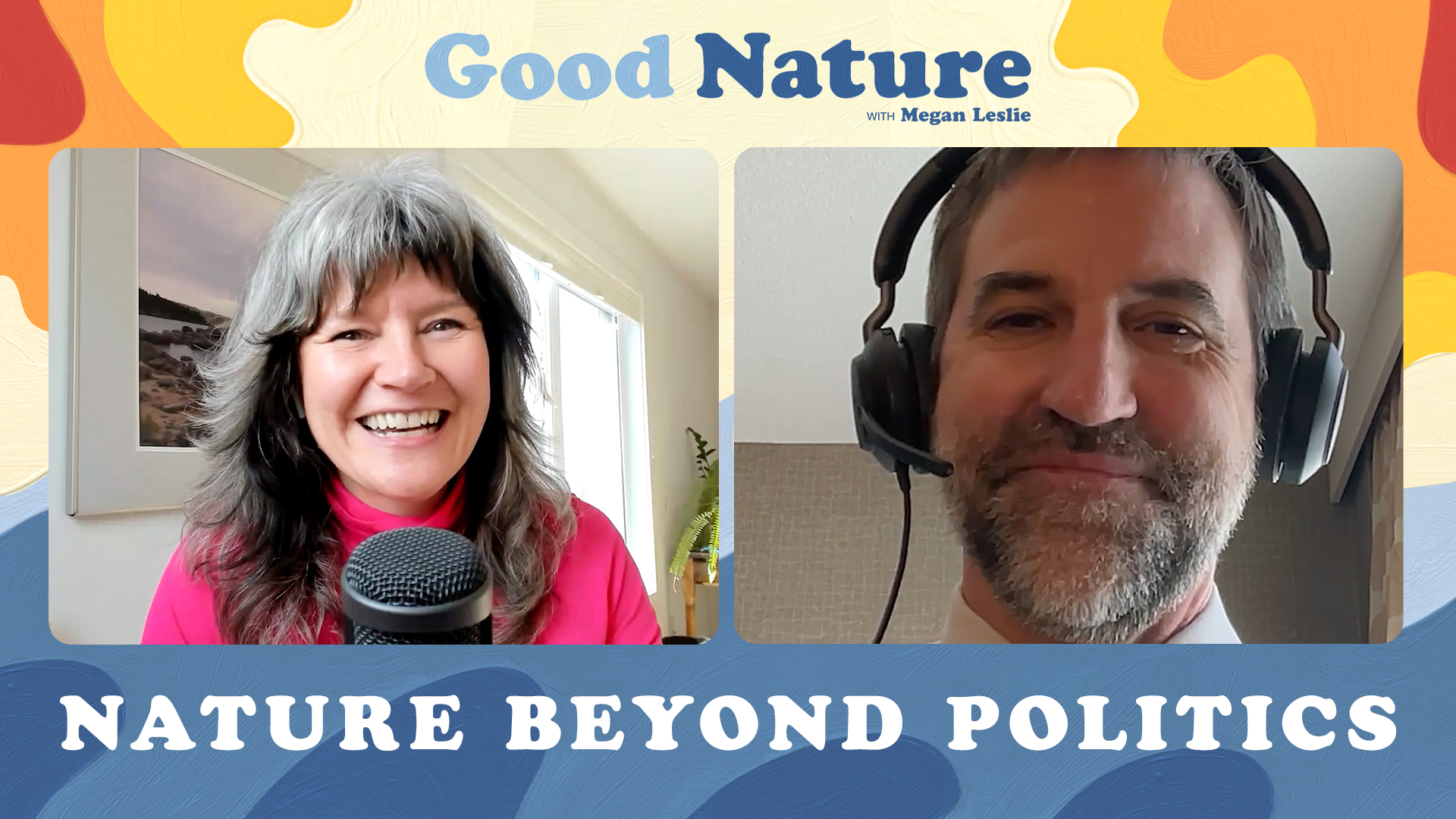
MEGAN LESLIE: Hello, and welcome to Good Nature. I'm your host, Megan Leslie. In each episode of this podcast, we talk to the people who give me hope for the future of nature and wildlife. Now, if you've been paying attention to the news over the last few weeks, you might have heard that the federal government has released a new nature strategy for Canada with billions of dollars pledged towards protecting 30% of our lands and waters by 2030. As soon as they announced this, I knew we had to do an episode unpacking all the ins and outs of this new strategy, and I knew just the person I wanted to talk about it. Our guest today is the Honourable Steven Guilbeault MP for Laurier—Sainte-Marie in Montreal, and former Minister of Environment and Climate Change. I've known Steven for two decades, from back when I was an elected official and he worked at an environmental organization. More to come on that. But before we talk to Steven, it's time for one of my wonderful WWF-Canada colleagues to tell me something good.
MEGAN LESLIE: This is a segment of our show where I use this very special orca phone to call up one of my colleagues at WWF-Canada so they can tell me about the things happening in their world that give them hope for the future. Today, I'm calling Jessica Currie in Quispamsis, New Brunswick. She is a senior specialist on our science, knowledge, and innovation team. Let's see what she has to tell us. Hey, Jessica! Tell me something good.
JESSICA CURRIE: Hey Megan! Did you know that older trees, sometimes called mother trees, have actually been observed sending carbon and nutrients to younger seedlings to help them grow?
MEGAN LESLIE: No, I didn't know that. Tell me about it.
JESSICA CURRIE: So most of us grew up hearing about competition in nature, right? Like survival of the fittest.
MEGAN LESLIE: Yeah. Exactly.
JESSICA CURRIE: Yeah, but nature, like everything, isn't black and white. So it's not just about the competition piece. We also have connection and cooperation. So let's take a forest for example. What would be something you see from a competition standpoint between trees?
MEGAN LESLIE: Well, I mean, you see it when there's taller trees and there's smaller trees underneath and the taller trees are shading them.
JESSICA CURRIE: Exactly, they're kind of fighting for sunlight, a resource, right? So that's certainly true, but beneath our feet, something pretty cool is happening. We have a vast network of fungi that's actually connecting all of these trees together. And through this network and through other means, like root-to-root connection, that trees can actually share nutrients, share water, share carbon. And they can even share information.
MEGAN LESLIE: Wow, how does that work?
JESSICA CURRIE: Okay, so for instance, if one tree is attacked by an insect, pest, disease, that sort of thing, it can actually send chemical signals out through this network and it can alert the nearby trees so it can boost their defenses.
MEGAN LESLIE: Wow, that is pretty incredible.
JESSICA CURRIE: So cool, eh?
MEGAN LESLIE: Yeah.
JESSICA CURRIE: Yeah, so it's not just a forest, like anything, it's a community. And it's not all that different from us. So, I mean, think of any team you've been a part of. Could be sports. There's usually that one person who kind of is a ball hog, who tries to do everything themselves, right?
MEGAN LESLIE: I know them.
JESSICA CURRIE: But we know how that plays out. It's not always the best, right? We know it's the teams that pass, that adapt, that support each other, that are connected, that are the most resilient over time. So my question for you, actually the question I want you to ask me is why does this matter?
MEGAN LESLIE: Well, why does this matter?
JESSICA CURRIE: Great question, Megan. So if we think of forests as networks and not just the individual trees themselves. The way we do conservation changes. So if we think about cutting down a tree, we're not just removing an individual tree, we're breaking the connection, not good.
MEGAN LESLIE: Not good, tell me something good.
JESSICA CURRIE: Okay, something good, older trees, they're not big and impressive. I mean, they are, they're pretty cool, but they're essential communicators and providers. So we should protect them.
MEGAN LESLIE: Ah, I love that.
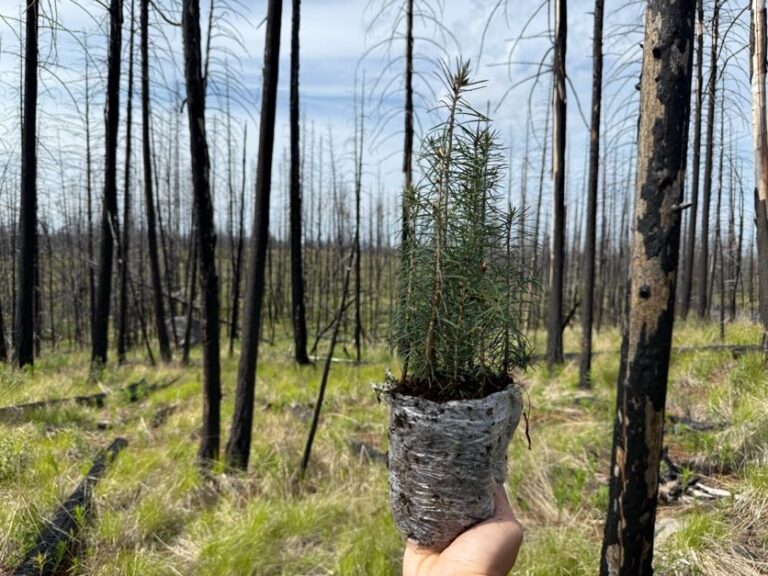
JESSICA CURRIE: And the biggest takeaway that I want to give you is that when we plant trees and we restore forests, we're not just adding greenery back to the landscape. We're rebuilding relationships.
MEGAN LESLIE: Oh my gosh. I love that. And that really is something good. Thanks a lot.
STEVEN GUILBEAULT, MP FOR LAURIER-SAINTE MARIE IN MONTREAL
MEGAN LESLIE: At the end of March, the Canadian government announced a federal nature strategy. I posted a video from the announcement with my first impressions, and they were good,
MEGAN LESLIE [IN CLIP]: Hey, so I am where the Prime Minister, he was here behind this podium over here, and he just made an announcement about nature. So we heard that there’s $3.8 billion in funding for nature. This is extraordinary. Very very happy to hear this.
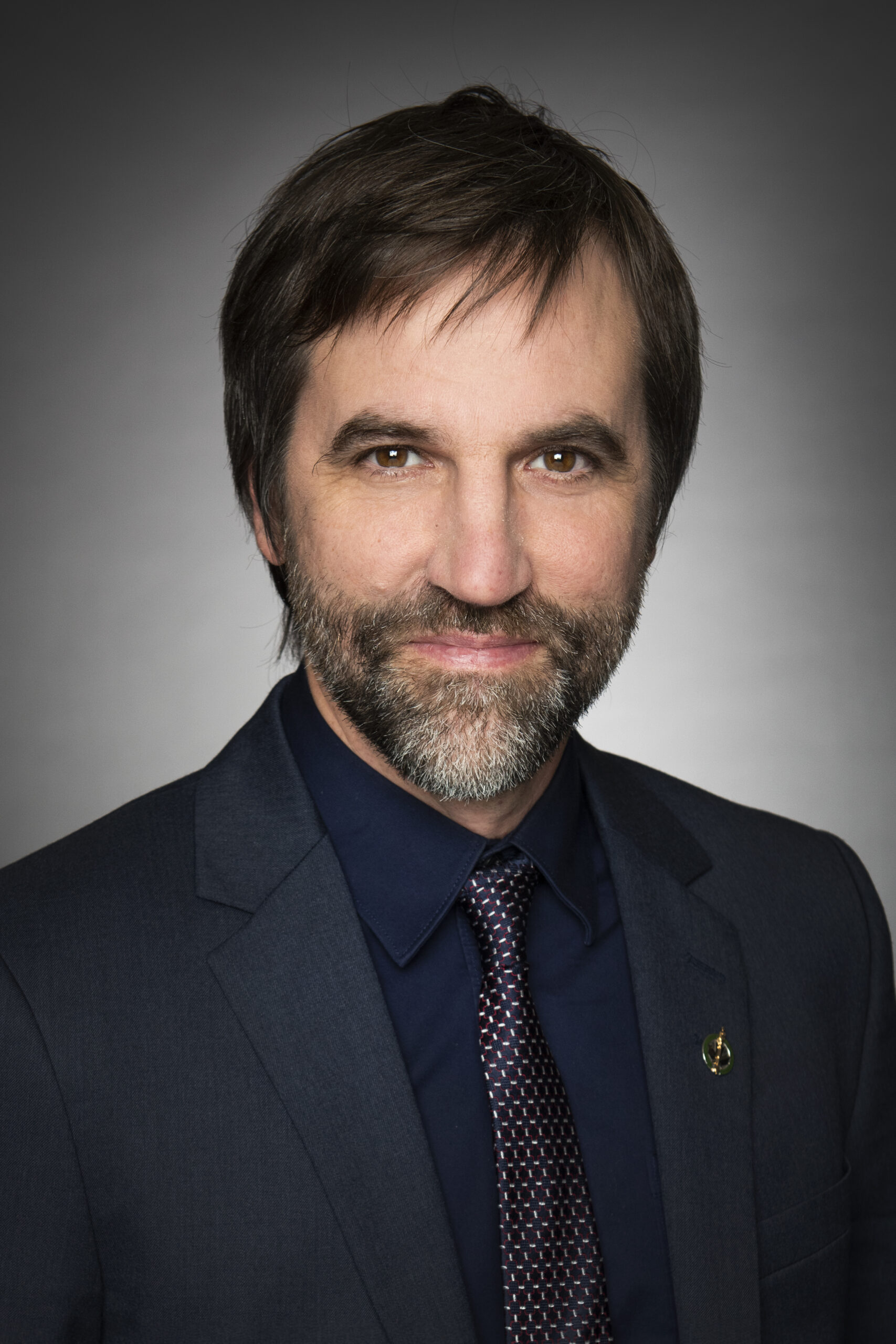
MEGAN LESLIE: But I also said that we keep people posted as we learn more about the strategy and got into the fine print. So that is exactly what we're going to dive into with this episode…with the best guest for the job! Joining us on Good Nature today is the Honourable Steven Guilbeault. Steven is the MP for the riding of Laurier—Sainte-Marie in Montreal, and he was Minister of Environment and Climate Change from 2021 until 2025, and he is here today to talk us through Canada's new nature strategy, that pledges $3.8 billion towards protecting 30% of our lands and waters by 2030. Steven, it is great to see you. Thanks for being here today.
STEVEN GUILBEAULT: My pleasure, Megan. Very happy to be here with you.
MEGAN LESLIE: Okay, so I wanna talk about the government's new nature strategy. But first, I actually wanna take an opportunity to say a bit of a public thank you. And, so get ready. I'm sure some of our listeners don't know that I was a member of Parliament, the MP for Halifax for two terms, and you and I met when I was an MP and you were leading Équiterre, an amazing environmental organization you helped found in Montreal. Do you remember coming to my office when I was first appointed the environment critic? There was a lot going on, so it’s okay if you don’t!
STEVEN GUILBEAULT: Yeah, I, I remember that! Absolutely.
MEGAN LESLIE: Well, I, I want, I'm so glad you remember. I wanna thank you for that because, so that was 2011. And I reached out to you and a couple of other environmental leaders that I admired, and you came to my office in Ottawa. And so after hours, you'll remember we got out a flip chart. We mapped out the year and what the year in environment could look like, when were the big meetings, what regulations were due for review, opportunities to talk about nature and climate change in Parliament. And I know it was just one evening, but like it set me on a course to do my job well and be a strong nature and climate change advocate. So I'm so appreciative of that.
STEVEN GUILBEAULT: Oh, thanks. It was really nice working with you and I still have fond memories of those days.
MEGAN LESLIE: Let's dig into this strategy and exactly what's in it. And you, you mentioned you come from that environmental activist background and then you've also been a government decision maker. So you have this really, this unique vantage point. This new strategy: what stands out to you and how does it differ from other attempts to do work on nature?
STEVEN GUILBEAULT: Well, I think the strategy is a clear commitment by our government to make good on that promise that we made to Canadians and to the world in 2022 in Montreal at the Convention on Biological Diversity, COP meeting, Conference of Parties, so COP15 meeting, where 194 countries committed to protecting 30% of the planet basically by by 2030. And do a range of other things like work on restoration, work on invasive species, work to reduce subsidies that are harmful to nature. Complicated subject, but an essential one nonetheless. And Canada, under Prime Minister Trudeau, we had started doing very important things when it comes to protecting nature. I mean, one of the good news of the strategy is that there's really no light of day between the commitment under Prime Minister Trudeau on nature than there is on the Prime Minister Carney on nature. Like both very committed, both seeing this as…I think, like, I don't, as you know, politicians tend to brag a lot.
MEGAN LESLIE: What?!
STEVEN GUILBEAULT: I don't like to do that, but, I think on nature, some of the things we are doing are being noticed all around the world.
MEGAN LESLIE: I agree.
STEVEN GUILBEAULT: The nexus, for example, on nature and reconciliation and how over the years, we've started more and more to work with Indigenous peoples. And you've been doing that at WWF for a long time. But some of this work is groundbreaking. So I think that's a very important thing for your viewers to understand, like this continued commitment. And one thing the strategy does, I mean, you know, close to $4 billion over five years is not pocket change. Like, it's a lot of money, but it also like, we have probably the best idea we've ever had of how we get to achieve that goal of protecting 30% of Canada by 2030. And I think, you know, beyond the various elements of the strategy itself, I think that this vision and this mapping exercise that took place to prepare the strategy, to me, is probably one of the most compelling things.
MEGAN LESLIE: I appreciate that those details are in there. It's a bit rare for an announcement to have an actual plan. Usually it's sort of the biggest high level piece at the beginning. And so, I mean, you mentioned already, we made this international commitment to protect 30% of our lands and waters. Other countries have done the same. So that's this “30x30” approach. Now, for our listeners who might not be familiar with formal protections and things like this, what do we even mean when we're talking about protection? You know, sometimes I think people imagine that we put up a fence, and you can't go there. It's so special, no one's allowed to go there.
STEVEN GUILBEAULT: A glass dome.
MEGAN LESLIE: Exactly. So what does protection mean under, in the context of 30 by 30?
STEVEN GUILBEAULT: So there are, I mean, the guiding principles behind those various types of conservation methods and, and we'll talk about that, are defined by the International Union for the Conservation of Nature, so-called IUCN. And every year the, as you know, you know, experts from different fields. They meet together and they update existing methodologies and best practices to define what can be considered protected.
STEVEN GUILBEAULT: So I suppose people might refer to as the gold standard would be your national park, like Parks Canada and fully protected. There can be no industrial activity. There can be light economic activity like ecotourism and things like that. People will go to a national park, they canoe, they can hike, they can kayak, but very low impacts. Then you have other levels of conservation where you will allow certain activities. I, you know, not too far from my riding is the Saguenay–St. Lawrence Park, which is a joint initiative by the federal government, so Parks Canada, and the Quebec equivalent of Parks Canada, called La Sépaq. It's a marine protected area, but there is commercial navigation. There is some fishing taking place. There's lots of tourism, ecotourism, whale watching. All of these more economically driven activities are done first and foremost with a conservation lens—
MEGAN LESLIE: Right.
STEVEN GUILBEAULT: —put onto them. And that's really important. As opposed to an area where you have none of these measures in terms of conservation that are put in place, and then it's largely the economic activities that are dominant. There, you have to do everything. So, for example, when belugas are giving birth, well, ships will have to slow down.
MEGAN LESLIE: Right.
STEVEN GUILBEAULT: When they get into this, it's either period or zone depending on the time of the year. We're doing more and more for the right whale, for example, detection using drones and airplanes, so that we can communicate to ships that we spotted right whales in that area so that those ships will slow down because we know that one of the main cause of those whales dying is collision with ships. So, and then, you have different levels of conservation, of protection. To the urban park, for example, which is one of the newest tools we have in Canada for protection. The, I'm in Toronto right now, so not too far from here, obviously, the Rouge National Park, the first national urban park. In the case of urban parks, one of the questions we had to ask ourselves is, okay, well, you know, you want to protect an area near urban cities. Your chance of finding, like, a pristine ecosystem, untouched by humans are quite low.
MEGAN LESLIE: Yeah.
STEVEN GUILBEAULT: So one thing we wanna do is make it easier for people to have access to nature. But maybe that nature has already been pretty affected by human development. But maybe instead of, you know, yes, we wanna protect, but maybe we wanna restore more than we want to protect in those areas. You may not find those hundred-year-old trees in there, but you make it easier for people to have access to nature. And at the same time you're working on restoration of natural ecosystems, perhaps more than protection of something that it's already been pretty affected.
MEGAN LESLIE: Right.That conservation lens you described, I think that really crystallizes, it's like different activities can happen, but what is the conservation lens that we apply here? Now let's…there's a real tension happening here, I think, with this nature strategy, because we're on our way to try and protect 30 by 30, but we also have a Build Canada initiative. We have a major projects office. We are, as a country, focusing on accelerated development. And something we've been saying at WWF-Canada is “We don't need to destroy nature to quote, build Canada.” And I look at this nature strategy and I wonder if it could support a different way of thinking about building, right? Not just adding infrastructure, but strengthening our natural systems that are already working for us. Is that, is the door open to that?
STEVEN GUILBEAULT: Oh, absolutely. And I think you are starting to see it with some projects. And I've spoken with the Prime Minister at length about this. He's very interested in seeing how we can, yes, “Build Canada”, and we need to develop, we need, we know we need new things if we want to reduce our dependencies on fossil fuels to fight climate change, we know that it's largely going to go through electrification of our transportation systems, electrification of our industries, electrification of heating in buildings, for example. And for that, we need critical minerals, which means mining, but it's not because we want to do mining that we should go mine everywhere. There are places where maybe we won't go for cultural reasons for Indigenous people or because these are very sensitive ecosystems. And when I was environment minister working with the natural resource minister at the time, Jonathan Wilkinson, we started this mapping exercise of saying, okay, well, can't go here for mining for a range of different reasons, but we can go here and we can go there. So I think number one, this idea of combining things. Like we can do more than one thing at a time. And I think the Prime Minister strongly believes in that. And I know for some viewers, you know, it might be, we should be investing in nature for the sake of investing in nature. And I agree with that. But when you're in government, there's competing priorities. Like there's the health sector, there's social issues. Everything that's happening in the world right now, our NATO commitment and defense certainly has taken a front row seat in terms of priority. So whenever we can make it easier for governments to do that, then I say the better.
MEGAN LESLIE: Yeah. And also just acknowledging what nature is doing for us. I mean, yes, fisheries, yes, lumber, what about clean air? What about absorbing ecosystem, absorbing carbon? What about absorbing floods? Slowing down fires? Like it is doing things for us. It's not this neutral space with no value.
STEVEN GUILBEAULT: Absolutely. I think it was last year, or maybe 2024, Parks Canada, their chief scientist worked with a number of people at Parks Canada. They published this fascinating study. They actually put a value on the ecological services rendered by the areas that are managed by Parks Canada. It was published in an international magazine and they value that those services, those ecological services, at more than $500 billion per year—
MEGAN LESLIE: Yeah, I believe it. I believe it!
STEVEN GUILBEAULT: —to the Canadian economy, clean air, clean water, fire protection, sequestering carbon. So, for those people, unlike us, who aren't interested in nature for the sake of protecting nature, there is a really good financial and economic argument to be made for doing that.
MEGAN LESLIE: Now, the nature strategy has three pillars and I am particularly excited about the second pillar. And so, in the strategy, it talks about, the federal government will map out where the biodiversity is in Canada, where the carbon is in the ecosystem, right? The trees and the plants and the grasses have absorbed carbon dioxide. And I love it because I'm really proud, WWF-Canada, we piloted this idea a few years ago. I mean, we don't have the resources of the federal government, but we put together an ecosystem carbon map that is static, right?
MEGAN LESLIE: But this idea that it could help us better understand, where we can site projects, how we can go ahead with projects. And there's not a lot about it in the nature strategy. Just a teaser for me. But what else do you know about this ecosystem carbon mapping and how it relates to Build Canada?
STEVEN GUILBEAULT: We know, for example, that wetlands in Northern Ontario are one of the world's largest carbon sinks.
MEGAN LESLIE: The world’s. Yeah.
STEVEN GUILBEAULT: Not just Canada, not just North America, the world. You wanna fight climate change? The last thing you wanna do is to allow for massive development to go into that specific area. You know, as I'm sure you have, we often hear people who are skeptical of Canada fighting climate change because, you know, we’re only 1.8% of global emissions and well—
MEGAN LESLIE: I've heard that before.
STEVEN GUILBEAULT: We’ve heard that before. It is true, but I mean, it still places us as one of the top 10 or 11 overall emitters in the world, number one. But when it comes to nature, I mean, what we do, it not only matters for Canada and Canadians, but it matters for the world because of, you know, we're the second largest country by size in the world. We have some of the most diverse ecosystems. Like, what people often talk about, the Amazon, and of course we wanna protect the Amazon, but protecting some of our Canada, some of our ecosystems here, will make a difference for the entire planet.
MEGAN LESLIE: Yes. So much opportunity. I, it's just, it is such an opportunity here in Canada. I agree. So a lot of what we're seeing from this strategy focuses on the actual land and waters. I think that's appropriate. That's what the announcement's about. What about the species that live on that land? Does this strategy support species at risk?
STEVEN GUILBEAULT: It does. We've had a Species At Risk Act for many years in Canada. When I was environment minister and nature minister, one of the conversations we started having with people like you and some of our experts and governments is, okay, well, for some decades now, we've been looking at this issues of species at risk, one species at a time. Maybe we need to take a bit more of a holistic look at this and look at ecosystem protection. And your species, those species then become your indicators of how well or not well an ecosystem is doing. So instead of just looking at caribou or looking at the western chorus frog or the spotted owl, you look at the ecosystem and you try and take an ecosystem approach to protection as opposed to a species specific. And I'm not saying we set aside the Species At Risk Act, but we, I think because we clearly, we're having a hard time fulfilling the promise of that act. There's so much work to do when you're trying to do it one species at a time, and you know, we get criticized, rightly so, by the commissioner to the environment, saying, well, you're not making a lot of progress, like in terms of species that are recovering. So I think there's obviously money in there, in the strategy for species that are at risk. But I think it's also, it should be an opportunity for us to look at how can we be more efficient at protecting those species.
MEGAN LESLIE: Yeah, I get it. It is about the ecosystems, often. Now, another area I wanna talk about, you mentioned at this conference of all the countries coming together in Montreal and all these countries agreeing to protect 30 by 30, there is also a commitment in there about restoration. Because we've already degraded a lot of lands around the world, so we've made a commitment to restoring 30% of degraded lands and waters and it's absent in this strategy—or, absent’s a big word. It's not really promoted in this strategy. Where does restoration fit into this strategy?
STEVEN GUILBEAULT: I think you're right. We didn't talk enough about it in the strategy, but I think it is embedded into many elements of the strategy. I was giving the example of urban parks earlier, where the work we will be doing to develop urban parks will largely be work where we're restoring ecosystems that have been degraded. And many of the programs, whether they're at Parks Canada or whether they're at Environment and Climate Change Canada are programs where, working with organizations like yours and many others in the country, we will help acquire lands and protect them and restore them, certainly closer than we would do for a national park. Like what we do with a national park, usually we look at iconic ecosystems or emblematic ecosystems in Canada, mostly pristine. And we say, okay, we don't wanna, we wanna protect this, and that's super important. We need to do that. Often not necessarily the most accessible for most Canadians, like you often have to travel far and wide to have access to some of those areas, not all the time. Some of them are closer to where most Canadians are, but I think where those restoration efforts matter the most is certainly closer to where we find most of the Canadian population.
MEGAN LESLIE: Where we are!
STEVEN GUILBEAULT: Where most of us are.
MEGAN LESLIE: Where the humans are.
STEVEN GUILBEAULT: Yeah, exactly. And I suspect that in the coming years, as we advance in the implementation of the strategy, restoration will take a larger and larger role because I'm convinced that we will map out fairly quickly the route to get 30% conservation fairly quickly. Like, although the numbers are a bit…not misleading, but we're at roughly 15% terrestrial conservation, almost 16% marine conservation. But the reality is that there are, as you know, a number of projects that are on the go where you and Parks Canada and other organizations and municipalities and even sometimes private sector corps persons have been working on projects that will be mature very soon. So those numbers are going to increase rapidly and we know which projects are more mature than others and which one we can bring over the finish line in the coming years. So I think, as we're able to, not complete, but certainly advance rapidly on conservation, I think that we will be able to shift our attention more on restoration.
MEGAN LESLIE: Okay. That's encouraging. Thanks for that. My last big question, I'm gonna ask you to take your government hat off. Probably your environmentalist hat is never off, so just keep it there. You and I know it is one thing to have a document that lays out what needs to happen to get to those 30 by 30 goals, but we actually have to do it. So what would you like to see over, like, let's do a short timeline. What would you like to see over the next year as far as implementing this strategy goes to meet that 2030 deadline? What are you looking for?
STEVEN GUILBEAULT: We announced two, well, one new national park, one marine protected area as part of this strategy. We have a long way to go. Like we committed to creating basically 35 urban parks, national parks, marine protected areas. We will have to pick up the pace on those for sure. As you know, and I tried to, with limited success, I would argue, try to simplify some of the programs, some funding programs that the government have that, although very important, very impactful, can be a bit heavy for organizations and municipalities and Indigenous communities. And I think there is now a real effort to say, okay, let's make it easier. Government tend to, as you know, come up with these complex processes as almost a form of protection to make sure that, you know, the money is well spent and we can explain every dollar. And I think there are ways of doing that without necessarily having this really heavy bureaucratic approach to it. And I think if we can do that, it's going to make your life and the lives of your peers much easier. It's going to help us accelerate achieving the goals that we've set for ourselves. So I, you know, I think it's a real win-win situation and I'm really hopeful that in the coming months, we can make good on that commitment. And I think, obviously, it is more challenging with certain jurisdictions in Canada to do some of these projects. When I was environment minister, there were, some jurisdictions simply wouldn't wanna have a conversation with me about that. But they will be willing to have conversations with you or other organizations. I'm hoping that we can, by working together, we can spare nature from what is happening with climate change, which is an issue that has become highly politicized, highly partisan. Like protecting the good conditions of life on Earth should not be a partisan issue. Unfortunately, climate has certainly been caught in these culture wars. I think we need to all be careful collectively to make sure that it doesn't happen to nature. And I'm hoping that this strategy, by enabling us to work with organization like yours, but the private sector, the financial sector will make it more of a societal movement, as opposed to this thing that, you know, could be perceived by some as being a government only thing, or an environmentalist only thing.
MEGAN LESLIE: So we all need to step up and I think that is sage advice. Thank you.
STEVEN GUILBEAULT: Thank you.
MEGAN LESLIE: Now, we like to end each episode with a little rapid fire questions that we like to call The Trail Mix. Are you ready?
STEVEN GUILBEAULT: I am ready.
MEGAN LESLIE: Okay. First question, incredibly unfair to you, what is your favorite national park in Canada? I know, I know.
STEVEN GUILBEAULT: Ugh. That is…can I have two?
MEGAN LESLIE: Okay.
STEVEN GUILBEAULT: I had the pleasure of visiting the Torngat National Park.
MEGAN LESLIE: In Labrador.
STEVEN GUILBEAULT: In Labrador, Northeastern Labrador, the very northeastern tip of Labrador. And Haida Gwaii, the Gwaii Haanas National Park in Haida territory. Probably two of the most iconic and beautiful places on Earth, not just in Canada. Really.
MEGAN LESLIE: Great picks. What is the most underrated Canadian wildlife species?
STEVEN GUILBEAULT: Oh, underrated.
MEGAN LESLIE: Underrated.
STEVEN GUILBEAULT: That's a good question. I mean, it's really, it's really tough. Like I think my third or second day on the job as environment minister, I issued an emergency order to protect a Western chorus frog.
MEGAN LESLIE: Ah. Yep.
STEVEN GUILBEAULT: As many of your viewers will know, it's a tiny little frog.
MEGAN LESLIE: Itty bitty.
STEVEN GUILBEAULT: And often when we think about wildlife, you know, we think about very iconic species, whether it's caribou or wolves or grizzly in Canada, or elephants and rhinos. And of course these are super important species for the role they play in the biosphere and various ecosystems. But also sometimes it's about protecting the really little guy.
MEGAN LESLIE: Yeah.
STEVEN GUILBEAULT: Who also plays a very, very crucial role in our ecosystems.
MEGAN LESLIE: Amazing. So what, maybe this is related, what is your favorite nature sound?
STEVEN GUILBEAULT: In 2017, I went sea kayaking in north of Vancouver Island, in a provincial park called the Broughton Archipelago Provincial Park with my wife. Seven days, full autonomy sea kayaking, and one day we were surrounded by a pod of white-sided dolphins and humpback whales. There were two humpback whales on each side of the kayak, about 150 meters and they were singing—
MEGAN LESLIE: Come on.
STEVEN GUILBEAULT: —to each other. I mean, I will cherish this memory ‘til the day I die.
MEGAN LESLIE: No kidding. Oh my gosh. What an, oh, that's, you're so lucky.
STEVEN GUILBEAULT: I am.
MEGAN LESLIE: What is the best place to enjoy time in nature in Montreal?
STEVEN GUILBEAULT: I mean, we're very lucky. We have le Parc du Mont-Royal right smack in the middle of the city. Massive green space. It's a short run from my house, about 15 minutes, I'm there. It's beautiful. It has wonderful trails, some lakes. But we have also some really nice spots on the St. Lawrence River. And more to come. There's a big project that the federal government is working with the city of Montreal to enable more access to our waterfronts in Montreal. But certainly the Parc du Mont-Royal is, it's not in my riding, but it's right next door.
MEGAN LESLIE: Accessibility is key. It's absolutely key. And finally, what is one thing that everyone can do to help protect Canadian lands and waters?
STEVEN GUILBEAULT: Talk about it. Talk about the importance of it. Talk to your family members, talk to your neighbors, talk to folks at work about it. Because I think more people talk about it, the more people like me, politicians, will hear about it, and if we hear about it, when we're knocking on doors, when we're calling people, when we're meeting people on the street, then we'll come back to Ottawa or Quebec City or wherever you're sitting as a representative and, or Queen’s Park here in Toronto, and we'll talk to our colleagues, and then, you know, all of a sudden it becomes a priority because everyone's talking about it. And I think that's something that's easy to do, that shows how important it is to you and will either give tools and arguments for people like me and you and others who care deeply about this, and those who care less may be forced into action because they feel they're under pressure to do it. But regardless of the reasons, as long as people are doing it, then it matters.
MEGAN LESLIE: Great answer. I love it. Stephen Guilbeault, thank you for the work that you do, and thank you for joining us on Good Nature.
STEVEN GUILBEAULT: Thank you very much, Megan.
STEVEN GUILBEAULT, MP FOR LAURIER-SAINTE MARIE IN MONTREAL
MEGAN LESLIE: Thanks again to today's guests, the Honourable Stephen Guilbeault and Jessica Currie. And thank you for joining us today on Good Nature. You can stay up to date on Good Nature and everything else happening at WWF-Canada by signing up for our newsletter Living Planet News. It's full of good stuff, like cool conservation stories from the field, species spotlights, and ways for you to get involved. The link is in the description. And if you have any thoughts on the show, ideas for episodes, or questions to share, please leave a comment. Or you can leave me a voice message! Just go to speakpipe.com/wwfGoodNature. The link will be in the episode description, and I can't wait to hear from you. See you next time.