

Seven rare species in the Carolinian zone
One of the most biologically diverse places in the country is also among the most threatened
Read More
June 18, 2026

Episode 7

34 min
President & Chief Executive Officer - WWF Canada
Listen on


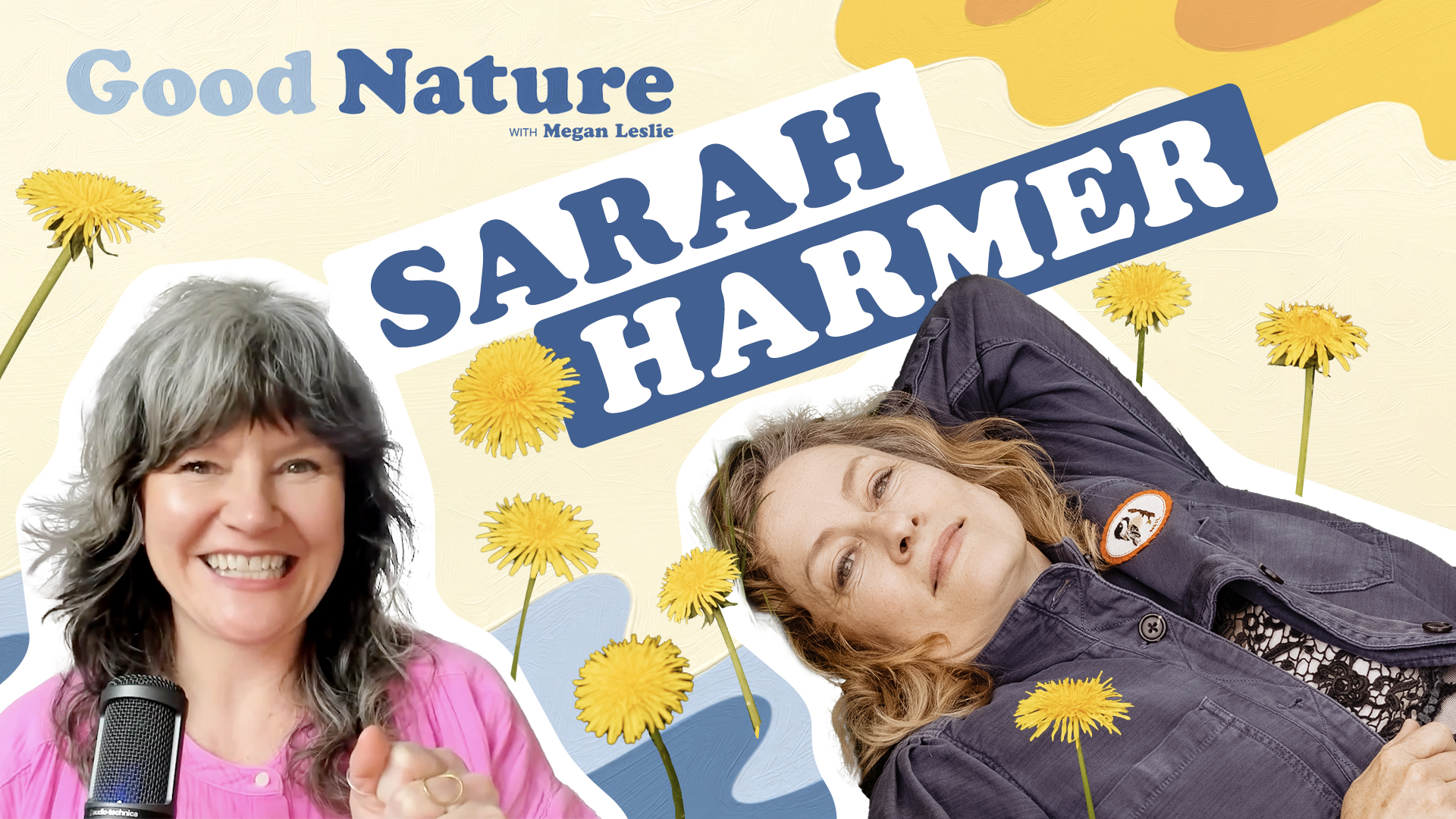
For decades, Sarah Harmer has used her voice — on stage and off — to stand up for the places she loves.
In this episode, Megan is joined by the acclaimed singer-songwriter and environmental activist to talk about her long-running efforts to protect Ontario’s Niagara Escarpment, where a proposed quarry expansion has sparked a grassroots movement. Sarah discusses how music helps bring attention to this threatened landscape, and what it means to move from awareness into the often-unglamorous work of organizing.

“I don't think that musicians necessarily need to, at every moment, use their platform. I get that the work they're doing is restorative and empowering...and that can be enough. But the whole ‘art is precious, we don't engage in the political’ kind of opinion — I think that's a bit soft and a little too precious and a little too privileged. I think everything's political. And damn, we have a lot of problems right now.” - Sarah Harmer
The conversation covers the power of art to shape public opinion and the importance of digging into the details when it comes to both effective activism and songwriting.

Sarah Harmer
Canadian singer-songwriter
Sarah Harmer is a celebrated Canadian musician and environmental and social justice advocate.
Megan Leslie
President and CEO of World Wildlife Fund Canada
Megan Leslie is President and CEO of World Wildlife Fund Canada. Since taking on this role, Megan has led WWF-Canada’s bold 10-year plan to Regenerate Canada by expanding habitats, reducing carbon in the atmosphere, lowering industrial impacts and, as a result, reversing wildlife loss and fighting climate change. She is also passionate about engaging Canadians to take action for nature.
SARAH HARMER: It is so much perception sometimes when power is being wrestled, you know, between the municipal government, the regional government, the provincial government. The court of public opinion is a big one and I think that's where art can really help shine a light.
MEGAN LESLIE: Hello and welcome to Good Nature. I'm your host, Megan Leslie. In each episode of this podcast, we talk to the people who give me hope for the future of nature and wildlife. And today's guest is a Canadian environmentalist and music icon, the wonderful singer-songwriter Sarah Harmer. For decades now, she's been using her voice on behalf of her beloved Niagara Escarpment, singing about the threats to this Southern Ontario Biosphere Reserve in her song and documentary, Escarpment Blues, and fighting to protect it from development through her grassroots work. Sarah's music and activism have inspired people across the country to speak up for nature, and I, for one, am very grateful. Sarah joined us from her idyllic backyard in Southern Ontario to talk about the power of music to impact people's relationship with nature, how nature has impacted her songwriting, and what it means to keep showing up for the things you care about.
MEGAN LESLIE: Sarah Harmer! What an absolute delight to have you and your chirping birds in the background on Good Nature. Thanks for being here.
SARAH HARMER: Thanks for having me. Nice to be here.
MEGAN LESLIE: Well, I have a lot of questions for you, so I wanna just jump right in now. You gained attention in the environmental movement, I'd say, back in the early 2000s when you really dedicated yourself to protecting the Niagara Escarpment. So to start off, for all of us listening across Canada, tell us a little bit about the Niagara Escarpment.
SARAH HARMER: Yeah, the Niagara Escarpment, it's where I grew up. It's in southern Ontario. It runs, it's a big rocky ridge corridor that runs for 700 or so kilometers through Ontario, up the Bruce Peninsula, across Manitoulin Island. It even continues on as a geological landform into, I guess, Wisconsin. So it's not Canada's alone, but it is a UNESCO World Heri—World Biosphere, rather. It's home to so many endangered species, incredible wetlands. And it was historically hard to develop, I guess, because it sits up atop the landscape. It's a big cliff, a lot of ancient limestone. There's lots of meadows and forests, and it's all the good stuff. So it's under threat by the gravel mining industry, among others, but for the most part, and so that's how I got involved. Yeah, about 2005 when I found out there was a proposal.
MEGAN LESLIE: Right. So this, this proposed gravel development, you know, would've destroyed some of the wilderness, that beautiful picture, all the good stuff that you just described near the escarpment. So what was it about the escarpment that really inspired you to take action? I mean, it's pretty big. It's in your backyard, but it's this big thing all the way down to Wisconsin, as you said. What inspired you to take action on that?
SARAH HARMER: I think that I knew it. I grew up tromping through those fields. And there was real risk, and it's really also such a source of water, of drinking water for thousands and thousands of people that rely on domestic wells. And so tapping below the water table to get the most homogenous, you know, going into the most ecologically rich area, one of the most in the world, to get the most homogenous gravel when we've already got a glut of gravel licensed in the province just compelled me. And the more I learned, the more I got involved, and the more kind of passionate I became.
MEGAN LESLIE: And so you and your band did a tour for the communities around the escarpment. Can you tell us a bit about that?
SARAH HARMER: Yeah, in 2005, when I was first finding out about the risks and this proposal by Lafarge, I just, one late night, kind of thought about how could I do a little walking tour with my acoustic band?
SARAH HARMER [CLIP]: We have been, we have been living out of a backpack for the last almost week now. We started things off on the tip of the Bruce up there in Tobermory and got ourselves nice and frosty in the Georgian Bay waters and paddled some of the trail, the Bruce Trail, and just yesterday, walked through the Pretty River Valley, and today, made our way along the Ganaraska Trail into Avening. So, yeah…[music begins]
SARAH HARMER: We did have a van. We had a van that we ran partly on biodiesel as well, between gigs. So we played in Owen Sound, in Collingwood, in Georgetown, all these places along the spine of the escarpment.
MEGAN LESLIE: Oh, wow. And I can only imagine. I'm sure some people came out for you. I'm sure some people came out for the cause. But probably people left with a lot more awareness.
SARAH HARMER: Yeah, and I think a lot of love for where they are. You know, sometimes these smaller places are kind of unsung, and it was so nice to go into these old theatres and community spaces and really celebrate our location, you know, where we were, where we got to spend our lives.
MEGAN LESLIE: That sounds wonderful. Now, I know a lot of artists, they'll speak out about causes. They have a platform, and I'm grateful to them for speaking out, but they don't necessarily do that deep organizing work that you've done, really, like, the boring stuff, right? So what made you cross that line from raising awareness into that on-the-ground activism?
SARAH HARMER: I think it was, you know, I went to the first meeting in January of 2005 at the local church and actually, my mom was really the one that had the can-do spirit. We drove around and stuffed mailboxes with flyers and had a first meeting, and I'd never spoken in front of people without a guitar in my hand, you know? So it was definitely like a, oh, I have to be an adult. I have to act like I kinda know how these things go. And it was a big cloud of how do these decisions get made? How can we get involved? And it was really like step-by-step. We started a committee. We met every week. We all were new to organizing, but it was, it became, like, so compelling. You know, it's like anything you put your attention to and you spend your, you know, commit to, you develop relationships with people, and you learn more about...I mean, I learned more about this place that I grew up in and still have lasting connections to neighbors and people that I otherwise wouldn't have met. So it definitely enriched my life, but it, and my music-making definitely had to take a, you know, some time out because it is, it can be all-consuming. But I was really into it, and I was doing it with my mom as well. So that was also a big part of it.
MEGAN LESLIE: It sounds heartwarming, but I mean, I've done a lot of that work and it's not glamorous. You know, attending hearings, filing interventions. But it is necessary and it's part of…I'm gonna use the word ecosystem. It's part of this ecosystem on how we can work on issues. So when you think about your experience, it's been so broad, it's encompassed so many different pieces, including these boring parts. What have you learned about the role that art can play in creating change, that ecosystem of creating change? What is the role of art?
SARAH HARMER: I mean, I'm like you, I really appreciate when performers, artists, people who have a platform, speak out about something. It's dangerous at times, though. Well, dangerous might be an exaggeration, but I find, you know, you're vulnerable because you, if you don't feel like you know quite what you're talking about, you're passionate about it, but you don't quite have the facts, like, it's hard to stick your neck out there. So I get it. There's resistance from musicians and people to not want to necessarily get too involved, but man, it is such a boost for community, volunteer community groups when they have... Because it's all perception. We're all trying to figure out how do we move this vision forward and get protection of land and water and all that. It makes a big difference because it is so much perception sometimes when power is being wrestled, you know, between the municipal government, the regional government, the provincial government, the court of public opinion is a big one and I think that's where art can really help shine a light.
MEGAN LESLIE: And what you said earlier about these small towns you know, just trying to work on this issue by themselves, and it's like, "Oh, Sarah Harmer's paying attention to this. This song is about my community. This band is interested. It's not just us. It's bigger." And art has such an uplifting role in that way, or amplifying role.
SARAH HARMER: It’s huge. I mean, I remember being in London, England, and being in a bookstore one night, and I pulled out a Michael Ondaatje book of poetry, and there was a poem called “Near Elgenburg”, and I live in Elgenburg! And I was in England, and I thought, "Wow, my little crossroads made it into this poem that has so much meaning for me," and it just kind of widened my world. It was...it's very powerful.
MEGAN LESLIE: It is. That meaning. Okay, the first time I heard your song, "Escarpment Blues," I actually thought to myself "Why is Sarah Harmer singing about rocks?" Because a lot of songs about the environment, they're often about, like, this iconic species or this iconic tree, and that song made me reconsider my relationship with environment, and you made me think about the ecosystem, and the Niagara Escarpment as the backbone of the land, and that was really evocative for me.
SARAH HARMER [CLIP]: [singing] If they blow a hole in my backyard, everyone is gonna run away. And the creeks won't flow to the Great Lake below, will the water in the wells still be okay? If they blow a hole in the backbone, the one that runs across the muscles of the land. Oh, we might get a load of stone for the road, but I don't know how much longer we can stand…
MEGAN LESLIE: Has that approach in your songwriting informed your advocacy, thinking about how we make this evocative and what that can mean for advocacy?
SARAH HARMER: I definitely set out to try to write that song to tell the story about what was going on. But it's hard. You know, you got two brains sometimes when you're in the weeds of, as you say, submissions and legalese and science. You know, you can get so- I can get so nitpicky on the details that it's hard to cross over into the, like, poetic realm that's gonna actually be evocative or be compelling. So, you know, even writing about aquifers, there was a little bit of nerd, you know, stuff in there. But I did really want the song to tell the story. And I felt like, you know, rocks are so boring in a lot of ways. And especially gravel that gets blasted and crushed and, you know, we all use it. But what is at risk? That's the compelling stuff. Like, being a kid and being able to go into the Carolinian forests of the Niagara Escarpment with the beautiful canopies and the salamanders and the vernal pools and the big fields and that stuff, that's what I really was standing up for. And I knew that that stuff, you know, once you drain and underdrain all that water out of that system, it's deadsville. You know, water makes it all work. And when you're going in below the water table, water goes to the lowest place. And it will pull out of so many of those life-giving wetlands, et cetera.
MEGAN LESLIE: You know, these big picture songs you have, aquifers are big, escarpments are big, but you have other songs that include small, almost incidental details about weather and landscape and I think that helps listeners like me connect with these landscapes in our imagination. I wonder, you know, there seems to be a bit of a parallel to environmental activism, that big picture issue that we're working on, and at the same time, like you said, these details about dates and times and procedure. I can't help but see some parallels there.
SARAH HARMER: Well, I feel like, too, when you're talking about environmental issues, it's the people on the ground that know the details. I love living in the country because, especially staying in the same place for many years, it's fascinating. You get to follow, you know, the return of the eastern phoebe, or you get to follow the growth of a fruit tree or just the changes of the season. And I think all those details are what makes us really...you know, we're sensitive creatures, and we are so, also, entirely reliant upon these details and these changes in weather and these, you know, these rainfalls and all of these things that we're so part of. And so when I think sometimes, I get overwhelmed at the big stuff, I always feel like we should be listening to people on the ground. You know, we should be listening to Indigenous leaders and Indigenous community members who have such a, you know, in general, reverential relationship with so much of these places. And sometimes when I get scared about big policies that get announced, it's so concerning when this big build, build, big, big, big picture will decimate the details, and it's those details that make life possible, you know. So I do love incorporating little things that catch my ear into songs as well.
MEGAN LESLIE: Yeah. Well, it really does connect us to, you know, we can picture these things in our imaginations. And you said that for “Escarpment Blues”, you said, "I wanted to write a song." You did that intentionally. And so generally, I wanted to ask, is that common for you? Do you consciously think about your songwriting as a way to communicate environmental issues? Or usually is it more of an art first approach, but your passion just kinda comes through in a way that makes people feel connected?
SARAH HARMER: I don't know. I really- the mystery of songwriting is alive and well with me. I mean, that song specifically, I did want to really put it on a postcard and be like, "This. This is what's going on." And I often just write a song that comes out of a line or a, you know, something I jot down, and then I try to just blow it up and build a song around it. But I do think right now, especially, there's so much to write about and so much strength to be gained by music. I don't know if I want it to be too didactic, you know, to have a message, but I also think there's a lot of value in that, so I think it's a balance for sure.
MEGAN LESLIE: Yeah. Well, last year, in 2025, you received the Junos Humanitarian Award in recognition of your years of activism. Let me say congratulations.
SARAH HARMER: Thank you.
MEGAN LESLIE: It's quite the honour. And in your acceptance speech, you called on fellow musicians to, I'm gonna quote you, "Use your gifts, use your opportunity and responsibility, and use your time at the microphone to throw your weight behind community efforts." So when you found out that you'd have the opportunity to give an acceptance speech on that stage, what was going through your mind?
SARAH HARMER: Well, I kinda winged it 'cause I'm not much…
MEGAN LESLIE: You did well. That was good winging.
SARAH HARMER: I'm not much of a planner. Later I thought, ah, you know, I wish I'd kind of made a bit more concrete about a few things that I thought could use some more, you know, talking about. But it was a big honor and like, I don't know. I'm not set on any definite opinion about that because in the way that I was asking people to use their gifts and use the microphone, I also get it that making music on its own and provide like, you know, going to a concert and being taken away and moved by a concert or a musical performance is kind of enough. Like on one hand, I don't think that musicians necessarily need to, at every moment, you know, use their platform. Because I get that the work that they're doing is restorative and empowering and who knows what to whoever's in the audience, and that can be enough. And, but, I'm a little, I guess…the whole “art is precious, we don't engage in the political when we're making art” kind of opinion. I think that's a bit soft and a little too precious and a little too privileged in a way because I think everything's political. And damn, we have a lot of problems right now. It can be really overwhelming and really deflating. So I'm kind of, I run both sides of it, you know. I think there's a time and you know, a moment to shed light onto the work. I just know how helpful it is as somebody in doing the boring work, like you say, of going to those community meetings and building those relationships. It can be such a necessary bolt of energy when someone from a distance gives you some amplification.
MEGAN LESLIE: And what about for you? You know, this relationship between music and activism that we've been talking about and your call out to other artists. But for you, what has that relationship between music and activism been like for you over the years? Has one shaped the other or vice versa?
SARAH HARMER: I don't know. I mean, it all kind of goes in through the, you know…
MEGAN LESLIE: It's the core of Sarah Harmer's being.
SARAH HARMER: It's like, but there's so many people doing community activism, community work. It's not, you know, it's... I definitely have a lot of will, and I can... If I get fixed on something, like, I'm just going down the rabbit hole, and I'm gonna, you know, delve into it wholeheartedly. And so sometimes that makes being a music person, it definitely takes a side, you know, it puts that to the side for a while. And it is hard to almost do both sometimes. But, I mean, the good thing about being a musician is that your schedule is pretty flexible, so you can fit into some of those more, you know, you can play a role where other people working 9:00 to 5:00 or whatever might not be able to show up for this or that. And so there is that kind of flexibility that's helpful when you do community work. But I don't know how it necessarily informs. It's all kind of jumbled up. It's hard for me to say.
MEGAN LESLIE: That's fair. I mean, it is about who we are. People ask me about my work in community versus the career that I've chosen, and it's kinda just who I am.
SARAH HARMER: Uh-huh. Uh-huh. Yeah, you bring from all different bits of your experience and your tendencies, your personality. Yeah.
MEGAN LESLIE: So in, I mean, you've had this long career both in music and in activism. Have you noticed, over that time, have you noticed a shift in how Canadians are talking about nature and conservation?
SARAH HARMER: I've more noticed a shift with our political leadership really ignoring how I found people were talking about conservation and climate, and I've really just seen a corporate lobbying big, big, big push by extractive industries, oil and gas, aggregate, getting in there and getting loopholes built into the Endangered Species Act in Ontario, and then now basically having the whole thing gutted.
SARAH HARMER: And, like, having a little window into the aggregate industry just from the people that I've…you know, we've just come through a second hearing. We're waiting on an Ontario Land Tribunal decision any day now. Like, it really…but seeing those people who are hired by companies to push their agenda, to water down protections for our water and our species, et cetera, it fires me up because I just think it's people on the other side that are working for a corporate bottom line and a shareholder bottom line, and they're getting paid, and they're giving each other awards and I see the crappy job they're doing. ,You know, like the trespassing that they're engaged in or the questionable science, the bias in some of these supposedly objective experts. And, like, stuff like that really angers me, and that's what fires me up, is when I see this corporate stronghold on our leaders. And I know that we live in capitalism right now and all that, but I feel like that's the change I've seen, rather than the change I've seen with the people that I get to know about conservation. Everybody gets, most people get it. People, you know, it's hard to generalize, but it's more the leadership that is really, at the Ontario provincial level, even federally it's very concerning, what I'm, what we're seeing right now with Bill C-5 and Bill 5 and that makes me mad.
SARAH HARMER: I wanna get more involved because of that.
MEGAN LESLIE: Yes. We're trying to do that, too, at WWF-Canada. And I know you're fired up because I've seen some of your recent work. And like, you wrote an op-ed for the Hamilton Spectator about this legislation in Ontario, Bill 5, and your op-ed was specifically about the repeal of the Ontario Endangered Species Act. And I thought you wrote beautifully about how important healthy ecosystems are for human communities, and how critical it is that we hold our leaders accountable to decisions that threaten wildlife and ecosystems. And then it was in the fall, you and hundreds of other musicians signed the Music Draws the Line petition, and that calls on the federal government to reprioritize climate and reconciliation policies in the wake of what the government's calling the Building Canada Act. So that's this piece of federal legislation that allows the government to fast-track certain projects and exempt those projects from environmental laws. So I know you're fired up because I see the work you're doing. We at WWF-Canada, we organized advocacy around those two issues as well. And like, first of all, for people listening, it's hard work. You know, this is the hard work of pushing back on what we know to be bad for our ecosystems, bad for wildlife and nature. It's also really frustrating. Now I have my own theories about what's going on. I do think that industry lobbying, like you said, is part of it. But what... I guess, why do you think that it is so hard to get political leaders to realize healthy ecosystems mean healthy communities for humans? What is the disconnect there?
SARAH HARMER: I'm not sure. You know, I, again, you've been in government, you've seen kind of the machinations of how the decision-making maybe can break down, and I wonder sometimes, you know, the blinders that corporate leaders like Carney…I mean, again, I haven't read his book. I know he's written a lot about values and, you know, climate, et cetera. But I don't know if he's relied on well water. I don't know if he has grown a garden. I don't know if he has walked barefoot in the grass. You know, I really don't know what his connection to the living world is on a personal level so that it's an emotional thing rather than a “let me manage this” kind of thing. I'm just speculating. I don't really know
MEGAN LESLIE: Yeah, it’s…we have a bit of a battle ahead of us with some new federal changes that were just announced. We're even still trying to process them here at WWF-Canada. But it's so hard when just a month or two ago we had the federal government announce the nature strategy, and this is amazing. We had Steven Guilbeault on to talk about what this means for nature. It's really a positive step. And then we have right after that, undermining of environmental legislation at the federal level. It's hard to circle the square, or square the circle.
SARAH HARMER: Yeah. How does that come out of the same mouth or the same government? Again, it's in the details, and I think that's why people have to be there. As someone said to me right at the beginning of this, you know, epic, 20-year now journey, they're like, "You gotta be there at every little dust-up."
MEGAN LESLIE: Excellent advice for all of us.
SARAH HARMER: And, you know, I've taken the last few months off from honestly reading too much news. I've been planting trees and, like, soaking in spring. You do have to take time off, but you also need to have a network, enough to be there at every little dust-up, because stuff gets moved when you're not paying attention. And so I love that WWF and so many great organizations across Canada are working hard to be there to represent ecosystems, to represent the living world that we're all completely relying on.
MEGAN LESLIE: Well, I was gonna ask you, how do we start holding political leaders accountable, but I, there's the answer. You gotta be there for every little dust-up. I love it. So here's something fun for the folks at home. Put “Sarah Harmer” and “Jefferson salamander” into Google, and behold, behold the number of hits that come up! Sarah, you are a Jefferson salamander ambassador. What is going on here? Why are you a Jefferson salamander ambassador?
SARAH HARMER: Well, funnily enough, I grew up in an old 1860s farmhouse, and we had a salamander in our basement that would make an appearance. It was a yellow-spotted, but a very close relative of the Jefferson salamander. They use the same habitats. And that, again, was on Mount Nemo on the Niagara Escarpment. So growing up, it was just such a cool thing. We'd see the salamander every once in a while. But yeah, back in 2005, when we found out Lafarge wanted to blow to smithereens a whole bunch of the top of this plateau, we knew that salamanders were breeding in nearby wetlands. We’d seen aMinistry of Natural Resources map. So I called the, there's a group, a small group, called the Ontario Vernal Pool Association.
MEGAN LESLIE: Of course. I love it.
SARAH HARMER: From the Credit Valley Conservation, I think. And I just had a number and called them, and they sent a couple of biologists out, and they did some salamander surveying. So they set up, around these ponds in our woods, these pitfall traps and these minnow traps. And sure enough, we had a very viable population of Jefferson salamanders breeding in these wetlands. And yeah, they were on the federal, I mean, they were threatened species at the time in 2005, and sadly, they've moved up the list to being endangered species. I did not know amphibians were in my future, but yeah, they're very mysterious. You see them at night. They're nocturnal, but only during a little window when they're breeding, typically at the end of March, early April.
MEGAN LESLIE: Wow. And so why is this important? What does their decline mean for nature and people?
SARAH HARMER: Well, they're so sensitive. They live in the water and on the land, and they're an indicator species. Biologists call them an indicator species.
SARAH HARMER: So they're the kinda top of the food chain in their world, and they, I guess they just mirror the health of their environment. So if Jefferson salamanders are doing well, or salamanders in general, things are good. You got a lot of diversity. You've got the clean water. You've got enough of the other animals and insects that they eat. Like, the food chain is alive and well, and that just reflects on us obviously being part of the food chain, being part of nature. That's good for us, too. And in the case of the quarry proposal on Mount Nemo, that was the first thing. The Jefferson salamanders in 2012, it was them, in the decision that came down on the Environmental Review Tribunal. So we've already fought this whole proposal, and we won the land protections. The company was dismissed because of the Endangered Species Act and the Jefferson salamander habitat. Of course, the industry then went and lobbied the province really hard to get the guts taken out of the Endangered Species Act. So we have less to work with. But they're very, a little thing, and someone would say, "Well, why do you care so much about a salamander? Our jobs are at stake," or whatever. It's like they are letting us know that things are in balance, things are healthy.
MEGAN LESLIE: The alarm bell.
SARAH HARMER: They're the alarm bell. We can't overlook the little guys. They're important.
MEGAN LESLIE: Well, I am going to be a Jefferson salamander ambassador, too. I'm a convert. Now, let's reflect back a little bit. You've been advocating on behalf of Canadian nature for over 20 years now, and we, you and I, both know that that work can sometimes feel really difficult. And you even mentioned sort of cutting off a little bit from the news this spring and getting your hands dirty, planting trees and things. Maybe that's the answer. But I wanted to know what keeps you motivated to keep working to steward our lands and waters.
SARAH HARMER: I have met so many amazing people from this kind of work, all different walks of life. I don't have to just hang out with musicians anymore. It's been a great education in just so many different walks of life doing volunteer community work. That makes me definitely compelled. The relationships you build, even with local municipal staff and council members and you know. And also I gotta say, I'm definitely competitive. And so when I see the other side, and when I see the bank rolling that's going into decimating these precious systems, world biospheres, when we already, for example, in the gravel case, we already have a glut of licensed—it's land banking. It's trying to get permits now because we've got a really permissive government, and that fires me up, and that pisses me off, and I am gonna get in that fight if I can, you know, if I can find something to do. But we were in a hearing for the last, all last year from March until September. We were in an Ontario Land Tribunal hearing, round two. You know, the company came back to try again. And so we're waiting on this decision. But that keeps me engaged. It's really like the—It's hard to know how to get involved on these things, but as soon as you do make one little connection, it tends to grow. And you get hooked.
MEGAN LESLIE: It's true. I'm hooked.
SARAH HARMER: Thank you. I'm glad you're hooked.
MEGAN LESLIE: I know of what you speak. Okay, on this show, we end every interview with a lightning round series of questions, and we call it the Trail Mix. So I'm gonna ask you some quick questions, and you can give me some quick answers. Are you ready?
MEGAN LESLIE: Okay. What is the most underrated Canadian wildlife species?
SARAH HARMER: Um, the most underrated Canadian wildlife species…
MEGAN LESLIE: It could be the Jefferson salamander.
SARAH HARMER: It could be, but I'm trying to go outside a little bit of my regular realm. I think amphibians in general. Can I say that or is, do you wanna be more specific?
MEGAN LESLIE: No, that's perfect.
SARAH HARMER: I’ll say amphibians in general. They're kinda slimy. They're kinda underground. Sometimes you don't see them, but they're doing good work out there.
MEGAN LESLIE: They are. Now, if you could be a Canadian wildlife species, what would you be?
SARAH HARMER: Tundra swan.
MEGAN LESLIE: Whoa, that was fast!
SARAH HARMER: I just have seen swans flying overhead recently in flocks, and I just think, man, what a bird's-eye view, what an eye, you know, view that they get and what distances they've traveled recently. So I would say the swan.
MEGAN LESLIE: What is the most beautiful landscape in Canada to you?
SARAH HARMER: Oh my gosh. Anywhere where humans haven't touched it. You know, I've been to the Arctic. I've, been so lucky to travel so many places, and it's like, everywhere is beautiful. I was up in the Arctic, and I thought I would really miss trees. I'm like, "Nope, this is incredible." It's really where humans haven't messed with it too much that I think is the most beautiful landscape in the country.
MEGAN LESLIE: Aw. And in those travels, you've heard a lot of things. What's your favorite nature sound?
SARAH HARMER: I heard an American woodcock the other day.
MEGAN LESLIE: No!
SARAH HARMER: Doing it’s “boop, boop, boop, boop, boop, boop, boop, boop”. Yeah, so I live on a big wetland here in eastern Ontario, so I think the American woodcock for sure.
MEGAN LESLIE: Solid choice. And what's one thing that everyone should do to help protect Canadian lands and waters?
SARAH HARMER: Believe that they can make a difference.
MEGAN LESLIE: Mm, yes.
SARAH HARMER: That's the first thing. You gotta think that, you know, believe that even if it's a small difference, you gotta believe in yourself because if you don't, that'll stop you from doing anything.
MEGAN LESLIE: Yeah. I'm gonna end this episode with a little tears. Yes. Thank you, Sarah Harmer, thank you for your voice in all the senses of that word, and thank you for joining us.
SARAH HARMER: Oh, thank you very much, Megan. It's my pleasure.
MEGAN LESLIE: Now here on Good Nature, we like to start every episode by using this Orca phone to check in with my WWF-Canada colleagues and hear about what's happening in their world that gives them hope for the future. And today I'm calling up Jessica Currie from Quispamsis, New Brunswick. She's on our science, knowledge, and innovation team. Here we go. Hey, Jessica.
JESSICA CURRIE: Hey Megan.
MEGAN LESLIE: Tell me something good!
JESSICA CURRIE: Alright, well, if I asked you to picture one of the most effective, efficient, some sciencey word, nature-based climate solutions on earth, or ecosystems that would absorb the most carbon. What's gonna be your guess?
MEGAN LESLIE: So what is an ecosystem that absorbs the most carbon? Um, well, I think everybody always talks about the Amazon. They talk about how rich it is, so I'm gonna say the Amazon.
JESSICA CURRIE: Oh my gosh. I, I knew you were gonna say that, but…
MEGAN LESLIE: Did you? Am I right?
JESSICA CURRIE: I'm gonna trip you up a little bit.
MEGAN LESLIE: Always.
JESSICA CURRIE: Amazon is sequestering a ton and that's because it's so big. But think of things that are small. That can sequester large, large amounts in just their small little area.
MEGAN LESLIE: Yeah?
JESSICA CURRIE: Think of things underwater. I'm a big underwater gal.
MEGAN LESLIE: Okay, tell me about this.
JESSICA CURRIE: So this ecosystem is something I bet you 99.9% of people just swim over, because who likes things underwater when they're swimming? Do you have a guess now?
MEGAN LESLIE: Kelp forests?
JESSICA CURRIE: Ah, close. So I'm gonna talk about sea grass.
MEGAN LESLIE: Sea grass! That was my next guess.
JESSICA CURRIE: Seagrass! Seagrass, which is not seaweed, just so we're clear.
MEGAN LESLIE: Okay.
JESSICA CURRIE: Totally different things. So seagrass actually is like, a plant you'd find on land, it has stems and roots and flowers, whereas seaweed actually doesn't have any of those things.
MEGAN LESLIE: Okay.
JESSICA CURRIE: Two separate things. But seagrass itself can actually capture and store carbon in its roots like it would on land. And we have meadows covering Canada's coastline like so extensively on all three coasts, which is wild to think about. I speak a lot about carbon at this organization, but it's not just about carbon. These habitats are also providing nurseries for fish. They're improving water quality and they're even helping with storm surges or erosion, that sort of thing.
MEGAN LESLIE: By keeping the land in place, I guess.
JESSICA CURRIE: Exactly. They're holding it together.
MEGAN LESLIE: Right.
JESSICA CURRIE: What's unique though is it's only been recently that scientists have actually been measuring and protecting these ecosystems as part of climate strategies, right? So it’s new. So I guess my point is, next time you see yourself at the ocean, you can floating green bits that you might not wanna stick your feet in are actually doing something pretty powerful. They're part of the solution.
MEGAN LESLIE: Wow, they are fighting climate change and providing habitat. Amazing. That really is something good. Thanks!
MEGAN LESLIE: Thanks again to today's guests, Sarah Harmer and Jessica Currie. And thank you for joining us today on Good Nature. You can stay up to date on Good Nature and everything else happening at WWF-Canada by signing up for our newsletter, Living Planet News. It is full of good stuff like cool conservation stories from the field, species spotlights, and ways for you to get involved. The link is in the description. And if you have any thoughts on the show, ideas for episodes, or questions to share, please leave a comment, or you can leave me a voice message. Just go to speakpipe.com/wwfgoodnature. The link will also be in the episode description. We'll see you next time!
Thoughts on Good Nature? Share your feedback by sending us an email at goodnature@wwfcanada.org, or fill out the form below.