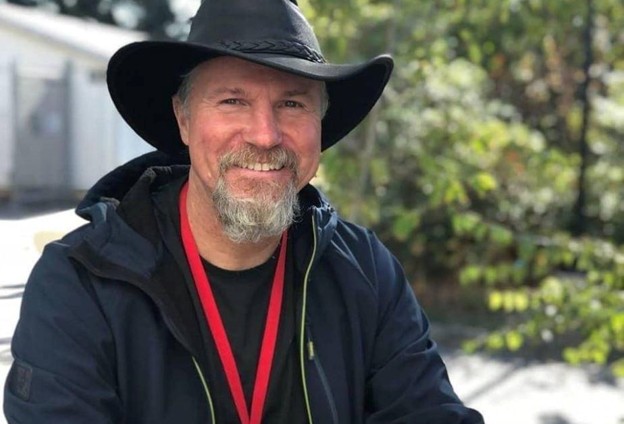
DONNIE MCPHEE: What I plant today isn't for me. It might be not even for my children, it's for my grandchildren, by the time they're seeing the real benefit, that fully developed, mature tree and everything it gives back to the community and to the ecosystem.
MEGAN LESLIE: Hello, and welcome to Good Nature. I'm your host, Megan Leslie. In each episode of this podcast, we talk to the people who give me hope for the future of nature and wildlife. Today's episode is part one of a little Good Nature miniseries. It's no secret that climate change is making extreme weather events like storms and heat waves more frequent, and the fallout from these events impacts every single person living in Canada. But there is also amazing work being done to use nature to help combat those issues, and I really wanted to spotlight that. So these two conversations are all about creative solutions to climate impacts. First, we'll talk about how forest restoration can help mitigate damage from flooding. Then in part two, we'll dive into the past decade of bigger and more intense wildfires and the growing movement to bring back Indigenous-led fire stewardship. Be sure to subscribe to the show so you don't miss out on that conversation. It's gonna be a great one. But for today, our guest is Donnie McPhee. Donnie spent his career at the National Tree Seed Center. Yeah, there's a National Tree Seed Center, and it's in Fredericton, New Brunswick, where Donnie devoted over 20 years to the mission of supporting forest restoration and fostering climate resilience. And these pursuits have become increasingly important as major floods become more frequent across Canada, especially on our East Coast. So let's get into it.
MEGAN LESLIE: Hello, Donnie. Welcome to Good Nature.
DONNIE MCPHEE: Good morning, Megan. Great to be here.
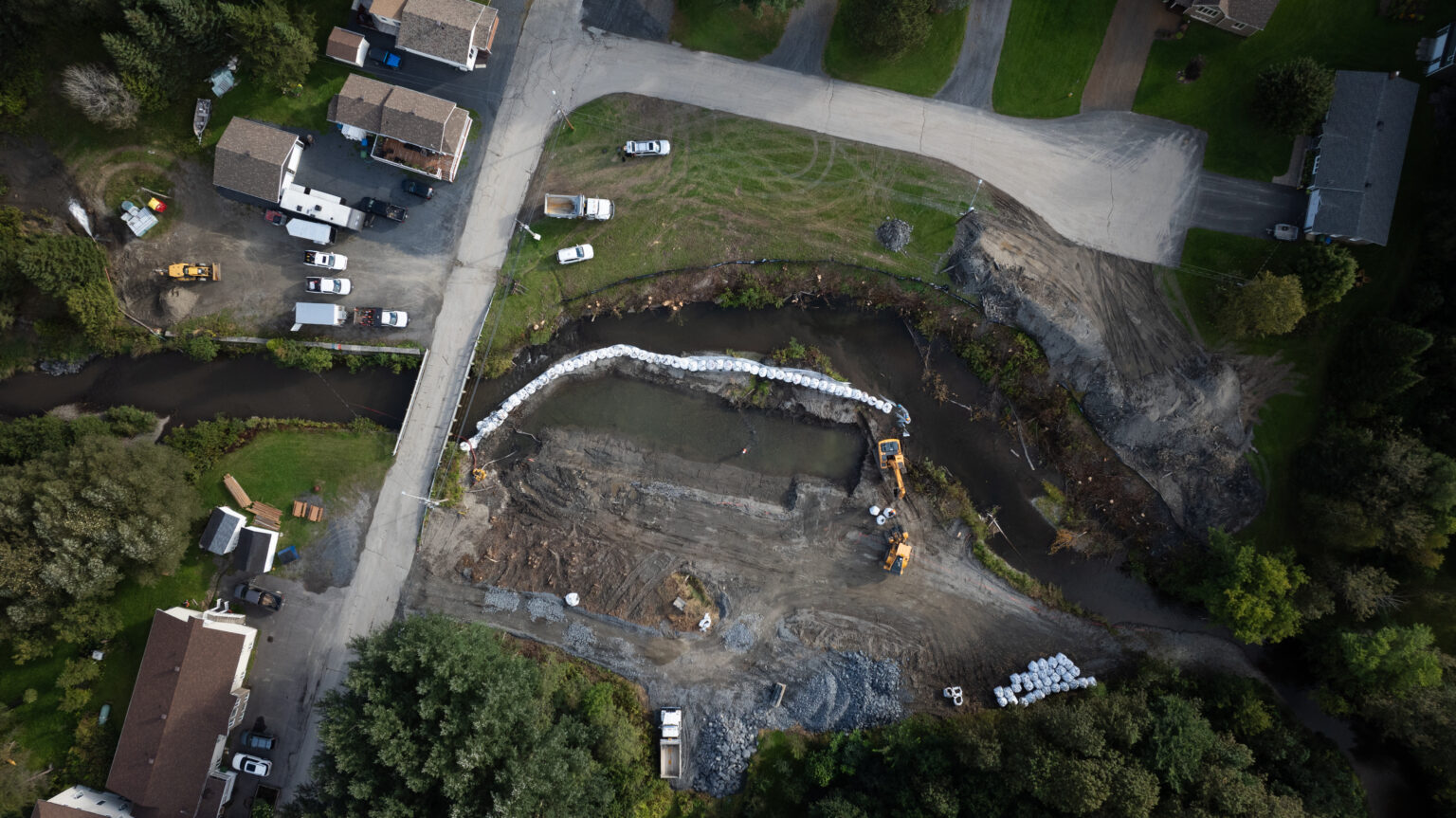
MEGAN LESLIE: Well, I wanna start with something that I think a lot of our audience can probably relate to, and that's flooding. Floods, as you know, they're becoming more and more frequent across Canada, and they can be devastating for people, but they can also be devastating for wildlife. And I think when most of us think about flood protection, we think of those man-made pieces of infrastructure like storm drains or levees and dams, that kind of stuff. But nature can play a significant role in flood protection, too. So can you start just by explaining the role of trees and forests in helping a landscape manage water?
DONNIE MCPHEE: Yeah. You know, I think when people, if they just stop and breathe a little bit and think about our natural environments and how they handled flooding throughout history, because flooding's always happened, but yes, it's increased a lot now, in recent times. And a lot has to do with just human development, like where do we like to live? Where do we like to put our cottages? Where do we like to recreate? And it's on these rivers and on these ocean fronts and stuff. And when we move into those areas, we tend to remove a lot of the natural environment that's there.
MEGAN LESLIE: Mm-hmm. And what happens if a landscape doesn't have sufficient trees, sufficient species to help manage a sudden influx of water?
DONNIE MCPHEE: Well, I think we see it on the news all the time, and that's where insurance agents and companies and stuff are losing their minds, and regulations are going in all the time about, well, no, you just can't build there, or if you do, you have to put up artificial barriers. But there are species here in New Brunswick that were once very common along our floodplains, but they were basically extirpated due to the high quality, the high value of those woods. But also due to just people needing or wanting where they existed. You know, those nice lake shores and river shores, so they clear cut, cut them all away.
MEGAN LESLIE: One species that you've talked about a lot in your work is the bur oak. And for those who may never have heard of it, like me, I have to admit, can you tell us a little bit about this really special tree?
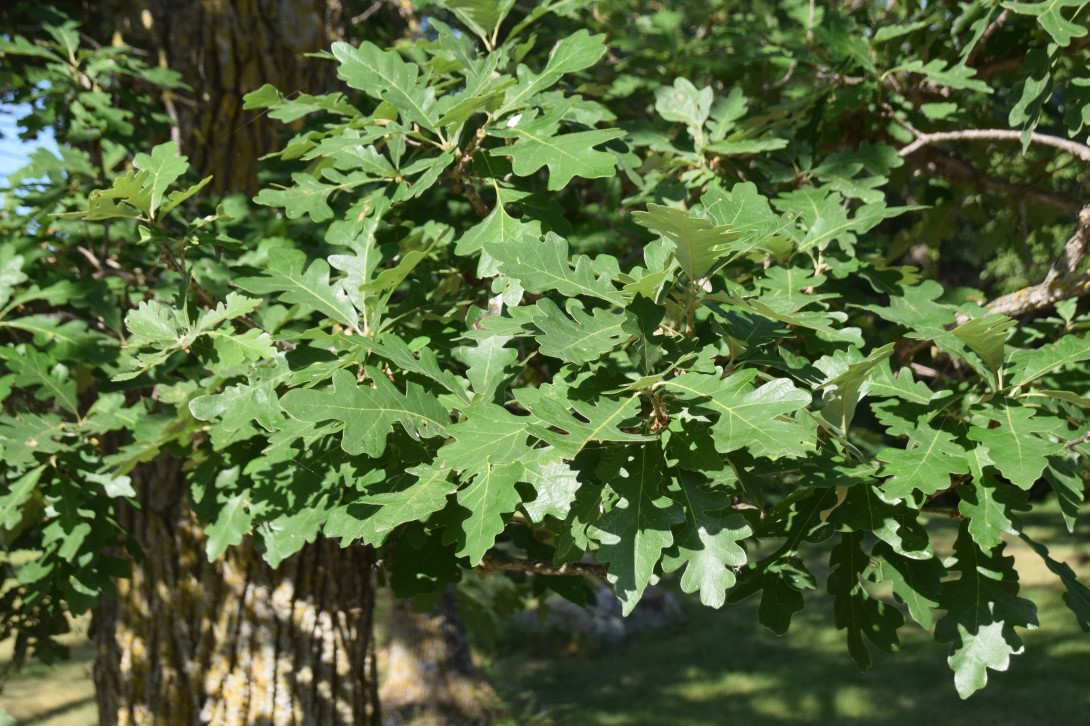
DONNIE MCPHEE: Yeah. So, it is the most widely distributed of the oaks in all of North America. So, if you're from Ontario or Quebec or Manitoba, you know the bur oak. It starts sort of in that pocket and it funnels all the way down into Texas. It's a large tree. It grows to 400 to 500 years old. There are remnant populations in New England and here in New Brunswick. So, I was fortunate. I actually did a large study on bur oak because, like, same with me, I didn't know anything about bur oak.
MEGAN LESLIE: Yeah, it’s just oak. Oak is oak!
DONNIE MCPHEE: It's an oak. And we had a grad student come from India to actually, she was very interested in oaks, and she got here, and unfortunately she was…where most of our bur oak in New Brunswick live or still exists are on pasture lands, and she was terrified of cattle.
MEGAN LESLIE: Oh no!
DONNIE MCPHEE: So she came to do this Master's program, and she couldn't do it. And I was sort of looking. I had already started a Master's in climate change stuff, but I was always interested in trees. And so I said, "Oh, that might be a project for me." So we kinda did a survey, and there were sort of seven to eight little pockets of bur oak left on the St. John, the Wolastoq River in the watershed, but very small. And when you started looking into it, it's like all the historic records show that it used to be very common from, you know, Perth-Andover, Grand Falls, or so, you know, a couple of hundred kilometers north of Fredericton all the way down to St. John. But those historic records show that in the early 1800s from this region, white oak, and that was bur oak, it's the only one we had here, was just shipped out. Like, it was more white oak shipped out of the St. John River Valley than any other species. But it only lasted for 10 years, and then it stopped. And it stopped not because the value went down, it's because we basically took everything. It only exists within 30 meters of our waterways on that narrow band. But where it was, it was there everywhere, but then it was taken away.
MEGAN LESLIE: Okay, so what is it about the bur oak? I mean, how is it related to floods and what are the repercussions of not having this bur oak landscape anymore?
DONNIE MCPHEE: Yeah, so when you think of some of the more common floodplain species we have, like silver maple, and I know a lot of people call it a weed here, but Manitoba maple, they're really shallow-rooted. And I actually had some bur oak growing. I'm growing them all the time, and I can sort of show you really quickly why they make such a great floodplain species. So this is a little seedling here. This is five weeks old. So I planted it. I put the acorn in the pot five weeks ago.
MEGAN LESLIE: Okay. Oh, that’s big!
DONNIE MCPHEE: Yeah, it grows really fast. But what you see grows fast. So this is another one. Unfortunately—I'm holding it up—a squirrel, I had it in my backyard and a squirrel nipped it off, and I was gonna throw it out.
MEGAN LESLIE: Ugh, squirrels!
DONNIE MCPHEE: I said, "Oh, I had this talk coming up. This might be..." So this is what was above ground. This is what was below.
MEGAN LESLIE: Oh, it's like, twice as long. Oh my gosh, it's three times as long!
DONNIE MCPHEE: Almost three times. So bur oak, they grow really fast, and most of their energy goes straight down into the ground. So in one year, you might see a 30-centimetre seedling above, and you could have a three-metre taproot driving straight into the ground. So super resilient that way.
MEGAN LESLIE: Wow. And just absorbing.
DONNIE MCPHEE: Absorbing, absolutely. The other really cool thing about bur oak is they coppice really well, and that means if an ice floe, so if you have bur oak seedlings and ice comes down the river and it cuts off the top of the tree, you have all that root system supporting, and it'll send up another shoot, another shoot, another shoot, and it'll do that for years. And finally, it'll get that one good year, and by then you've got this huge root system just, you know, absorbing nutrients and moisture, looking for somewhere to go, and it'll pop up a shoot and it'll skyrocket. So they're really neat that way.
MEGAN LESLIE: And just absorbing those floodwaters. This is not bur oak, but someone once told me that a healthy silver maple can absorb 200 litres of water per hour. That sounds to me, just intuitively, like that has gotta be better than a drainage portal or a culvert.
DONNIE MCPHEE: Absolutely. Yeah, and bur oak would be very similar with that. And the other nice thing with bur oak is that, where silver maple sometimes are susceptible to, like, with climate change coming and things are drying, their root systems are along the surface, and they're sucking up water hard. But if you get super long periods of drought, that can negatively affect silver maple a bit. But with bur oak, where they have their taproot so far underground, they can withstand long, long periods, years of heavy drought and still persist.
MEGAN LESLIE: Okay, so, it’s clearly a super tree. So I wanna know, what are conservationists doing to try and bring the bur oak back?
DONNIE MCPHEE: So there's a group that formed in New Brunswick back in around 2016, and we called ourselves BORT, the Burr Oak Restoration Team. And it was nothing official, but it was basically, there were actually members from WWF, ECCC, Nature Trust, Nature Conservancy, the watershed groups, a couple of the Wolastoq First Nation communities, just people who I'd been talking with through my work on bur oak or had read about it, and we said, "Well, what can we do?" So we started to come up with a strategy. And we're still kind of working on it all the time. But the nice part is just by talking about it, a lot of communities, a lot of organizations, the city of Fredericton, the city of St. John, they're all starting to plant it just because people are talking about it. So it's kind of one of those weird things. We formed this group, we're gonna form this conservation strategy, but when I walk around now, like along our floodplains, I'm seeing little bur oak seedlings everywhere, and that's because 20 years ago, through my work with CFS and bur oak, we planted about 30,000 bur oak through different forest initiative programs. And a lot of those didn't survive. And that's one thing, when you're dealing with planting on the floodplain, you have to understand that you might get 10% survival. But those 10% that grow, they put out thousands and hundreds of thousands of seeds, acorns, every year, and that's your nursery for your developing going along.
MEGAN LESLIE: Right. Well, thanks for sharing about how people just sort of came together and now you're hearing people talk about it because I was wondering, we are not just seeing reports in the news of climate change impacts, but we're experiencing it, and I wondered if that was leading to more interest in the ways that forest restoration can help. Sounds like it is in New Brunswick.
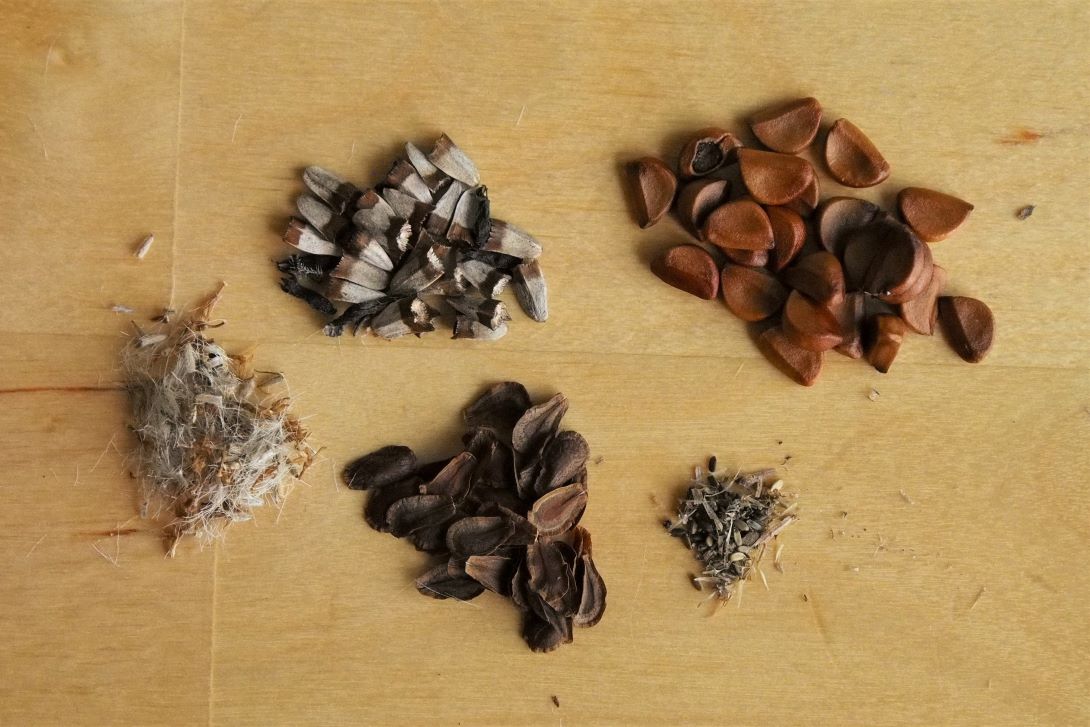
DONNIE MCPHEE: I really feel it is. I mean, all of our watershed groups, our First Nations communities along the Wolastoq River and stuff there. And then the nice part is, one of the issues with bur oak and any of the oak is the seed doesn't store. So what falls from the tree this year, like, at the National Tree Seed Centre, for almost all species, we can collect that seed, store it for future use. But with the white oaks, they really don't store. So what you collect this year, you have to grow next year. So if you didn't have a seed crop this year in New Brunswick and you wanted to grow seed next year, a lot of times what would happen is people would go to Ontario or somewhere else and start importing seed or seedlings from that area.
MEGAN LESLIE: And it’s not the same area.
DONNIE MCPHEE: Something that's really exciting for me is, like, the City of Fredericton is now growing. So all the trees the City of Fredericton wants to grow within the city and its limits, they now have their own nursery, and that just came online two years ago. Woodstock First Nation, they just put in their own nursery because they want to be growing seedlings for all of the communities along the Wolastoq Bay. Mactaquac Provincial Park, they just put in their own nursery because, same thing, they want to grow their own for their own. So they're going to be growing seedlings for all the parks, and all of them are very interested in bur oak, which is great. So, you know, we've been out there collecting every fall and then providing seed to those organizations so they have local seed sources.
MEGAN LESLIE: Okay, I'm so glad that we're talking about seeds, because I really want to get into this. I think that if someone stops and thinks about restoration, they think about, well, you start with planting a tree, but that is not the beginning.
DONNIE MCPHEE: Not at all.
MEGAN LESLIE: And your work at the National Tree Seed Centre starts way before that. You're telling us a bit about who's out there collecting and conserving tree seeds. Why is this such an important part of restoring ecosystems?
DONNIE MCPHEE: So in our educational systems, our traditional Western educational systems, most forestry students, they believe, just like you said, that a tree is a tree, and we don't teach in any of those systems or any of our educational systems about seed collection.
MEGAN LESLIE: Really?
DONNIE MCPHEE: Really. Because, in Canada, we plant about 600 million trees a year in Canada. Of those 600 million, about 595 million are of six species. Those are conifer species used for forest industry. So, the other five million, those mainly go to urban centers, like, they're your Walmart trees or your local nursery trees, but still a very low percentage of them are hardwoods. So, for forest industry, they understand the importance of forest genetics. So they're not just collecting seeds from anywhere, planting it anywhere. They have seed orchards. So basically, historically, they've gone out, collected seed from the biggest, tallest, straightest trees, the ones that a forest industry would want, and that's what they plant out. Now, it's very regulated, and they are using the right genotypes, the right genetics for the right areas, because if they don't, it costs them money.
DONNIE MCPHEE: However, when Canada announced its 2 billion tree program, all of a sudden we were saying, we're gonna plant 2 billion trees, and they weren't gonna be for forest industry. That really stimulated, well, where's all the seed gonna come from? And as soon as we heard about the program, in my role as the coordinator for the National Seed Centre, I started calling Ottawa. It's like, "We don't have the seed. The seed is not there." So we were very fortunate where, with the Seed Centre, we received some funding through that program, and we started traveling the country and looking for willing and able and understanding partners, and a lot of that partnership was developed with First Nations communities across the country. We ran 50 in-the-field training sessions with Indigenous communities hitting every province, every territory, except for Nunavut. And then we also hosted 14 sessions where communities came, members came to Fredericton, and we would host six to eight communities. And we try to do it so you'd have community members from coast to coast at the same session so that they would get to meet each other and get to knowledge share. Yeah, so we hosted 14 of them as well, and that was all about how do you collect seed? How do you process seed? And then, one of the things with our Indigenous Seed Collection Program, and I was at the Convention of Forest Biodiversity in Montreal in 2022, and I did a presentation, and the first question I got was from a young Indigenous woman. She said, "Well, why's a white man up on stage talking about seed collecting?" Now, I was very lucky, because my staff and my manager, who is Indigenous, were all there, and they jumped up to my defense. Because one of the first things when we started this program is we hired an Indigenous woman, Mary Knockwood. She's from Fort Foley First Nation here. She's our program manager. And again, I kind of had this vision of this program as the coordinator for the Seed Centre, but I can't go out and meet with communities and tell them what's good for them. So the second question I got at the Convention of Forest Biodiversity was, "Well, how come we’ve never heard of you?" And it's like, "Well, that's why I'm here."
MEGAN LESLIE: That’s why I'm here!
DONNIE MCPHEE: The last thing we want to do was be, you know, another white researcher knocking on a community's door saying, "Hey, do I have a program for you!" What we really wanted to do is, working through organizations, you know, such as WWF, such as ECCC, such as Nature Conservancy of Canada, letting them spread the word and then have communities approach us, and that's what we've been really fortunate to do. So I think it's close to ninety communities across Canada that we've been working with. Well, they didn't wanna be bringing in seed from thousands of kilometres away to restore their lands. They wanted to have their seeds conserved, so if something happened to their lands, they could use that seed to come back to their properties. So that's one of the things the National Tree Seed Centre is currently doing for these communities. The Seed Centre doesn't own the seed. It's owned by the communities, but they're just storing it for the community, so if something ever happens, it's there to go back.
MEGAN LESLIE: That's amazing. So what's different when Indigenous communities are leading the charge in this work? Does the work of seed collection and forest restoration benefit differently? What's different with Indigenous leadership?
DONNIE MCPHEE: I think one of the big differences is that, and I'm not, like, you know, I'm a white guy. I think like a white guy, I'm sure, and unfortunately, we tend to think about tomorrow. Whereas with Indigenous communities, they sort of are thinking of generations down the road.
MEGAN LESLIE: Oh, yeah. Yeah.
DONNIE MCPHEE: It's not just for me, it's down the road. And when you're dealing with forestry and planting trees, you have to think that way because what I plant today isn't for me. It might be not even for my children, it's for my grandchildren by the time they're seeing the real benefit, you know, that fully developed, mature tree and everything it gives back to the community and to the ecosystem.
MEGAN LESLIE: Thanks for sharing that. And thanks for being so open to learning so that you can share stories like that. Now, when... So I'm at the World Wildlife Fund, wildlife is our middle name, and I think that when people think of species at risk or threatened species, I'm gonna be honest, I think of wildlife, certain turtles or the beluga or the sage grouse. And I wonder, is preventing a plant species from disappearing, is that similar or different from an approach you'd take with wildlife?
DONNIE MCPHEE: So in Canada, we have about 240 species of trees that are native here. A lot more than people think.
MEGAN LESLIE: Wow. Okay, yeah.
DONNIE MCPHEE: About a quarter of those are currently under threat. They're not listed as endangered, but they're under threat. So, you know, some of your listeners might have heard hemlock woolly adelgid. It's wiping out the hemlock in the East.
MEGAN LESLIE: Yes. On the East Coast.
DONNIE MCPHEE: It’s wiping out ash. Butternut canker, so we're losing our butternut. Actually, New Brunswick is the only place left globally that has healthy populations of butternut, because butternut is basically being wiped out of the US. I mean, there are remnant trees here and there, but it's a fungal disease. You know, you’ve got mountain pine beetle. You have all these different things going on. Beech bark disease. Dutch elm disease. They’re everywhere. But one of the things we always get is that when a species hits the endangered, like it's met the criteria for endangered, it's almost too late for a conservation strategy, because you need that genetic diversity, and I'm sure it's the same with wildlife. You know, we think of the cheetah, you know, the prime example when you're talking about lack of genetic diversity within a species. The white rhino, any of those. Well, you know, you can start bringing things back when they're at a very small number, but you're gonna run into genetic complications down the road just because the diversity isn't there to withstand diseases and changes. It's the same with tree species.
MEGAN LESLIE: That's interesting because I thought, you know, seeds are seeds. It's gonna be fine. We'll have more trees. But that's really interesting.
DONNIE MCPHEE: The real cool thing is though, you know, with wildlife, unfortunately, sometimes you're relying on zoos or on enclosed areas to protect those few wildlife. But with seed and trees, you can store seed, so that's sort of the work of the National Tree Seed Centre. You know, they have 200 and some different species of trees and shrubs in storage and working to have more. But that seed can be stored almost indefinitely if they are collected at the right time, when they're mature, they're handled, dried down, and then stored under the proper conditions.
MEGAN LESLIE: Okay, so you and I are talking about how we can actually deal with some of these tree species that are at-risk, but hey, let's get to the root cause here. What do you think Canada should be doing differently when it comes to at-risk trees?
DONNIE MCPHEE: It’s such a tough question, and, you know, I can give an example of, I've done a lot of work with beech bark disease. So beech bark disease is a disease that came in through the port in Halifax back in the early 1900s, late 1800s.
MEGAN LESLIE: Oh, through the port? Okay.
DONNIE MCPHEE: And it’s slowly working its way across the country. That disease now is just hitting Ontario. So I've been asked, "Okay, what's the work you've done in the Maritimes for disease resistance?" Because there is resistance, but the problem coming up from the US, there's another. There's a nematode that's affecting, and it's beech wilt. And then there's another beech weevil that's come in. So our biggest problem is time when you're dealing with all of these species. Because I truly believe that nature will work things out, but just not on our individual timelines. And sometimes we just have to protect enough of the genetics that are there in natural habitats, protecting those ecosystems. And yep, we might lose 95% due to a disease or due to something that comes through, but there is resistance in almost all cases, there is natural resistance in those forests and in those ecosystems. It just might take hundreds of years, thousands of years before the forests recover to how we perceive or want to perceive them to be.
MEGAN LESLIE: Donnie, this has been a really great conversation, and I've loved learning about your work and your experiences. I gotta know, what motivated you to dedicate yourself to the future of healthy forests in Canada?
DONNIE MCPHEE: I don't know if it was motivated. I think I've always been someone that's open to like…I'm retired, and I told my wife, "In my retirement, if my kids ask me to do anything, I'm doing it. I don't care what it is." So, you know, here I am, 60 years. I just started mountain biking.
MEGAN LESLIE: Good for you. Of course.
DONNIE MCPHEE: I just started alpine touring skiing because that's what my kids wanna do, and, and I'm gonna do it. But I've kind of had that view, I think, throughout my whole life. So I grew up in Cape Breton, and one of the things in Cape Breton, and I didn't realize this until later, was that I grew up with looking for connections with people. So the old saying, "What's your father's name?" That's about looking for connections. It's not about who's your father. It's like, can I find something in common with you so we can connect? And somehow I think that has translated to how I view when I'm walking in the woods. I'm looking to connect. I'm looking for commonalities. I'm looking for, you know, things and that just sort of embedded in me and here I am.
MEGAN LESLIE: You're making me tear up. That's really beautiful. Well thank you. And I know that you have listened or watched the podcast before, so you know what's coming next.
DONNIE MCPHEE: Here it comes.
MEGAN LESLIE: Here it comes, because on this show, we end every interview with a lightning round series of questions called The Trail Mix, and we're gonna put this trail through a beautiful forest, so, a beautiful, healthy forest. So I'm gonna ask you some quick questions, and you're gonna give me quick answers. Are you ready?
DONNIE MCPHEE: I hope so.
MEGAN LESLIE: As ready as you can be, I know.
MEGAN LESLIE: Okay, easy one to start off. What's your favorite fun fact about trees?
DONNIE MCPHEE: They will be here way longer than me, and they will see and experience way more than I ever could hope to.
MEGAN LESLIE: Beautiful. Okay, Donnie. All trees are special but what is the most iconic Canadian tree species?
DONNIE MCPHEE: Yeah, I mean, I have to go with sugar maple.
MEGAN LESLIE: Okay!
DONNIE MCPHEE: I think. I mean, it's on our flag. It's, sort of... I think, when I'm traveling, sugar maple is the, you know, the maple tree is sort of Canada’s tree.
MEGAN LESLIE: it's pretty iconic. Yeah, for sure. Okay then, well, if you were a tree, what tree would you be, and would it be the bur oak?
DONNIE MCPHEE: I would have to say yes. I’m, yeah, like, it's funny. You don't know sometimes if you are it or it is you. But, for me, I associate with a bur oak. When I see one, I didn't know what one was until I was in my mid-20s. Never even knew. But once I saw a bur oak, man, I have bur oak eyes. Like, if I'm anywhere in the world, I'm looking for bur oak.
MEGAN LESLIE: Amazing. With ybur oak eyes, what is the favorite forest that you have ever visited?
DONNIE MCPHEE: Wow. Well, I just came back from a trip to Mexico, and it wasn't your typical. It was a hiking trip with a fellow researcher, Carlos Ramirez, who's a forest tree biologist, conservation guy, and he took me to the high mountains. And we were in a forest. Actually, in the background, those two pine cones you see behind me on the mantle, those are from Pinus maximartinezii. And it's an ancient pine species, extremely rare, one of the rarest tree species in the world. We were in that habitat, and it blew me away, like, just being there. The Garry oak ecosystem out in Victoria and Vancouver is pretty cool as well.
MEGAN LESLIE: Yeah, we got some good ones here in Canada for sure. And Donnie, what's one thing that everyone can do to protect our trees and forests?
DONNIE MCPHEE: I think protection first comes from acceptance and understanding what it's given to you. And, you know, I've hired a lot of students at the Canadian Forest Service over the years, and it always surprised me, some students, when I'd say, I'd ask a question like, "Do you get out in nature?" And so many students, "Yes, I walk from the library to my residence, and I go through the little patch of woods here." And it's like, it's hard to have connection to something unless you get out and experience it. So I think before I can start asking people to protect, I have to ask people to connect. And I think just getting out in our forests, in a real forest, you know, get out to our national parks, our provincial parks, our conservation areas, and experience them. And then I think the protection and that need to protect, it's just innate. It's gonna happen.
MEGAN LESLIE: That is great advice. Thank you so much for this conversation, and thanks for joining us on Good Nature.
DONNIE MCPHEE: No, I really appreciate the opportunity, Megan. It's so nice to meet you.
MEGAN LESLIE: In the world of nature and conservation, there are a lot of misconceptions flying around. So today, I'm gonna use the orca phone to call up one of my WWF-Canada colleagues, and we're gonna bust one of those pesky nature myths. Today’s guest, he's in our Toronto office, and it's Cathal Doherty, our soil specialist at WWF-Canada. Let's see what he has to say. Hey, Cathal, what myth are we busting today?
CATHAL DOHERTY: Good afternoon, Megan. I wanna push back on one of the most persistent myths about the natural world.
MEGAN LESLIE: What is it?
CATHAL DOHERTY: Swamps, wetlands, marshes are thought of as gloomy, unproductive wastelands.
MEGAN LESLIE: Yes.
CATHAL DOHERTY: And I want to push back on that myth.
MEGAN LESLIE: Push away, push away. Tell me about it.
CATHAL DOHERTY: Okay. So for a little bit of context, this perception runs deep.
MEGAN LESLIE: Yeah.
CATHAL DOHERTY: Throughout different cultures, wetlands are often seen as these eerie, kind of dark places. You have the will-o'-wisp, those flickering lights that are leading people to darkness. Like spooky. Lord of the Rings fans, you have the Dead Marshes, you know, those...one of the most terrifying scenes in the entire trilogy. And unfortunately, that fear shifted in around the year 1850 into something of a bit of an annoyance. So then swamps started becoming different words like dismal. The “great dismal swamps” started being used to describe these different wetland areas. And from 1850, they started becoming drained and transferred into non-wetland systems. And I think that had not only an impact on the local environment, but globally, the amount of carbon that released and the amount of impact that had on the hydrology in these environments.
MEGAN LESLIE: So carbon being released from the bog.
CATHAL DOHERTY: Yeah, because when you drain these wetland areas, what you're doing is that water was keeping a lot of the carbon in the ecosystem. So when you remove the water and you remove all the soil, all of that living, breathing soil is going to release all that CO2 back into the atmosphere. And I think, and I have to give kudos to Shrek because Shrek is a hero of the swamp and he makes it…
MEGAN LESLIE: Wasn’t expecting that. Yeah!
CATHAL DOHERTY: And this is a story that was a myth, but I really think the story is changing around here. And Shrek is an example where he's the hero born of the swamp. His family moves back into the swamp. It's a place of birth. It's a place of life. And I really think that we're now seeing swamps as they are, these beautiful, biodiverse, rich areas. And we're really starting. The Ramsar Convention on Wetlands and all these different amazing things we're doing on the ground is really turning that myth on its head.
MEGAN LESLIE: I love it. I will look at swamps differently for sure. Thanks so much for busting that myth.
CATHAL DOHERTY: Thank you.
MEGAN LESLIE: Thanks again to today's guests, Donnie McPhee and Cathal Doherty, and thank you for joining us on Good Nature. You can stay up to date on Good Nature and all things WWF-Canada by signing up for our newsletter, Living Planet News. And if you have any thoughts on the show, ideas for episodes, or questions to share, please leave a comment or email us at goodnature@wwfcanada.org. And we'll see you next time.