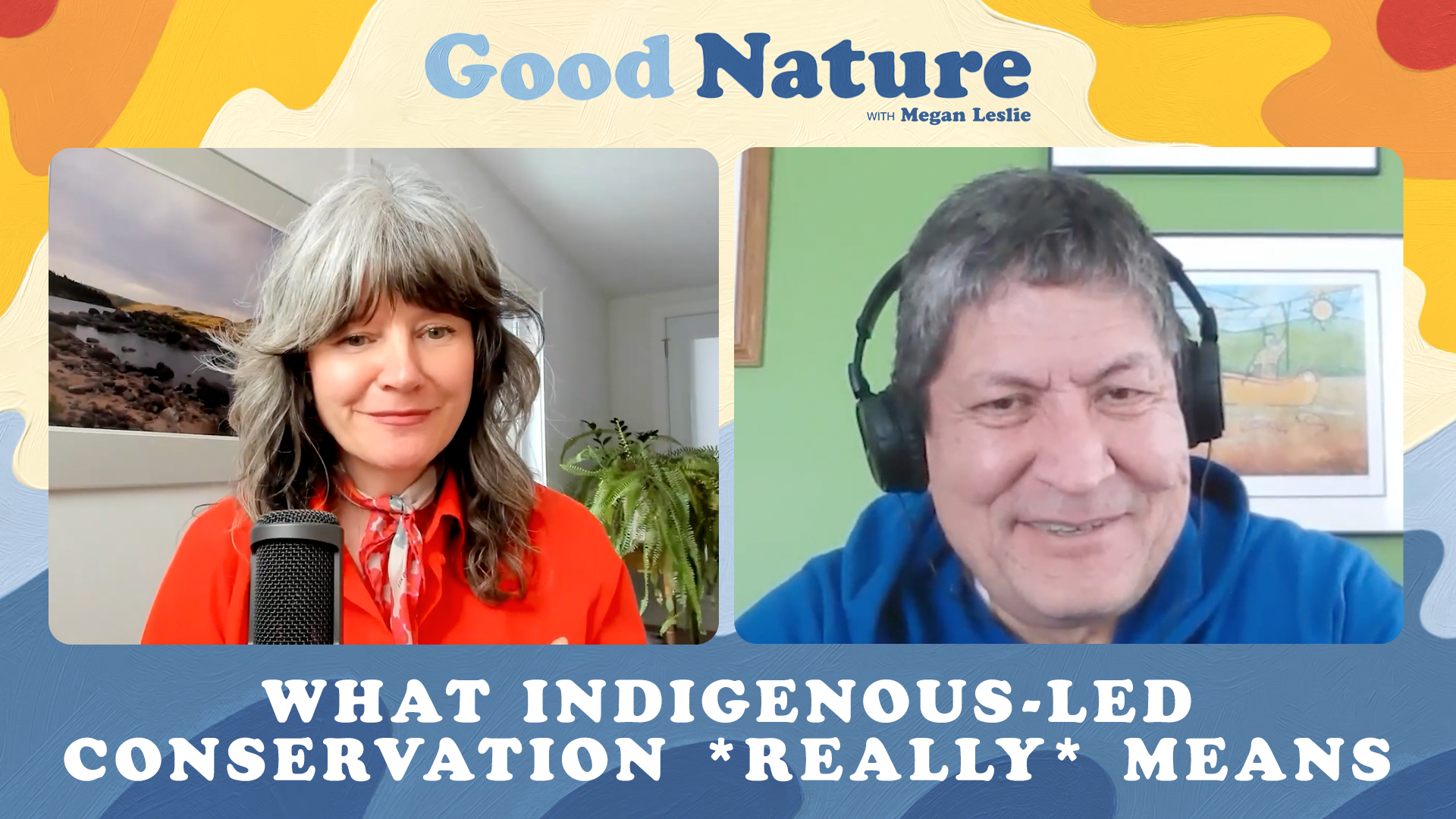


‘IF INDIGENOUS COMMUNITIES THRIVE, WE ALL BENEFIT’
How Indigenous communities in Canada are already implementing the Global Biodiversity Framework
Read More
April 9, 2026

Episode 2

34 min
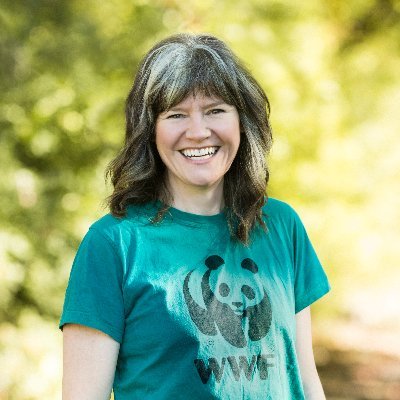
President & Chief Executive Officer - WWF Canada
Listen on


What happens when we approach nature with responsibility, not extraction?
It’s more than just ecosystems that benefit: Wolastoqey First Nation at Neqotkuk member and Indigenous rights advocate Ken Paul talks about how restoring lands and waters is also a way to restore relationships across time and place.

“If all Indigenous coastal communities were empowered to take care of the waters and their lands, if they were resourced properly, if they had good partnerships, it would build this quilt of positiveness up and down the coasts…Whenever Indigenous communities are empowered, the broader society benefits.” – Ken Paul
Megan sits down with Ken Paul, a member of Wolastoqey First Nation at Neqotkuk and a longtime leader in fisheries and oceans governance, about what Indigenous-led conservation really means. Ken explains why conservation can’t just be understood as a program or a policy, but rather a responsibility rooted in relationships with land, water and future generations. From Indigenous Protected and Conserved Areas (IPCAs) to the concept of Two-Eyed Seeing, the conversation questions extractive approaches to nature and knowledge, instead exploring how Indigenous leadership can guide more ethical, effective conservation.
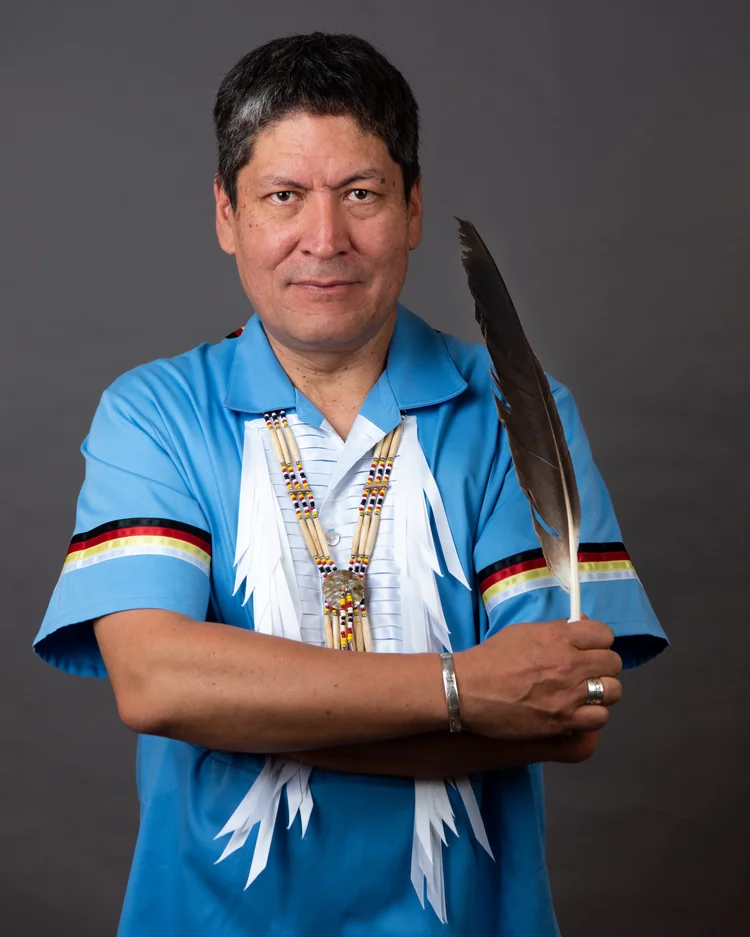
Ken Paul
Principle/owner of Pokiok Associates
Ken Paul is a member of the Wolastoqey Nation at Neqotkuk, located in the community of Tobique First Nation in N.B. He has advocated for First Nations and Indigenous Peoples regionally, nationally and internationally on all aspects relating to fisheries, aquaculture, ocean protection, economic prosperity and governance as they relate to inherent Aboriginal and treaty-protected rights, legislation and policy.
Megan Leslie
President and CEO of World Wildlife Fund Canada
Megan Leslie is President and CEO of World Wildlife Fund Canada. Since taking on this role, Megan has led WWF-Canada’s bold 10-year plan to Regenerate Canada by expanding habitats, reducing carbon in the atmosphere, lowering industrial impacts and, as a result, reversing wildlife loss and fighting climate change. She is also passionate about engaging Canadians to take action for nature.
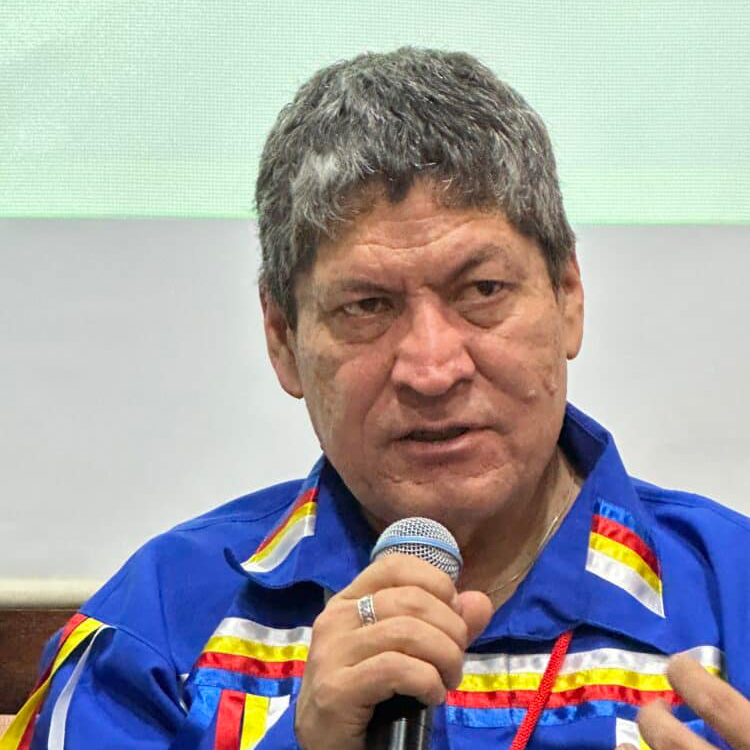
How Indigenous communities in Canada are already implementing the Global Biodiversity Framework
Read More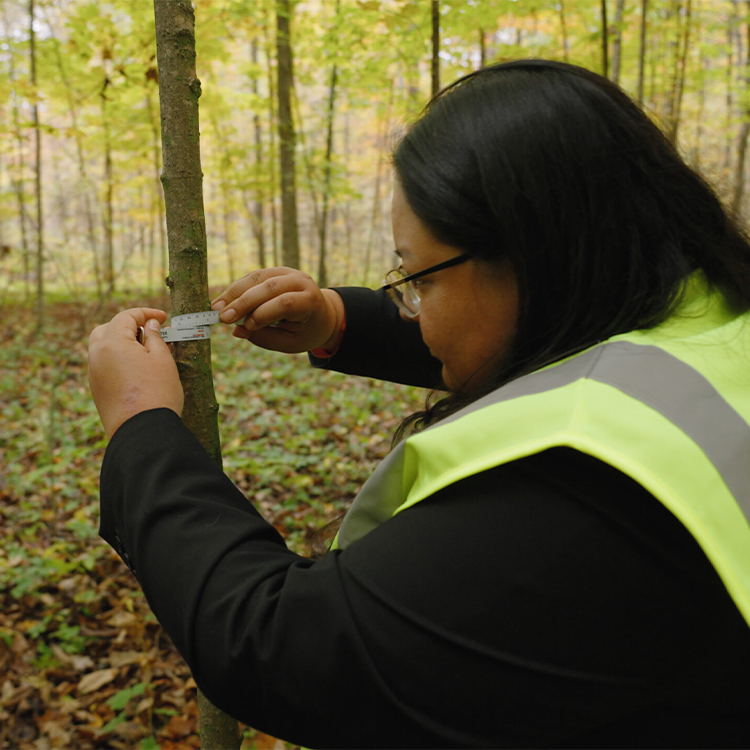
How a cornerstone of our 10-year strategic plan is taking shape through partnerships across the country
Read More
Kianna Bear-Hetherington (Wolastoquey Nation) on future of the Wolastoq
Read MoreMEGAN LESLIE: Hello, and welcome to Good Nature. I'm your host, Megan Leslie. In each episode of this podcast, we talk to the people who give me hope about the future of the natural world. And today's guest is Ken Paul, a member of the Wolastoqey First Nation at Neqotkuk in New Brunswick. And he has spent his whole career advocating on behalf of First Nations, Inuit and Métis across Canada. I met Ken back in the early aughts when I was doing marine conservation work in Nova Scotia, and I really admired his ability to open up the complexities of Indigenous-led conservation in a way that was compelling and accessible. He's joining us today to talk about Indigenous Protected and Conserved Areas, his own journey into advocacy, and the power of two-eyed seeing. But before we talk to Ken, it's time for one of my wonderful WWF-Canada colleagues to tell me something good.
MEGAN LESLIE: It's time for a segment we call Tell Me Something Good. Now it can be hard to stay hopeful these days, so I wanna call up some of my amazing WWF Canada colleagues about the things happening in their world that give them hope for the future. Today, I'm using our trusty orca phone to call our Toronto office and chat with Kathy Nguyen, WWF's Canada's Community Engagement Specialist. Let's see what she has to share with us. Hey Kathy, tell me something good!
KATHY NGUYEN: Megan! I'm so happy to talk to you today. Love, love the phone.
MEGAN LESLIE: Pretty great, eh?
KATHY NGUYEN: And you might need some tissues for what I'm about to tell you. Good things, amazing things from our youth all across Canada.
MEGAN LESLIE: Okay, not crying things for sadness, crying for good. Great. I'm ready. I am ready.
KATHY NGUYEN: We're ready to cry for good. We have this amazing program, Go Wild Grants, where we're able to allow for students to bring their amazing ideas forward. Students are all across Canada coming up with incredible ideas for how to welcome wildlife to their schools, how to create habitat, and with this Go Wild Grant funding, they're able to bring those amazing projects to life.
MEGAN LESLIE: Love it.
KATHY NGUYEN: So we have all these great stories from students who are telling us what the impact has been for them and I can't wait to share one story in particular.
MEGAN LESLIE: Please do. I want to hear it!
KATHY NGUYEN: Yeah? Okay, I'm going to take you to Brockville. I've got letters from the students. So if we go to Brockville, Brockville, Ontario, there is an amazing school in Brockville, Ontario who has created the most amazing garden. All the grades from K to 4 got together. They planned out exactly what plants they're supposed to plant, where in the schoolyard could really welcome habitat and help it to thrive. They really buddied up and made this happen. They installed the garden beds and transplanted all of the plants. And on top of all of that, on top of creating this amazing habitat, they also were looking at how are they thinking about Indigenous perspectives, as well. That's such an important part of conservation. And for a youth that are in grades K all the way to 4 to be thinking about that? That's so inspiring.
MEGAN LESLIE: Yeah. It is.
KATHY NGUYEN: So they created a land acknowledgement. They made their own. And I'd love to give you a bit of a teaser about it.
MEGAN LESLIE: Please do.
KATHY NGUYEN: Okay. “Today and every day, students at Vanier Public School gather on traditional Haudenosaunee land. We are grateful to gather here. We're so grateful for the earth under our feet, The air here, it clears our minds. The sounds of nature, it calms our hearts. And the fields help our bodies grow strong. Our school community recognizes that we're part of a story that came before us and we will share our knowledge with younger students so they too can live the story forward for us. After seasons of loss, of trees, of connection, we now keep seeds and seedlings like promises. Guided by Haudenosaunee knowledge keepers and caring mentors in our community, we are slowly replanting not just a tiny forest, but a relationship.” How are they writing this?!
MEGAN LESLIE: Oh my gosh.
KATHY NGUYEN: “We are learning to take care of Turtle Island and we promise our stewardship of this land is a practice, not just a project.”
MEGAN LESLIE: Wow.
KATHY NGUYEN: Incredible.
MEGAN LESLIE: That is, you're right, about the good tears. And that's really something good. Thank you, Kathy.
MEGAN LESLIE: Today's guest is Ken Paul. He's a member of Wolastoqey First Nation at Neqotkuk in New Brunswick, and he's a Member of the Advisory Board for WWF-Canada's Indigenous Protected and Conserved Area Support Fund. He’s spent over 20 years advocating for First Nations chiefs regionally, nationally and internationally on all things fisheries and oceans governance, most recently through his company, Pokiok Associates. Ken Paul!
KEN PAUL: Aw, hi.
MEGAN LESLIE: It's so good to see you.
KEN PAUL: It's so good to see you, too.
MEGAN LESLIE: And I spy a little panda. You're representing us today.
KEN PAUL: Oh, yes, yes!
MEGAN LESLIE: Thank you. It looks great.
KEN PAUL: It's a cool design!
MEGAN LESLIE: Well, thank you. You are such a friend to WWF-Canada. Where, by the way, where are you today?
KEN PAUL: I'm home, in my home in Neqotkuk. It's very snowy today. It's very quiet out there, very calm, but there's a lot of snow.
MEGAN LESLIE: I am in Ottawa. There is also a lot of snow. It has been a snowy winter. Ken, let's get into it. Now, if someone signs up for a WWF email or if they follow us on social media, they're going to learn that we talk about Indigenous-led conservation a lot. And that's really what I want to explore with you today. So to get our conversation going, let’s kind of start at the beginning. What exactly is Indigenous-led conservation?
KEN PAUL: Well, Indigenous-led conservation, it's not simply an activity or an initiative or any kind of like something you can wrap a program around. It really goes back to the core values that Indigenous peoples all over the Americas have where it's this reciprocal responsibility that we have to the lands and waters of our homelands, of our ancestors. And it's a way of guiding our activities and it really influences our decision-making on a day-to-day basis, on a long-term planning basis. The big thing that I think mainstream society really doesn't quite understand, even if they might've heard about it, is this thing about the relationship with the land and the waters. And I think it goes back to this core belief that, for Indigenous peoples, we don't believe in general, in our traditional beliefs, in monotheism, where there's one God, or even really polytheism, where there is multiple gods. We believe in something, I guess you can sort of describe it as “omnitheism,” where everything is, has a spirit. And if we go into the understanding with that, then we understand that we have a relationship with all living beings and we have responsibility. It really means allowing and respecting, like, all of the rights-based aspects of Indigenous peoples, but empowering the communities to actually take the lead on project developments, on land use, on water use, on how water resources are used, or who benefits from them. You know, it's just a... It's really all couched in responsibilities. And we know that these kind of things take time, they take investment. Indigenous peoples don't have the immediate answer for all the world's problems, which, you know, a lot of people…
MEGAN LESLIE: I wish!
KEN PAUL: Yeah, I wish too! You know, although in a sense, I think there's a, that would be a lot of responsibility put on Indigenous peoples. But I believe Indigenous approaches towards things such as protected areas will have longer term impacts for environmental protection and sustainability, as well as figure out the place for human beings in that world.
MEGAN LESLIE: Yeah, it's really an approach. I love how you describe that reciprocity, maybe versus what we often see around nature is extraction. What can we extract here?
KEN PAUL: Yeah, these are resources to fill our society. These, but we don't. Indigenous peoples generally don't look at things that way. They understand that these are relatives and you know, even the simple acts where Indigenous peoples like, if I go hunting with someone or fishing with someone, we'll lay tobacco. Either on the ground or on the water as an acknowledgement that we are going to be taking the life of another living being to sustain ourselves. So we are honouring that spirit by trying to give something back. And tobacco as a sacred medicine is a way of doing that. And because if you don't, if you start taking that stuff for granted, then the Creator will stop providing that stuff for you.
MEGAN LESLIE: We're seeing that. Ken, is there a particular experience you had that got you involved in this work? How did you get involved in this?
KEN PAUL: Well, it was probably, mostly by accident. You know, when I went through my early days at high school and university, I was math minded, analytically minded, and I just took science courses and got a Bachelor of Science with a math major. Not really understanding what, like, really where my career was going, because, you know, when you're 22, 23 years old, like really, who knows where you're going to be, right? But somebody had approached me and brought me onto a survey vessel to do hydrographic surveys of the ocean floor for a summer, and then a summer job in Newfoundland. And I realized that, well, first of all, that was a career, but the importance of really the ocean on our land-based economies, our societies, and the Hydrographic Service, the mandate was to create maps so that ships would not run aground. So it was a safety aspect and I was dedicated to the cause. But seven years into that career, as my first career job, that's when the Marshall Decision came down in 1999. But at the time, because I was this engineer that worked with the Hydrographic Service making maps, which was a technical branch of the Department of Fisheries and Oceans, people started looking around and I tell people, it's like, overnight, I literally went from that engineer that works for DFO to that Indian that works for DFO. And I was being approached at water coolers. Conversations would stop when I would go to the cafeteria to get my coffee. And I realized that I, okay, I have to, there's something's happening here. I have figure out what's going on. So I took guidance from my parents, took guidance from Elders, and I started to transform my career to understand that the Creator put me in this role, in this position for a reason. I didn't understand what that was. And since then, it's all been about building bridges between Indigenous peoples and greater society on how to, you know, really honour the treaties because they were Peace and Friendship Treaties, and try to figure out ways to work together. But it's really been a lopsided arrangement. And I think there's compliance only because it's legally responsible. The Crown has to, Canada has to do things. And they will misinterpret things because they don't want to, in general, you don't wanna fetter, the mantra is you don’t want to fetter the Minister's authority. But regardless, like, the way the ancestors that set these up, they set these up so that we would have these rights and protections for them.
MEGAN LESLIE: Ken, in that spirit of building bridges that you are so good at, I wanna ask a question about reconciliation. So I think, you know, at WWF, we see supporting Indigenous-led conservation as a way for our organization to engage in reconciliation with First Nations, Inuit and Métis, almost using conservation like a tool for reconciliation. But I mean, let's be honest, attempts at reconciliation have gone badly before with other organizations and governments. So if we look at the role of conservation and reconciliation, how can organizations like ours ensure that conservation work is truly Indigenous-led and it isn't just like a tick box, right? You know, the tick box of, oh, yeah, check, done. We're moving on. What makes it ethical or real?
KEN PAUL: When somebody talks about reconciliation, I would say, well, how do you define that? What's that mean to you? I mean, cause it's like, I know it through an accounting practice that you're reconciling, like, you know, the finance, your finance sheets. And when Prime Minister Trudeau came in and started introducing the topic, it was, you know, it was like a breath of fresh air, and we thought, okay, great, things are going to change. And some things changed, not everything changed for the better, but this idea of reconciliation like, what is that defined? Because it was half of the term of the Truth and Reconciliation Commission, right? Are we going to ignore the truth and just get to the reconciliation part? And who defines that? Then if you want to get into the Indigenous-led part of it, really, what I talk about there is empowering Indigenous communities, Indigenous nations, where, you know, we'll talk, there's like, there is kind of a global push or focus on obtaining Indigenous knowledge from Indigenous communities. But I just see that as just one venue that you would deal with in the communities. I think a lot of people see that as a safe way of engaging in these communities. ‘Cause you get to, the idea is that you're going to sit down with an Elder. You're going to get some pretty interesting knowledge, but it's extractive in its approach…
MEGAN LESLIE: You're extracting, yeah!
KEN PAUL: You're pulling that information away in that approach. If it's Indigenous-led, then you're actually investing in the community. You're bringing resources there. You're listening to the community and listening to the priorities of the community. And if you work on the community priorities, they're going to benefit the rest of Canada or the rest of the non-Indigenous organizations, communities in that area. You know, I firmly believe that the innovation and the talent Indigenous communities has always been there, it's just been underserviced, underfunded and underutilized.
MEGAN LESLIE: Right. So it's really supporting.
KEN PAUL: At this point, yeah.
MEGAN LESLIE: I mean, if, if you are, if Indigenous people are in the lead and you are supporting, and I think supporting can probably be like money.
KEN PAUL: Yep.
MEGAN LESLIE: Technical support. I don't know. Maybe a nation needs communications support. Maybe they need support with…
KEN PAUL: Training.
MEGAN LESLIE: …training or meetings with government officials. Yeah, yeah!
KEN PAUL: Learning who else is in these fields, like building up the partnerships, because what tends to happen is that if an institution like university will do a project and they get a grant from one of the tri-council groups. They will bring in Indigenous communities into the project, which is great. You know, the communities get to benefit from this, they get to learn about the different kinds of science that's being done. But it's only great so far as if that, if these questions are relevant to the communities themselves. Sometimes it's more important to have the Indigenous communities lead and let them choose their partners.
MEGAN LESLIE: Sometimes or all the time. Yeah.
KEN PAUL: Well, from a community perspective, I would say like a lot of the time, sometimes it's better that they're working with others and helping them because there's learnings to be doing that for working with somebodies. So if my neighbor is building a garage or something, then I go over and help that person. He gets the garage, but you know, I get some information about, okay, oh, this is a way to do this. Those kind of learnings that you get when you work with people.
MEGAN LESLIE: Okay, so I actually really want to ask a question about these learnings. So historically, when a government was making decisions about protection, they relied solely on Western science. And I think these days, there is a big push to put Indigenous knowledge equally, an equal contributor along with Western science. If you'll forgive my pronunciation, Etuaptmumk, a Mi'kmaq word coined by Albert Marshall. The idea of two-eyed seeing. Can you describe two-eyed seeing a little bit for us?
KEN PAUL: Sure. The beauty of the concept of this two-eyed seeing, Etuaptmumk, is that people can grasp onto it like really, really quickly. Like this concept of using your Indigenous lens to understand the world and take an approach as opposed to the Western or popular lens to also see the same thing. But I think what most people think of is when they work on these, like these are parallel tracks. And that eventually, like, if you think two canoes coming down a river, you know, there's two separate canoes coming down the river and then eventually you're going to take your own route and, but arrive at the same point. But the question I have, and which, you know, I've had conversations with Albert about this is, is what happens if the results disagree with each other? You know, are you going to work on one over the other? And this is like a misuse of this concept. It's not an integrated approach. It's an integrative approach. So it means it's an active approach. And that means that you have to do the work at the beginning. You have to understand the different methodologies and put them out there and trigger, try to figure out what are the best methodologies to actually resolve your issue. The integrative approaches where there's areas of overlap and there's going to be areas of overlap where the disagreement is and that's going to take the most work. But if you can work on that, that's where the innovation is going to take place. And you will have the best possible science for the area that you're working in rather than just try to bring in universal science that's going to apply to everything everywhere. Because the Indigenous knowledge for, you know, a group like the Musqueam of BC is not going to apply in Mi’kma’ki. It’s different history, different culture, different fish species, different trees, different climates. The local indigenous—there's a whole bunch of things around Indigenous knowledge and knowledge systems that people don't understand. The local Indigenous knowledge is there for a reason because it's adaptive to that local environment. It may not be transferable. Whereas our approach and the assumption with our science approach is that when you come up with the scientific law or truth, that's supposed to be universal. And that's only true until another scientist comes along and challenges them, you know? But that universality is not necessarily the way to work with Indigenous communities. The integrative approach of the two-eyed seeing means spending the time at the beginning, which involves the relationship, which means also, understanding values and you know spiritual connection to place. You gotta do all of that work in the beginning in order to have this approach really flourish.
MEGAN LESLIE: We've been talking about Indigenous knowledge, we've been talking about Indigenous-led conservation, so sort of these concepts. I want to get into maybe some of the execution of what do we do with this? And a big part of Indigenous-led conservation is this idea called Indigenous Protected and Conserved Areas, so IPCAs. And these are lands and waters where Indigenous peoples play the primary role in protecting ecosystems. I think that when people hear IPCA, they think of legal boundaries, maps and rules, and I mean like never mind IPCA, even the word “protection” makes people think of parks where they're not allowed to fish or they've got to pay a fee to get into this natural space and fill out a form. What does an IPCA really look like on the ground? What does that look like to communities?
KEN PAUL: Yeah, that's a big question. IPCAs in general is a concept that was sort of developed like many of these concepts, developed by non-Indigenous peoples and then brought to the communities. And I think this concept has been, has a bigger spotlight because of Canada and the world commitments to protect 30% of land and water resources by 2030. Now, I don't know where the heck, where that agenda is now under this current government.
MEGAN LESLIE: I can't remember the numbers right now. It's not great.
KEN PAUL: Yeah. Well, we don't even talk about that, right? That's no talk about that. And I'm kind of concerned that Canada is not going to hit those targets, as well as many other countries, and that they'll have another summit and come up with new targets. Because that tends to what seems to be the pattern. But as far as what it means for Indigenous peoples, what it means is like prioritizing, I guess, in a simple way, like nature in these areas. You know, I had a career with Parks Canada as well. I had met Elders from across the country. I lived for a year up in the high Arctic and Inuvik. I was able to visit some of the most beautiful landscapes here in North America. But when we were working with Indigenous peoples in any of those areas, because I was lucky I was always to work with the local Indigenous communities, depending on what the project was. They always talked about the fact that, well, you know, when Parks Canada came, they put a fence around this thing. And the park, it's like there's animals in there and they put trails in there and you're not supposed to divert from there. So it's almost like, you know, a zoo where, you know, you're not allowed to interact. And in some cases, and this happened up in Cape Breton Highlands, because there was no hunting, no fishing, no forestry, any kind of resource extraction policy, there was a threat for the highland moose that there was gonna be a population crash because they had no natural predators. The younger ones were eating up all the lower shrubbery, the population was growing, so they were eating themselves out of food. So Parks Canada worked with the Mi'kmaq in Nova Scotia to have a controlled hunt. As Indigenous peoples, when we say that we have relationships with the land, we also feel that we're part of that ecosystem. And the ancestors for thousands and thousands of years knew that they have to hunt because you control the population. When I was working up in the North, the Inuvialuit, they would go out to the caribou herds. There was the Porcupine caribou herd migrations. And they told me that, you know, when the first bunch of animals came through, they would let them go through. They wouldn't hunt them. And that they would look for, they would wait a day or so, and then take the ones that were either a little bit off to the side or some of the ones that are a little bit older because you're kind of like making sure that the leaders and the strong ones are the ones leading.
MEGAN LESLIE: There's even a saying like don't take the leader or something like that.
KEN PAUL: Yeah, same thing with fishing, you know, so BC, so we don't have the natural, strong migration periods in Atlantic Canada like we used to. But in BC, with the salmon stocks, I've had some of my friends out in BC say, when the first spawners come into the rivers, we let them go. They're the ones that are leading the rest of the spawners. And it's also an agreement amongst the different nations that they know that they're not going to be taking these ones, that they are going to wait and take others. So that the spawners can lead the way so that the fish that get all the way up through can spawn and create, you know, more fish populations for the other generations. And so that idea of not taking the trophy fish or not taking, you know, the trophy, you know, moose or the trophy whatever for the photos is like an, it's a value system within the communities themselves. You know, you're trying to, you have to provide for yourself, but you have to do it in such a way that's important. So even in an IPCA, our activity in, an IPCA for Indigenous peoples is not “no people allowed.” Like, and I worried when people talk about the, when they describe something as pristine, cause I guess what I'm envisioning is that they're imagining no human beings there, but we actually are part of the ecosystem. We have a role in that ecosystem. It's just that we've lost our own, in general, broadly, our own responsibilities within there. So we have to ensure that if we're going to be going into those areas that we do things that’s either are going to minimize our impact or, if we are going to have an impact, we got to do something to mitigate that impact in a positive way. So we should be able to still hunt, we should be able still fish, but we can't do things,if we need to take trees, we need to do selective forestry, not clearcutting. You know, we shouldn't have major commercial indiscriminate fisheries in a marine IPCA. We should, you know, like hand, handlining and stuff like that, to feed yourself, I think is important. And I think when people do those kinds of activities, they become more connected and not only with the land and the waters, but with their own spirit. Like it's, it's that spiritual connection that I think is more fulfilling for people. And I think that's, there’s, in general, is a spiritual deficit in our broader society and we tend to fill that up with negative stuff. You know, when there's a deficit of something, you know, we get to social media, we do, there's people have addictions problems, stuff like that. But you know when people are able to kick that kind of stuff, a lot of them will try to, well, fill that with the spiritual void, which makes them whole again, you know.
MEGAN LESLIE: And you painted a beautiful picture of reciprocity, which is where we started. Ken, let's do a little bit of an imagination exercise to wrap this up. So looking ahead, what's your dream for Indigenous-led conservation? What do things look like if it all sort of happens perfectly? What do things look 20 years from now?
KEN PAUL: Well, the one, like, I'm not gonna solve climate change, you know, as in, no individual is gonna solve…
MEGAN LESLIE: You're gonna try! You're gonna try.
KEN PAUL: Well, but my contribution, because I thought really hard about this, you know, yeah, I do my recycling and I do my blue bag and all that kind of stuff. And, you know, I know that there's problems with that system as well. But my contribution I feel like is right now in this role that I have and in, in my circles of influence is to empower Indigenous coastal communities, ‘cause I work in the marine sector, to advocate for resources coming to them. So that they can lead the science programming. They can help, not only lead in some of the economic and industrial fields, but also provide, I guess, the framework to responsible resource use. And to empower Indigenous knowledge systems, which by extension, will empower the value system and these ideas of reciprocity and thinking about the future. I think if more indigenous communities are empowered to do this work and are empowered to lead this stuff, that's going to inform a different kind of environmental protections. There will probably be a higher environmental sustainability ethics around a lot of this work. And that we’ll have a better chance at a healthier future. And you know, when I try to think about this, I think like, you know, if all Indigenous coastal communities were empowered to take care of the waters in their lands, they were resourced properly, they had good partnerships, that would build this quilt of positiveness up and down the coasts, and that would be a good contribution to, you know, so that others who are working on terrestrial issues can do their work as well. And whenever Indigenous communities are empowered, like, the broader society benefits. So that's what I'm hoping is going to happen.
MEGAN LESLIE: Well, I commit to doing my part, to making my contribution. Thank you so much, Ken.
KEN PAUL: Woliwon apciy.
MEGAN LESLIE: We're not quite done, though. We're not quite done. There’s more.
KEN PAUL: Oh, okay!
MEGAN LESLIE: So on the show, we end every interview with a lightning round.
KEN PAUL: Oh!
MEGAN LESLIE: A lightning round of questions called The Trail Mix.
KEN PAUL: Okay.
MEGAN LESLIE: I'm gonna ask you quick questions. You are going to give me quick answers, okay?
MEGAN LESLIE: Most underrated marine species. What is it?
KEN PAUL: The most underrated marine species I would think are probably plankton.
MEGAN LESLIE: Plankton! Oh, yeah, good, yes.
KEN PAUL: Because they are the basis, they feed everything.
MEGAN LESLIE: Perfect. Um, favorite ocean to swim in.
KEN PAUL: I haven't been to all the oceans, but I have been to a few and I still gotta say the Atlantic is my favorite ocean.
MEGAN LESLIE: Aaw. Yeah, me too, I understand. Okay, I gotta keep going. What is your favorite nature sound and why?
KEN PAUL: My favorite nature sound is really the sound of birds. There are a few specific birds that I like to hear, like pileated woodpeckers. I do also appreciate hearing calls from eagles. And I think because it, to me, the eagles, you know, not only is that that's strong spiritual connection, but when eagles are around, I know you generally have a healthy ecosystem, but whenever I'm out in nature, even when I'm outside in the city, I try to listen for the birds. And if I can't hear the birds, I try to listen for the wind blowing through the trees.
MEGAN LESLIE: Perfect. Ken, 10 words or less, sell me on visiting New Brunswick.
KEN PAUL: Uh, 10 words or less. I would say diversity in tides, seafood, forests, wildlife, and generally good people.
MEGAN LESLIE: Ah! 10 words exactly and I'm sold. Okay, best season in Canada and why.
KEN PAUL: Uh, for, well, everybody picks the summer. I prefer the fall. I love that, that time of renewal. I love the colors. I love just that change when things are starting to, you've gone through your summer, you've enjoyed your summer. But then you're, you're just, it's still very warm, very temperate. And, uh, I like walking through leaves on the ground.
MEGAN LESLIE: The fall on the East Coast, nothing like it. And last question, what is one small everyday thing that people could do as their contribution?
KEN PAUL: I think every day everybody should spend a little bit of time outside, even if you're in a city and take a minute, 30 seconds to a minute and just calm yourself, breathe the air, feel the wind on your face, look to the sky, know that millions and millions and millions of people are looking up at the same sky. We all share this. You know, and listen for birds, listen for wildlife and just appreciate that it, the miracle that it is, that we are the single being and all the things that had to have happened over millions of years to allow us to be here and that we, our descendants will be experiencing the same sky, the same air, the same kind of weather, just appreciate that to connect with your spirit. And I think if we do that every single day, then not only will it be healthier for us, but we'll be able to, I don't know, make better decisions.
MEGAN LESLIE: Thank you. I'm gonna go do that right after this. Thank you. Ken Paul, thanks so much for joining us.
KEN PAUL: Yeah, I appreciate the invitation.
MEGAN LESLIE: Thanks again to today's guests, Kim Paul and Kathy Nguyen. And thank you for joining us today on Good Nature. If you have any thoughts, ideas or questions to share, leave a comment or you can leave me a voice message. Just go to speakpipe.com/WWFGoodNature. The link will be in the episode description. And I can't wait to hear from you. For more news about Good Nature you can subscribe on YouTube or wherever you get your podcasts. And keep in touch by signing up for our newsletter, Living Planet News. The link for that will be in the description as well. We'll see you next time.
Thoughts on Good Nature? Share your feedback by sending us an email at goodnature@wwfcanada.org, or fill out the form below.