

THE TRUE COST OF MINING IN NUNAVUT
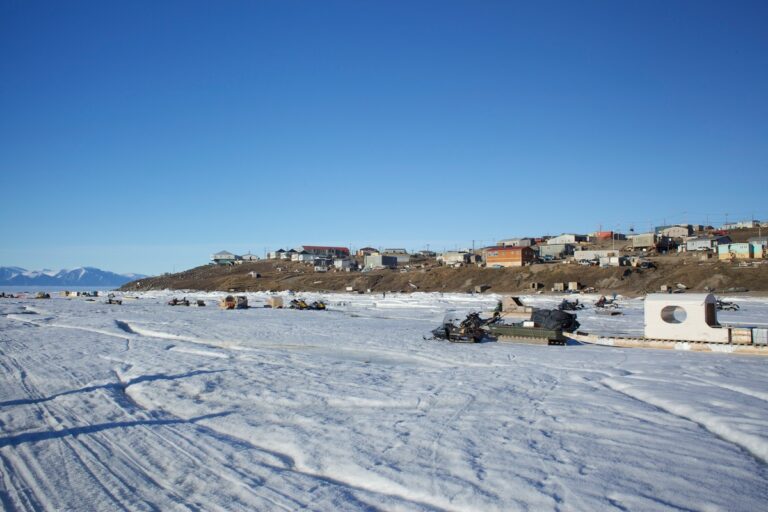
The 1,700 residents of Pond Inlet are still living with the consequences of having an iron mine as a neighbour
Read More
August 27, 2026

Episode 12

33 min
President & Chief Executive Officer - WWF Canada
Listen on


Long before Nunavut was a territory of Canada, it was home to Inuit.
On this episode of Good Nature, Paul Okalik, Nunavut’s first premier and now WWF-Canada's lead Arctic specialist, reflects on Inuit’s deep connection between culture, wildlife and self-determination. Paul recalls growing up in Pangnirtung, memories of roaming barren-ground caribou (tuktu) and the creation of Nunavut. He describes the responsibility Inuit have always felt toward the lands, waters and species that sustain them, and explains why development projects are also poised to impact culture, food security and the future of communities across the territory.

"There's all these new stressors that are coming our way — push for roads and construction that will really impact our lives. Not just our lives, but the animals that we depend upon. So that's where I think we have to show the country that this is our home. You're not gonna do whatever you want with it. We plan to live here, and we plan to have a say in our own future." -Paul Okalik
At its heart is a straightforward concept: the people who call a place home should have a meaningful role in deciding what happens there.
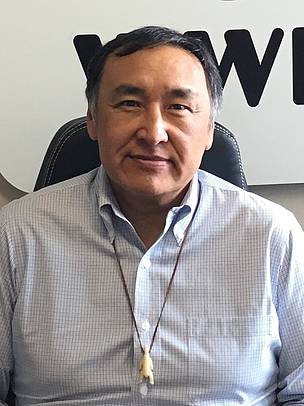
Paul Okalik
Nunavut’s first premier
Paul Okalik was Nunavut’s first premier and is currently WWF-Canada's lead Arctic specialist.
Megan Leslie
President and CEO of World Wildlife Fund Canada
Megan Leslie is President and CEO of World Wildlife Fund Canada. Since taking on this role, Megan has led WWF-Canada’s bold 10-year plan to Regenerate Canada by expanding habitats, reducing carbon in the atmosphere, lowering industrial impacts and, as a result, reversing wildlife loss and fighting climate change. She is also passionate about engaging Canadians to take action for nature.
PAUL OKALIK: There's all these new stressors that are coming our way that will really impact our lives. Not just our lives, but the animals that we depend upon. So that's where I think we have to show the country that this is our home. You're not gonna do whatever you want with it.
MEGAN LESLIE: Hello, and welcome to Good Nature. I'm your host, Megan Leslie. In each episode of this podcast, we talk to the people who give me hope for the future of nature and wildlife. And our guest today is Paul Okalik. You may know Paul as the first premier of Nunavut, but I know him as my esteemed colleague at WWF-Canada. Paul has spent much of his life directly shaping the future of the territory he calls home. Today, he's focused on a different challenge: ensuring that the decisions affecting Nunavut's lands and waters are led by the people who know them best. In this conversation, Paul and I spoke about the creation of Nunavut, the importance of caribou, the promise of the Nunavut Land Use Plan, and what it will take to ensure a bright future for Inuit and the Arctic wildlife they depend on.
MEGAN LESLIE: Paul Okalik, tunngasugit, welcome to Good Nature!
PAUL OKALIK: Qujannamiik, Megan.
MEGAN LESLIE: So let's look at the big picture because, even though Nunavut, it's the largest territory in Canada by area, it's about the same size as Western Europe, if people can kind of imagine that on a map. The population of Nunavut is very small and it's spread out, and I think that means that the rest of the country doesn't always give Nunavut the attention it deserves. Can you talk about why all Canadians should know and should care about what's happening there?
PAUL OKALIK: Well, to begin with, we were here way before Canada, so we've always been here, and we'll continue to be here.
MEGAN LESLIE: Touche.
PAUL OKALIK: So it doesn't matter what country we belong to. At the end of the day, it's our homeland, and it will always be our homeland. And the importance of our territory to us is that it's our home. It's where our food is. It's where our culture and history is based on, and we're no different than any society. We still need to survive and have a future. So the country comes and goes different ways, but our ways remain the same where we can. But we're under pressure. There's all these new stressors that are coming our way, push for roads and construction that will really impact our lives, not just our lives, but the animals that we depend upon. So that's where I think we have to show the country that this is our home, you're not gonna do whatever you want with it. We plan to live here, and we plan to have a say in our own future.
MEGAN LESLIE: I'd love to hear a bit more about your home. I know you grew up in Pangnirtung. That's a hamlet on the southeastern shore of Baffin Island. Tell us a little bit about your upbringing there.
PAUL OKALIK: I was born during the transition from our established camps as Inuit to a permanent settlement in Pangnirtung. So I was born in the hospital in Pangnirtung. So I never lived the nomadic life that my older siblings and parents lived. But that didn't stop us from going to our traditional areas and learning about the history of our lands and waters. So I have great memories of my mother, my late mother, telling me about our history in those parts of the world. So I'm blessed with that gift. And it shows the importance of our ties to the land and respect for the lands and waters. So it's a beautiful part of our history that we should always maintain because it shows the reverence that we have for the species that we harvest.
MEGAN LESLIE: That intimate relationship with the land that you're describing and the cold, there's seasonal change in the north, how did those experiences shape the way you work on conservation today?
PAUL OKALIK: Our environment has changed. I can't deny that. I remember, growing up, we had no arena. We had no way of pretending to be my Montreal Canadiens anywhere other than the sea ice when it first formed. That was so—because we were surrounded by mountains, so we had no ponds to skate around in. And so I would start skating probably in mid-October. That was a beautiful time because the ice is just forming and smooth, and you can skate for miles. So trying to skate towards the puck, you're skating forever. So that's how beautiful it was. And it's not that cold yet, so it was a beautiful time. But you can't replicate that today in October. You'll be swimming in October in my homeland. So that's how it is now because this ice doesn't form probably until maybe December. This year, my cousin was boating in January, early January. So that's the environment we live in today.
MEGAN LESLIE: Wow. Now, Paul, back in 1999, you became Nunavut's first-ever premier, even before the territory itself had officially split off from the Northwest Territories. Thinking back to 1999, what were your hopes for Nunavut's future at the time?
PAUL OKALIK: My hopes were no different than my fellow Inuit. We had aspirations of retaining our culture and our language and strengthening our culture and language because they have been under attack, right from the introduction of the classroom to our homeland. So our view was that if we can retain the ability to control the schools and the institutions, then we can have more control over our future that way. So, and also, our environment has always been important to us, so we want to strengthen our ties to controlling our lands and resources in the territory. So that's been the forefront the last few years, especially here in Nunavut.
MEGAN LESLIE: Right. Well, looking back now, almost three decades later, do you think Nunavut's role within Canada has changed over time?
PAUL OKALIK: I can't say how far, but we have been in the forefront here and there when things change over the world, depending on the circumstances. Then all of a sudden, we're at the forefront for defense or other purposes that Canada may want. So it's not always in a good way to our culture, because now it's a push for development of the resources at all costs, by all appearances. So that's something that really needs to shift because we're the ones that will have to bear the cost of those activities, and we should be given more of a say. Because if you look at our history, the reason why we created Nunavut was to have a say and because we endured too much remote control over our lives, where Ottawa would decide what would happen in our homeland and how we would be taught in the classroom. And come on, we're past that stage. We have to move forward and find our own place in our own future.
MEGAN LESLIE: Well, that’s a great segue because I wanted to ask you about the Nunavut Land Use Plan. So this was one of the requirements of the original Nunavut Agreement, and it's the biggest land use plan in the world at over three million square kilometers, and it's pretty special. And I know that the purpose of the plan is to guide how lands and waters can be used in a way that respects Inuit rights and protects nature and supports sustainable development, and it sort of, you know, tells us where activities can happen and where they can't happen. But it's been over 30 years since the plan was proposed, and it still hasn't been finalized. So Paul, can you explain to us, like, how is that even possible that we don't have this plan?
PAUL OKALIK: It's a rather unfortunate part of our more recent history is that when things matter to us as Inuit, they fall through the cracks and get left behind and just get overtaken by events that appear to be more important to the outside world than our own. So that's a sad part of our land use plan. The first draft was, I believe, in 2012, so it took a while to get the draft land use plan in place. So sadly, I wasn't part of the government at the time, so I couldn't have a role in pushing it through. Unfortunately, the resource sector has taken a foothold by a few jobs here and there and are the nice, new, shiny, new toys for some people. So they've been pushing back on any effort to try and protect our calving grounds and that's the disappointing part of the whole exercise. Hopefully, they'll change and that we'll get the plan in place so that what matters to the Inuit in the communities will be addressed, which are calving grounds and other important areas that they feel should be protected from activity.
MEGAN LESLIE: Mm-hmm. Tell me more about what you mean with caribou calving grounds. I'm assuming, you know, these are the calving grounds, but tell us a little bit about it.
PAUL OKALIK: These are special places that we never go to because we view them as special places that they need. These are spaces that we don't go hunting at because they need the time to maintain their health, especially when they're young. So we avoid those places because it's one place where they need their space. Because I grew up with so much regard for caribou country. Like, I wasn't allowed to scream as a child because it would make unnecessary noise that would scare the caribou. We were not allowed to leave any garbage, any debris in caribou country. So that's how much regard we have for the caribou, the tuktu, because it's their home, and they deserve to have a space that is respectful of their place in our culture. So that's something that I view as a total disregard for that practice. And unfortunately, it's proceeding in the absence of a land use plan.
MEGAN LESLIE: Right, of course. Also, I think maybe linked to the land use plan, you've been talking a lot about Baffinland Iron Mines Corporation's planned expansion of their mine at Mary River, and the expansion would dramatically increase the company's iron ore production. I know that there's a plan to build the Arctic's first ever railroad, which maybe sounds like a good thing, except that railroad is set to cut right through caribou habitat. Tell us a little bit about your concerns when it comes to this railroad.
PAUL OKALIK: Any infrastructure, linear infrastructure, does deter caribou from passing through those areas, especially when there's heavy traffic. So I think the proposal for the railroad is going to further, not just be a deterrent for migratory paths of the caribou, but it will eat into what little habitat there is on the island, on the North Baffin Island, that has always been a very important habitat for that species in our island. Now, I grew up in Baffin Island, so we first encountered having a quota on our harvest in 2013, I believe, because there's not enough. So to further erode the habitat of these species is not gonna help their health and their future on the island. So it's something that is a real concern for us.
MEGAN LESLIE: Now, Paul, you talked about caribou on an episode of WWF-Canada's other podcast called This Is Wild, and if people are listening to this episode, have a listen. It's a great one. Paul, can you walk us through, there's a bit of a domino effect that happens when there aren't enough caribou on the land. Tell us about that.
PAUL OKALIK: As Inuit in our homeland, we don't have a lot of nutrients coming our way. We don't have farms. We don't have a lot of healthy options that we can turn to. So when you cut out a major part of our diet, we have to turn to other species like marine mammals and store-bought food, which aren't always the healthiest options. So it puts a strain on us as a people. And we deserve to have access to healthy food like any citizen of this world and be able to turn to, in the fall, it's a caribou season. And when you cut that out of your diet, you try and find other ways. Like, we go to other parts of our territory and harvest some of those caribou, which adds more strain to the caribou population elsewhere. And for whales, it's early spring to the summer months. So when there's shipping activity that interferes with that, then it's gonna be difficult for my fellow Inuit in some parts of the territory when shipping activity increases in some parts.
MEGAN LESLIE: Can we pick up on that a little bit? Because I know the other major development that Baffinland is planning is a new shipping route, and you might think, oh, so what? They're just gonna have a new path for the ships, except that it's encroaching on really important habitat for walruses and whales, and you're talking a little bit about the impacts there. Can you tell us more about that?
PAUL OKALIK: Yeah, I think shipping has not been a big activity up until recently in our territory. So the biggest shift that we saw was probably in 2018 when Baffinland was allowed to increase their shipping of iron ore through Milne Port from four million metric tons to six million metric tons. So the shipping activity increased. But it really shifted the narwhals that have been inhabiting those waters. Like I grew up in Pangnirtung, 800 kilometers south of this activity, and I had never seen a narwhal in my lifetime, in my waters, even though I used those waters quite a bit. But when the increase occurred in 2018, we then started seeing narwhals in our waters 800 kilometers away.
MEGAN LESLIE: Wow!
PAUL OKALIK: That were never there before because they were being dispersed by all the shipping activity. And the people of Pond Inlet, Mittimatalik, they weren't seeing as many, so they weren't able to fill their quota for their income and for their food. So it really made a point that this activity was really already deterring our narwhals at six million metric tons. Imagine this Steensby Port project will increase that activity to 18 million metric tons, three times what really affected Pond Inlet already. It's gonna really, really impact all species on the port and railroad activity that's planned for the future.
MEGAN LESLIE: There's a real tension here though between balancing economic development and environmental stewardship in Nunavut. Tell me a bit about some of those challenges and can we balance this?
PAUL OKALIK: I don't know if we can, but there has to be a better way forward because the current activity that's planned will pretty much, really impact the walrus habitat that Sanikiluaq and Igloolik really depend upon because without shipping activity, those walruses will be displaced along with the narwhals that Naujaat in the mainland depend upon, which transgress those waters that the shipping activity will be taking place. So perhaps a different route will be helpful, but with more regard for the migratory paths of the narwhals in the future because as it is now, this is destined to fail for us as Inuit. It will increase the profits of somebody, but it won't be profiting our culture and our way of life as we live it.
MEGAN LESLIE: Yeah. Paul, I'm hearing a lot more discussion across the country about the importance of Indigenous-led conservation and Inuit-led conservation. You hear about it a lot more, but I can only imagine there are still challenges when you're trying to ensure Inuit voices are at the centre of decisions about stewardship in their own territories. You started off by saying Inuit have a right to have a say. What kind of challenges still exist with this?
PAUL OKALIK: I…like, it’s an unfortunate part of being controlled by outsiders, is that we have no real way of picking and choosing our more important areas as we are being displaced. So a lot of these resource extraction companies have found a way of manipulating the institutions and the organizations. They may be Indigenous, but they're not always helpful for the Inuit communities in terms of trying to protect their waters and lands. And the institutions put in place require that these protected areas be signed off by these institutions, and they're not getting the go ahead, even though the communities really wanna have a role in protecting their future, their food source, and it's stalled in some places. Hopefully, we'll turn the corner and shift the focus in the future, but we're not there yet.
MEGAN LESLIE: Yeah. Well, you're starting to paint a picture of the future, so I'm gonna ask you outright, if you could paint a picture of what Nunavut could look like, could be like, 25 years from now, what would that look like to you?
PAUL OKALIK: I often point to Naujaat. I view it as my Eskimo heaven because it has a healthy population of tuktu, caribou. It has a healthy population of whales and marine species. It's like, when you go there, it really shows how healthy the people are and how strong our culture is in terms of sharing your harvest with your neighbors and your family members. Whereas elsewhere in the territory, where I live, that's hard to do because you're limited in the amount of caribou that you can harvest, and it really prevents you from sharing even with your fellow Inuit in some cases, even though you want to share, but there's not enough to go around. So those things really affect our traditional ways because we've always been sharing with people that are less fortunate. And I hope that that will change in the future with more protection for the core species so that we can exercise our culture freely and provide healthy food for all Inuit in the territory, regardless of where you live.
MEGAN LESLIE: Well, you've been very generous to share with us today and share a bit about your culture and your experiences and what you hope for the future for Nunavut. So, Qujannamiik. Thank you.
PAUL OKALIK: Qujannamiik, Megan.
MEGAN LESLIE: Now, Paul, on this show we end—we're gonna have a bit of a change of pace here because we end every interview with a lightning round of questions called the Trail Mix. So I'm gonna ask you some quick questions, and you gotta give me some quick answers. Are you ready?
PAUL OKALIK: Okay.
MEGAN LESLIE: All right. To kick it off, what is the best part about living in the Arctic?
PAUL OKALIK: I would say the freedom to be able to enjoy the fresh air and spread out. It's so spacious and open.
MEGAN LESLIE: So spacious. I love it. All right, if someone told you they were going to spend one day in Nunavut, could be anywhere in Nunavut, what's the number one thing they should do when they're there?
PAUL OKALIK: Depends if they're non-Inuit, so if they're...
MEGAN LESLIE: A Southerner like me!
PAUL OKALIK: Okay, I would say, go enjoy the outdoors. I have a national park in my hometown. You can go enjoy the scenery and enjoy the fresh air.
MEGAN LESLIE: Perfect. Hopefully folks will. What is the most impressive Arctic wildlife species?
PAUL OKALIK: Ah, there's so many beautiful animals, so I can't, like…
MEGAN LESLIE: Can’t pick just one?
PAUL OKALIK: The narwhal is always very special. I was in Naujaat one time and we were out looking for caribou and at the same time narwhal hunting here and there. And early morning, I went to climb a ridge and I looked around with my binoculars and then I saw, on a little inlet, the narwhals were just relaxing, floating on the water, and oh my goodness, what a sight. That's how I view our beautiful land and waters, is that it's their home and they deserve to relax and enjoy it like we do.
MEGAN LESLIE: Amazing. Now, Paul, what is your favorite sound to hear in nature?
PAUL OKALIK: I would say…silence.
MEGAN LESLIE: Yes. Sorry, that brought tears to my eyes. Yes, yes! I'm gonna sit with that. And finally, Paul, what's one thing that everyone can do to help advocate for the future of Nunavut?
PAUL OKALIK: For Southern Canadians, you have multiple ministers that you can press that say, look, the Inuit deserve to have a home, and their home is under some duress with all the activity. Give us some space so that we can allow it to breathe and get by. And at the current pace, we're not moving that direction. We deserve to have a space where our future is our own future, not Canada's future. Like, I'd hate to see our territory become like the moon, where there's no more wildlife because it's been deprived of those species. Because I see old mining towns in the southwest where it's like the moon, where it's no vegetation, it’s just dead. We don't wanna go there. We'd like to continue to have a living space in our territory.
MEGAN LESLIE: Paul Okalik. Qujannamiik. Thank you for joining us on Good Nature.
PAUL OKALIK: Aulali, qujannamiik, Megan.
MEGAN LESLIE: Today, we're gonna use the trusty orca phone to call up one of my WWF-Canada colleagues to discuss some of the ideas about nature and conservation that maybe we haven't questioned before. On Good Nature, we like to call these ideas “Nature Hot Takes”. So today, I'm calling up our Toronto office to talk to WWF-Canada's soil expert, Cathal Doherty. Let's see what he has to say. Hey, Cathal. What's your hot take?
CATHAL DOHERTY: My hot take for you is that being a good gardener is more about taking care of the soil than it is about taking care of the plants.
MEGAN LESLIE: Okay. I like plants and soil's not on my radar, so explain.
CATHAL DOHERTY: So, most people think of gardening as just planting the plants. You know, you wanna pick the right varieties, you wanna make sure they have the right water, nutrients, sunlight for the different plants. But the plant isn't an independent organism just growing in the air. They grow in a substrate, and that substrate is the soil. It's a living, breathing thing.
MEGAN LESLIE: Right. Okay, what does that look like for me as a gardener? Am I gardening the soil?
CATHAL DOHERTY: Essentially you are, and a lot of people do this intuitively. When you water your garden, are you watering the plants or are you watering the soil?
MEGAN LESLIE: Great example.
CATHAL DOHERTY: And similarly, The soil needs to eat. It needs to breathe. You don't wanna compact your soil. You don't wanna stomp on it. You want it to be airy. You want it to be nice and fluffy. Because soil needs to breathe. It's a living, breathing thing. It needs nutrients.
MEGAN LESLIE: Okay, so if I'm having my neighbors over to look at my garden, am I showing off my soil?
CATHAL DOHERTY: I think you will be in the future.
MEGAN LESLIE: You are. I bet you are!
CATHAL DOHERTY: Well, here's a simple thing you can do. Soil feeds on a lot of organic matter. It feeds on dead plant materials. But a lot of people, in the fall, when the leaves fall in their garden, they rake it off, and then in the springtime, they then have to do a lot of work and add those nutrients back to the soil. A simple thing you can do is leave your leaves over the winter because that’s going to feed the soil.
MEGAN LESLIE: Leave the leaves!
CATHAL DOHERTY: Leave the leaves. Exactly.
MEGAN LESLIE: Well, I love that hot take, and I totally agree. Thanks so much.
CATHAL DOHERTY: Thank you.
MEGAN LESLIE: Thanks again to today's guests, Paul Okalik and Cathal Doherty, and thank you for joining us today on Good Nature. You can stay up to date on everything happening at WWF-Canada, including this podcast, by signing up for our newsletter, Living Planet News. And if you have any thoughts on the show, ideas for episodes, or questions to share, leave a comment or email us at goodnature@wwfcanada.org. We'll see you soon.
Thoughts on Good Nature? Share your feedback by sending us an email at goodnature@wwfcanada.org, or fill out the form below.