GLORIA DICKIE: Everyone wants to tell you the story of the time they saw a bear. Like every single person has a bear story and they wanna tell it to you. So I get that a lot.
MEGAN LESLIE: I am resisting right now.
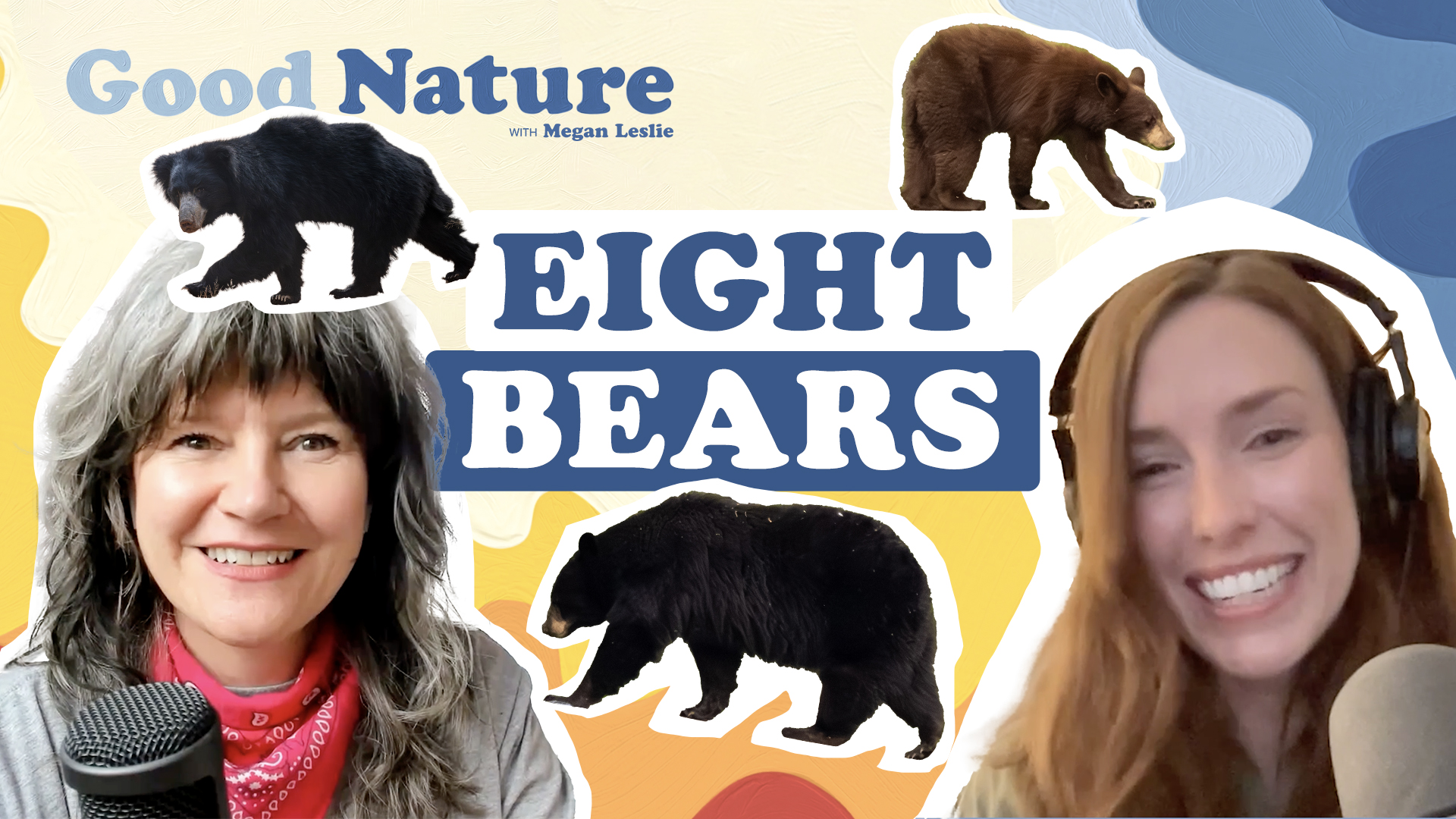
MEGAN LESLIE: Hello and welcome to Good Nature. I'm your host, Megan Leslie. In each episode of this podcast, we talk to the people who give me hope for the future of nature and wildlife. Now, if you follow the news, you've probably noticed that the stories coming out about nature and environment can be…well, they're a little bit depressing. And I think there's a point where some of us feel the urge to turn away, not because we don't care, but because it starts to feel like too much. And this raises an interesting question. If the story of nature is that overwhelming, how do we keep telling it? Our guest today is Gloria Dickie. She's a wonderful environmental journalist and she's the author of Eight Bears, a book that looks at the lives of bears around the world and how humans have shaped their fate. I read Eight Bears recently, and while it's a beautiful book, it's also, it's a tough one. So when I spoke to Gloria, I really wanted to get into what it means to acknowledge the reality of what's happening to our planet, while also maintaining the hope that we can and will make things better.
GLORIA DICKIE, AUTHOR OF EIGHT BEARS
MEGAN LESLIE: Gloria is originally from Southern Ontario, but she is based in Thailand right now. Gloria, thank you so much for being with us here today.
GLORIA DICKIE: Thank you for having me, Megan.
MEGAN LESLIE: Okay, so first let's get situated. I have to admit, when I saw the title Eight Bears, I was like, what, what eight bears are we talking about? Oh, oh, the eight bears. So there are only eight bear species on the whole planet, which surprised me. Who are they and where do they live?
GLORIA DICKIE: Yeah, that was kind of the thing that I think, when coming up with the title for the book, we were like, we landed on that number, right? Because it is a surprising fact. Most people can only name four, maybe five if they're lucky. They know the American black bear, of course, which we have in Southern Ontario and where I grew up. We have the brown bear, which is the kind of overarching species of grizzly bear. So grizzly bear is a subspecies of brown bear. They can often name the polar bear found in the Arctic. The panda, which, often they kind of question like, is that actually a bear?
MEGAN LESLIE: I sometimes question!
GLORIA DICKIE: Yes. I've had people fight me. I've had people fight me, say, it's not a bear. I'm like, it's, it's a bear.
MEGAN LESLIE: It’s a bear.
GLORIA DICKIE: And then they kind of like, come to a stop and they can't name the other ones. So with this book, I kind of wanted to focus on those lesser known species. So we have the spectacled bear or the Andean Bear, and that lives in South America in the Andes, as you might guess. Paddington is a spectacled bear, the most famous one. We have the moon bear and the sun bear, which both live across Asia. We have the sloth bear in India. So those are the other kind of four species that most people have not heard so much about compared to kind of the iconic four.
MEGAN LESLIE: Yeah, when you say the names, they kind of maybe ring a bell for me, but I would've been hard pressed to name them for sure. Now, do you remember the first time that you encountered a bear in the wild?
GLORIA DICKIE: It was actually quite late in life, and I kind of talk about, in my book, I think it was the lack of bears, like this kind of Animal of the mind that made them even more captivating, right? Like I grew up in southern Ontario. We didn't have black bears in the area that I grew up anymore. Raccoons was kinda like the biggest thing that you had to worry about getting into your tent when you went camping. But it was really when I moved to Colorado for grad school when I was about 21, 22 that I first saw bears because they were coming into town and they were coming in, eating garbage, eating apples, you know, fruit on the trees, and falling asleep. So yeah, the first, the very first sighting was a mom and two little cubs who'd actually climbed up a tree and they'd fallen asleep after they were done eating.
MEGAN LESLIE: So you write that your favorite bear is unequivocally the polar bear. Can you tell us why, and also I know you, you write about going up north to see one in person. I'd love to hear a little bit about that.
GLORIA DICKIE: I didn't, I don't think I had a clear favorite bear at the outset of reporting this book. I hadn't seen many of the bears at that point, but I did have, I guess, kind of a predisposition and love of Arctic and northern reporting. I liked cold weather, so it kind of made sense that when I finally went to Churchill, Manitoba and saw the polar bear, that I would more or less fall in love with that animal, right? And I think part of that came from the fact, this feeling of precariousness, right? Like looking at this animal that spends most of its life offshore on the sea, ice and environment that, you know, is kind of unimaginable to live in to us. Um, and knowing that it faces this really harsh future possibly and what a shame it would be to lose that animal.
GLORIA DICKIE: And of course that's true for other bears, too. But I think, I guess it speaks to the Canadian in me, right? That I'm just very drawn to this, you know, it's on the toonie, it's a very iconic Canadian species…
MEGAN LESLIE: Yeah.
GLORIA DICKIE: Yeah.
MEGAN LESLIE: And when you were up there, are there any particular experiences that you, you know, really stick with you?
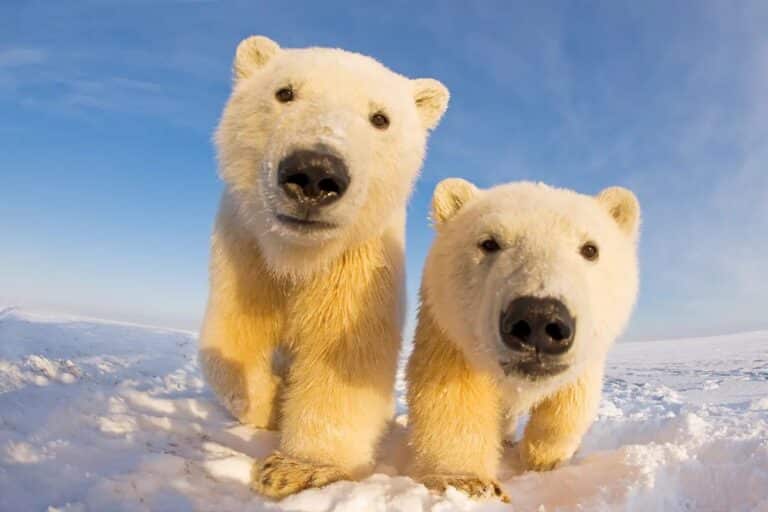
GLORIA DICKIE: I think, I mean, the goal of the book, I guess, was not always to see bears in, like, pristine environments. It was to see, like, the human relationships with bears as they are today. And in the case of polar bears, when you're probably going to see a polar bear, it will be on a tundra buggy in Churchill. I don't know if you've heard of these vehicles that kind of trawl across, tourist vehicles that go out to look for polar bears. I was on a kind of specially adapted one that was for scientists and NGOs when I first saw a polar bear from that vehicle, so that was definitely, like, the number one moment just being, you know, maybe five meters away, you're looking down at this animal that's like waiting for the sea ice to come in. I remember, like, looking into its very deep black eyes. That was really special. And I think especially after not having had many instances where I did see bears in the wild, and while it's a much more tame experience, it was still, like, not behind bars, right? So that was pretty memorable.
MEGAN LESLIE: I wanna dig into that human-bear relationship a bit later. Right now, I'm thinking about bears and their relationship with nature around them. Now, at WWF-Canada, we produce a report on the state of wildlife. It's called Living Planet Report Canada and our 2025, our last report, really focused on nature's interconnectedness, how each species is part of a larger web. And when those links are broken, the impacts go beyond a single population, like it goes beyond bears. And one way that we showed this, we actually made a graphic using grizzlies because of the way that grizzlies maintain ecosystem health. Because they keep deer populations in balance and that avoids overgrazing and they fertilize forests with their salmon scraps. It really is this web of life. And I can't help but wonder if that idea, the keystone species role, was part of what made you realize that bears were a great jumping off point for this story about how we relate to nature.
GLORIA DICKIE: I think there was the ecological keystone species, the umbrella species, and that, you know, grizzlies drag salmon into the forest, the decomposing salmon carcasses fertilize the trees. That was fascinating to me. But what also kept coming up in my reporting was this idea that bears are a cultural keystone species. So it's not just for their ecological role, but kind of our love and relationship to bears kind of couldn't help protect the whole ecosystem. It's the human connection again to bears versus just the role that they perform. Because, I mean, I think arguably, you know, wolves eat more meat. There's other animals that perhaps can serve a stronger role than bears in terms of how they connect with the ecosystem. But in terms of that cultural aspect, they're pretty unrivaled, especially in northern countries, especially in Canada. It is the iconic kind of number one animal that we feel passionate about conserving.
MEGAN LESLIE: Yeah. They really do capture our imagination. I was thinking about the fact that you traveled where these bears are. Ecuador, Peru, China, Vietnam, Canada. And I wanted to ask you about an encounter with a bear or with the people living alongside them that really changed your perspective. But I don't know, is this keystone cultural piece, is that something you learned while you were traveling around?
GLORIA DICKIE: I guess what I just said is kind of within a western, northern context because I did have that moment when I was working in India and kind of reporting on the sloth bear. And at that time it, you know, the sloth bear is the world's deadliest bear. Part of that is the fact that there's so many people who live close to them. You know, Canadians are a bit more removed. We don't have bears generally at our doorstep. But also, they're a very aggressive species. They're used to living with tigers on the landscape. So this kind of idea about being very passionate about conservation of bears, the cultural connections, that was more or less absent in the Indian context with the sloth bear because people were very afraid of bears. And that was a challenge for conservationists, which was how do you champion an animal to conserve it when it can kill you, right?
MEGAN LESLIE: That reminds me, I was in New Zealand recently and I was really struck by the danger of the land. So they have earthquakes and volcanoes. We went hiking and there were steam vents along the hiking trails and they have boiling mud. And when I asked people like, how do you live like this with so many dangers on the land? And the answer was always, ah, but you have bears!
GLORIA DICKIE: Interesting.
MEGAN LESLIE: And then I went to Australia and you know, there are sharks and shark attacks, there are crocodiles. They have the most poisonous snake in the world. And we saw a toad that sprays venom. And I, and I asked, how can you live with all these dangers? And people said, ah, but you have bears! And I've never talked about bears. I'm not like you. I've not written a book on them. I've never talked about bears so much in my whole life as I did over those two weeks. And because I think, I'm sure you can relate to this, I grew up in Northern Ontario, where we have black bears. And those black bears largely lived in the wild doing their black bear thing. And I was quite insistent that bears were not dangerous. But when I read your chapter on black bears, you focused on bears moving into urban settings, that conflict, human-wildlife conflict, and I didn't know they were such a problem. I kind of assumed they could be a nuisance. You know, like we talked about the raccoons getting into your tent. I didn't realize that they could be so dangerous. Can you talk a bit about human-bear conflict in North America? And then also I'd love to ask what some of the successes have been in restoring that human relationship.
GLORIA DICKIE: Just to go back, I mean, that's so funny that you heard that. And it's, I mean, my partner's Australian and I'm terrified of sharks, and we have this real, we have this discussion all the time because to him it's like, well, what about bears? I'm like, I don't wanna go in the water because there's sharks in Australia, right?
MEGAN LESLIE: Yeah, exactly.
GLORIA DICKIE: I guess bears just seem like a remote possibility that you would be attacked, right? And I think when we're thinking about this context of urban bears, so to speak, which is kind of the phenomenon that I explore in the book, there's some incidents, of course, where people are getting attacked by bears in towns, people get swiped at and things like that. But by and large, the danger is to the bear itself, right? We are killing bears that come into towns and cities and behave typically like overgrown raccoons, right? But there is always that possibility that they can attack you. And we've seen that in national parks in the past. Food habituated bears are dangerous bears.
MEGAN LESLIE: Right. And parks are easy picking.
GLORIA DICKIE: Exactly. And so as we change the environment around us, as we see food shortages, I don’t know if you paid attention last year, there were a number of attacks in Japan. Hundreds of attacks, actually.
MEGAN LESLIE: Oh no.
GLORIA DICKIE: Thirteen people were killed by Asiatic black bears and brown bears in Japan. And that was due to, you know, climate change had caused a natural food crop to fail, right? So you had tons of people living in these villages being attacked by bears. And that's something that, at least with the food availability, we can kind of control in terms of garbage management, right? Like don't give bears a reason to come into towns if you can kind of achieve that. Bear smart communities, this was an idea that began in Canada, actually. In British Columbia, I believe. Where basically, you lock away the garbage, you cut down the fruit trees, you install electric fences, you bearproof your community so the bears don't have a reason to come in. And we're seeing more and more places adopt that kind of strategy to deal with an influx of bears. I always kind of hesitate to say influx because, you know, obviously they were there first, in many cases! Incursion, invade, all the words that we use. But to try to kind of create space between people and bears.
MEGAN LESLIE: Exactly. Bear smart communities, and so there's been good success…well, I imagine they're pretty smart, so it's constant rejigging, constant adapting.
GLORIA DICKIE: Yeah, I saw that when I was in Yosemite, like they could figure out the designs for various bear proof bins within a few months, and they were constantly changing them to try to prevent them. Because they’re, yeah, very smart animals. But by and large, yes, they've been very successful at reducing conflict. We're starting to see this kind of bear smart mindset spread outside of North America. It's in Europe now. Other parts of the world are adopting it. So that's kind of a nice trend line to see that, you know, what began in these mountain towns, it's kind of had a global reach over the decades.
MEGAN LESLIE: Now, I wanna switch to another bear. And Gloria, you might not have noticed, I'm gonna try and lift it up. Here I am, wearing a spectacled bear shirt.
GLORIA DICKIE: OoH, wow. I'm, okay, I'm very jealous now. I don't have, I have, you know what, of all my bear souvenirs, the spectacled bear’s the hardest bear to find things of.
MEGAN LESLIE: You know, so I was in Colombia and I visited their habitat, the Alpine ecosystems, the Páramo, and I was just desperate to see one and all I have is this shirt.
GLORIA DICKIE: You didn't see one either!
MEGAN LESLIE: No, not at all.
GLORIA DICKIE: Good. I was afraid that you were gonna say, “oh, I saw one!” because I also did not see one.
MEGAN LESLIE: No, I was very, I was sort of, like, just scanning the horizon the whole time, kind of chanting. “It's okay, little bear.” It was very ridiculous. But my colleagues at WWF-Colombia have spectacled bear shirts, so it was like, okay, I can at least come home with that. The spectacled bear chapter is your first chapter, and I loved the setup of it because you talk about climate change impacts. And I think that most of us, when we think of climate change impacting bears, we think of the polar bear first, because it depends on ice to survive. So it was interesting to me how you, right out of the gates, talked about how climate change is affecting the South American spectacled bear and its habitat. And I'd love for you to share with us some of your other findings about climate change and bears in the Americas. What is happening and how is it impacting them?
GLORIA DICKIE: One of the biggest changes I'd say in terms of how climate change is impacting bears is shorter hibernation or no hibernation at all in some cases. And this is, it can be complicated to kind of tease out why that's happening. You know, to some extent it's food availability. If there's garbage around, they have less reason to go to sleep, to conserve energy. But there's also been research that's found that as the winters grow shorter, as less snow is falling, as temperatures are not getting as cold as they once were, bears are no longer hibernating for as long of a period as they once were. And that's also quite difficult because that means bears have more time to get into trouble, right? They're awake more. They can be hit by cars. They're in towns eating food. When they're not hunkered down under some tree roots or in their den, they're out in the world and therefore the mortality rate can increase from bears. So that was something that I found quite, quite gripping. I just got back from Romania a few weeks ago, doing some reporting on bears, and everywhere I went, I heard from people, “the bears are no longer hibernating, they're awake because this winter we had no snow.” So this is something that we are seeing across the world.
MEGAN LESLIE: Interesting. And also, I wanted to ask you questions about your reporting on bears and how you write about them. So interesting that you were just in Romania doing another story. And I think when we're reading stories or when people are writing stories about climate and environment, we—I'll include myself here because I'm guilty of it—we use this sense of crisis to engage people, which is necessary, I think, because that is the reality of the situation, especially with bears and with wildlife. These habitats and species need us to act with urgency. But it can also be really hard to keep following these stories if you're a reader because there are so many stories about nature loss and endangered species, and it's hard not to lose hope. So when you're structuring your writing, how do you balance that optimism and realism in your work?
GLORIA DICKIE: It was definitely a kind of a job of laying out what are the more optimistic and hopeful, or even funny chapters, right? Versus like, what is the most depressing. Kind of like going up and down through those emotions and those feelings. I said kind of light and darkness, right? You're balancing those two things out in your writing. It was something I thought a lot about when I was writing. And also like, how to balance this idea of truth and positivity and hope. Because I felt, maybe you'll get to that, but for a long time, like, there was this kind of knee jerk reaction where you would kind of chronicle something that was quite grim and then you'd have like two lines at the end being like, but there's still hope, it'll be fine! And it was kind of trying to make the reader feel better, right? That maybe they didn't have to do so much because maybe it'll all be okay. And that was something I struggled with with the book, was like how to end the book on a positive, yet truthful and realistic message.
MEGAN LESLIE: Right, and so, you know, we're doing this podcast. One of the reasons we're doing it is that we’ve found that focusing on conservation solutions, rather than just the problems, can be a way to motivate and mobilize people. And so there's hope, but there's also, you know, we need to talk about solutions as well. So maybe I'm asking you for an inside tip as we go along with this podcast, but do you have thoughts on how to make nature storytelling more impactful? There is the hope, there are the solutions. What makes it resonate with people?
GLORIA DICKIE: Something I heard recently was, hope has to be an action, right? Like, you can't just, it's not just a feeling, like, you can't just be thinking hopeful thoughts, and then that's it, right? So I think bears are one of, in some ways, the easiest narrative vehicle to perhaps make people feel engaged about climate change, right? Like, using an animal to tell, kind of, these esoteric science stories, perhaps, is one way to get people willing to take that action, willing to be hopeful in a practical way. You know, I've heard a lot of, from a lot of people and readers over the years since the book came out about how they've gotten involved with conservation, how they've donated to help bile bears or polar bears. I think it's still difficult though. People don't know what they can do, right? These are global scale problems in many cases. How do you help to address deforestation in the Andes? How do you help to solve climate change in the Arctic, right? Especially in this modern time. And I don't have an easy answer for that, right? There is, of course, there's a push within journalism as well to focus on solutions and I think when we do that as journalists, too, we have to be very careful that we're platforming actual solutions that can scale and that can have a meaningful impact and not just kind of a feel good story that doesn't actually make that much of a difference beyond to make the reader feel better.
MEGAN LESLIE: I think, I don't know if you coined the term “hope is an action”, but yeah, that really speaks to me. That is an excellent framework. Now, when you are reading other pieces of environmental journalism, what speaks to you? What do you think makes a really great piece?
GLORIA DICKIE: I think having characters that you can relate to. And I mean, this was one of the things people would say to me with bears, like, oh, you had such great, like scientists and all these things. I'm like, well, yeah, because the bears can't speak, right? You have to find someone who can tell their story. So for me, when I'm looking for strong environmental stories, it's, yeah, it's the characters. It's the quotes, in many ways, it's the colour of the story. It's the quirks of that story. And I guess, like, something that I just haven't thought of before, some curious way that the world works, is kind of what I look for in a story. But maybe that's different from the average person, I guess, who is not reading environmental journalism every day, all day.
MEGAN LESLIE: And those little quirks and little hooks that you're talking about, there are a lot with bears, I think!
GLORIA DICKIE: There's a lot of bear puns. There's a lot of strange bear facts. The bear facts is what I get the most, right?
MEGAN LESLIE: I was gonna ask, do you have, like a ban on bear puns in your work? It's like, no bear puns.
GLORIA DICKIE: No, I think, like, one thing that I would do, I always laugh at though, like, whenever I meet with people who've read the book, everyone wants to tell you the story of the time they saw a bear. Like, every single person has a bear story and they wanna tell it to you. So I get that a lot.
MEGAN LESLIE: I am resisting. I am resisting right now. So a lot of us who care about nature and conservation, we can feel pretty daunted by the scale and the complexity of the challenges out there. And I started this episode by saying that your book really made me understand the different ways that humans are impacting bears negatively. And I will admit, I got pretty in my feels, Gloria, when I finished your book, thinking about human impact on bears and bear populations, and I gotta ask you if you think that—well, you've shown that humans are capable of impacting bears so negatively, do you think that we are capable of impacting them positively? Do you think that there can be a bright future for bears?
GLORIA DICKIE: I think that there can be. And I think that I, pardon the bear pun, met some people that, you know, they kind of beared that out, right? Like you could see, yes, you could see, you know, pandas, the odds were stacked against them. They're still here. I met some really inspiring people who dedicated their lives to rescuing moon bears and sun bears from bile farms in Vietnam. It was coming to an end, you know, you traveled the country. Yes, there were still some bears in cages, but there were hundreds of bears that were in these, you know, beautiful sanctuaries now. So if anything, you could kind of see how much one person could make a real difference or one government dedicating their time to something could make a difference. I think the other thing, too, that made me feel hopeful was the fact that bears are very adaptable animals. They're much more adaptable than other species. And I think I talked about that with the spectacled bears. They can eat a lot of different things. They can live in a lot of different habitats. They're not in a very narrow niche that we see with some animals, right? So as much as we might write one species off, maybe it will find some interesting adaptation strategy because again, they're very curious. They're very smart. I think it could be an instance too, where we're, like, kind of selling them short. We're not believing that they can get themselves out of this, too. with kind of what we've seen in the past. Yeah.
MEGAN LESLIE: Yeah, they're pretty resourceful. What keeps you motivated to keep reporting on nature and wildlife?
GLORIA DICKIE: Ooh, that's a big question. It's hard to be a journalist. I think working in this, I mean, anyone working in this space, right, working on biodiversity, it's not generally a very happy story, what we've seen, especially when the world is turning away and turning their attention to other things. I think I feel an immense privilege to be able to go out to these, often some of the last wild places, last beautiful landscapes, seeing perhaps some of the last of a species. Because I love nature and I love animals, and that's what I grew up with, you know, and that was kind of my passion as a kid. So on a purely selfish level, that keeps me going. But also, again, there are stories of hope that I do get to tell, right? Animals that have come back from the brink of extinction. We have examples of things that when humanity does its best, we can turn things around. So, I don't know, I think, like, in some ways, as you get older, you become more cynical, but I think you also have to become more hopeful and turn that into action, too.
MEGAN LESLIE: And you get to share it with people like me. I'm reading and I'm feeling connected to wildlife when I'm not out there in the field.
GLORIA DICKIE: Yeah, I think that's been one of the most encouraging aspects of writing a book. I mean, I do other forms of journalism as well, but just, you know, barely a week passes where I don't hear from someone who mentions the impact it's had on their life or their view of bears. And that's kind of the most rewarding part of the field.
MEGAN LESLIE: No kidding. So on the flip side, you know, the people who listen to Good Nature, they care a lot about nature. They feel like they can take action. They want to know what to do. They're very engaged. So what would you say to this audience about staying motivated to help protect and steward nature?
GLORIA DICKIE: Well, if you live in an area where you're seeing more and more bears coming in, look into those bear smart principles. Talk to local council members about that. I mean, there are more and more places that are adopting these kinds of bylaws and things. Get in touch with the organizations that work on bear or biodiversity conservation. There's lots of people doing great work trying to conserve habitat. Doing what they can on the ground, and perhaps off the ground too, in terms of larger climate goals. Yeah, I think, you know, people always just say like, look for the heroes, right? Like, find the people who are doing the work that you think makes a meaningful impact.
MEGAN LESLIE: Yeah. There are lots of ways to get engaged. I'm gonna switch gears a little bit here because on this show, we end every interview with a lightning round series of questions.
GLORIA DICKIE: Okay. Okay.
MEGAN LESLIE: You're like, oh, no one warned me! We call this the Trail Mix, so I'm gonna ask you some quick questions and you give me quick answers.
GLORIA DICKIE: Okay.
MEGAN LESLIE: Most underrated bear and why?
GLORIA DICKIE: I think the sloth bear, just because it's very furry and shaggy and weird looking.
MEGAN LESLIE: Love it. Now, if you were a bear, this might be the same answer. If you were a bear, what bear would you be?
GLORIA DICKIE: I would go for the polar bear again. Again, the Canadian in me has to say polar bear. Yep.
MEGAN LESLIE: Fair, fair. Okay. Then maybe this is the next question, too. Arctic freeze or Thailand heat?
GLORIA DICKIE: Arctic freeze. Hands down. I'm not built for this climate. I'm not built for this climate at all. Yep.
MEGAN LESLIE: What is your favorite nature sound and why?
GLORIA DICKIE: Ooh. I really love the sound of an elk bugling down in the valley, which is very, like, niche, but like being in Colorado, the rut, when the elk would come down, that was a very beautiful kind of haunting call in the forest. Yeah.
MEGAN LESLIE: Oh my gosh. What is…can you tell me what it sounds like at all? I don't even know what that…I can't even start to imagine.
GLORIA DICKIE: I don't know that I can, like, make—there was an elk bugling contest that people would go and they would, like, try to recreate the sound. It was, like, kind of a very podunk fair activity. It's like, [imitates elk bugling].
MEGAN LESLIE: Awesome.
GLORIA DICKIE: I cannot, I cannot. You can YouTube it after.
MEGAN LESLIE: I believe it. I felt like I was there. Thank you. So, now that you've covered the bears of the world, all eight species, what is your dream story subject?
GLORIA DICKIE: Hmm. I'm still doing a lot of bear things. So this is, like, the funny thing, right? I mean, these stories have long legs to them. Part of the reason I love being a journalist though, is that you're able to kind of dive into whatever topic piques your interest. I've been doing a lot of wildlife for a long time. My most recent kind of reporting obsession has been volcanoes. I don't know why. I don't know why. That's kind of what I've gone towards.
MEGAN LESLIE: So similar to bears. I see the link.
GLORIA DICKIE: There's, like, a bit of the danger and the mystique. I don't know, there's something that is a bit maybe similar. And also, you know, volcanoes all over the world in very interesting places. So yeah, I guess I like volcanoes right now. That's kind of my current thing that I'm nerding out on. But I'm still, also still very much Team Bear and got a lot in the works on that front, too.
MEGAN LESLIE: You're living the dream. Last question. What is one small thing that everyone can do right now to help protect the world's bears?
GLORIA DICKIE: Vote for governments that are committed to the environment and maintain governments that you can vote. That's what I would say.
MEGAN LESLIE: Yes. That is a great suggestion. Thank you for that little bit of political call to action. I appreciate it. This has been a delightful conversation. I really wanna thank you. Thanks for joining us on Good Nature.
GLORIA DICKIE: Thank you so much, Megan, for your great questions.
MEGAN LESLIE: Okay, it’s time for us to call up one of my colleagues at WWF-Canada on the orca phone, so they can tell me about the things happening in their world that give them hope for the future. Today we're calling Quispamsis, New Brunswick to talk to Jessica Currie from our Science, Knowledge and Innovation team. Let's give her a call. Hey, Jessica!
JESSICA CURRIE: Hey, Megan.
MEGAN LESLIE: Tell me something good.
JESSICA CURRIE: All right. I've got a good one for you today. If I asked you what the largest migration on earth was, what would be your guess?
MEGAN LESLIE: I'm gonna say caribou because they're in those big herds.
JESSICA CURRIE: Good guess. What if I said it was in the ocean?
MEGAN LESLIE: Oh. I don't know! I don't know. I’m panicking.
JESSICA CURRIE: It's okay. It's not, I would say it's pretty subtle. No one really knows, but every day, well, every night, to be specific, I suppose, billions, if not trillions of tiny animals like zooplankton and fish, herring, capelin, that sort of thing, they actually migrate from the deep ocean to the surface to feed—
MEGAN LESLIE: Oh, okay, migrating up versus down!
JESSICA CURRIE: Exactly! Before sunrise, then they all head back down. It's like the largest routine movement of life on our planet. It's crazy.
MEGAN LESLIE: I wouldn't have thought that was migration, but of course it is!
JESSICA CURRIE: So it might have been a trick question for you.
MEGAN LESLIE: Now you tell me.
JESSICA CURRIE: It’s called dial vertical migration. So dial is Latin for day, and I'm sure someone's gonna tell me I'm pronouncing that wrong, but it's representing a 24 hour period, so it's just something that's happening quietly, every single day without much fanfare. But what's more interesting is that these animals actually take the carbon from the surface where they're feeding. So let's think of it like an elevator, for instance. So they're on the upper floor of the elevator and they're taking that carbon and they're pressing the button down to the dungeon and taking it all the way to the deep ocean where it's then being sequestered. So this is just like a natural process that's happening every single day to help regulate the Earth's climate.
MEGAN LESLIE: Wait a minute, help me understand. How are they leaving it at the bottom?
JESSICA CURRIE: So they're taking all of the nutrients that they have at the surface when they feed and they're ingesting it, right?
MEGAN LESLIE: It's poop.
JESSICA CURRIE: It’s poop! Then they're going to the bottom and then it's coming back out.
MEGAN LESLIE: Wow. Fighting climate change with poop.
JESSICA CURRIE: How exciting is that?
MEGAN LESLIE: That is pretty good news. Thanks for sharing it with me.
JESSICA CURRIE: You are welcome.
MEGAN LESLIE: Thanks again to today's guests, Gloria Dickie and Jessica Currie. And thank you for joining us on Good Nature. You can stay up-to-date on Good Nature and everything else happening at WWF-Canada by signing up for our newsletter, Living Planet News. It comes out once a month. It's chock full of stories about what's going on in the world of Canadian wildlife and nature. If you have any thoughts on the show, ideas for episodes or questions to share, please leave a comment. Or you can leave me a voice message! Just go to speakpipe.com/wwfgoodnature. The link will be in the episode description. And I can't wait to hear from you. See you next time.