

CANADIANS FOR THE GREAT BEAR SEA
In 2012, Aliya Jasmine joined WWFers (and NHLer Scott Niedermayer) to help protect an iconic region
Read More
July 2, 2026

Episode 8

34 min
President & Chief Executive Officer - WWF Canada
Listen on


Most of us never think twice about the names of birds. But across North America, more than 150 species are named after historical figures with ties to colonization, enslavement and racist pseudoscience.

“We know that bird populations are in decline. We know that we need to do more about it, and the only way we're going to do more is if more people care. Well, why don't more people care — if birds are so accessible to everybody, if they're the ‘gateway’? There are barriers to entry. And those barriers pose even more questions, like, who is invited into nature? Who is allowed in these spaces?” -Aliya Jasmine
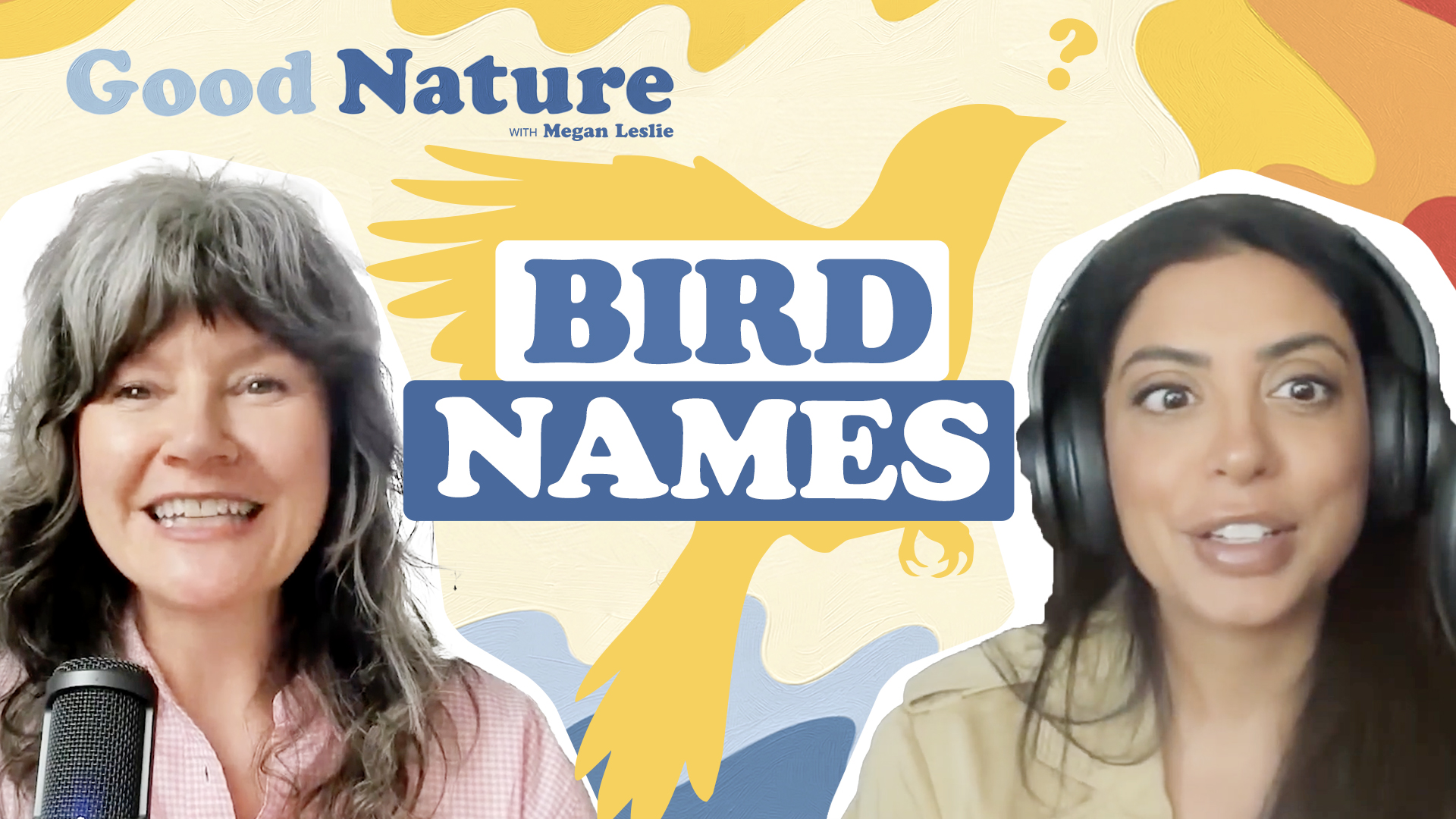
In this episode of Good Nature, Megan Leslie is joined by filmmaker and environmental journalist Aliya Jasmine to talk about her new short documentary Bird Names, which follows the growing movement to name — or “unname” — some of these birds. Aliya explains how something as seemingly simple as language can shape who feels welcome in conservation spaces, and why changing names could make birding and environmentalism more accessible to more people.
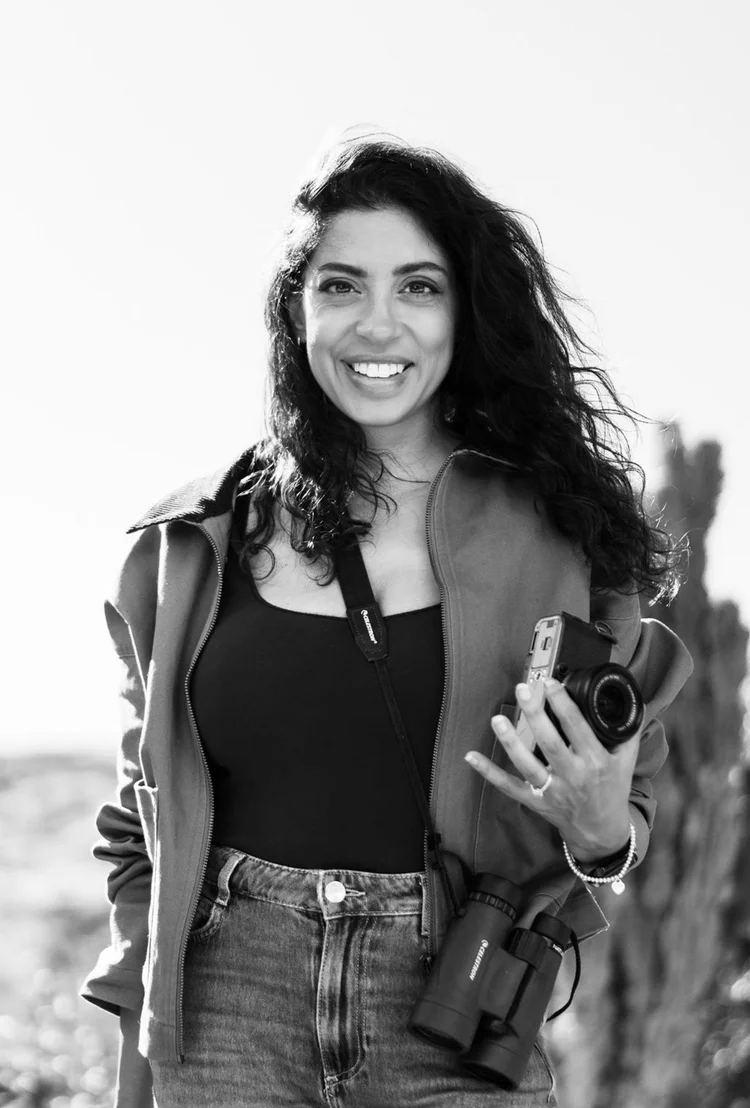
Aliya Jasmine
Award-winning filmmaker, environmental journalist
Aliya Jasmine “AJ” is an award-winning filmmaker, environmental journalist, and public climate storyteller whose work sits at the intersection of climate solutions, wildlife, and belonging. Her stories have appeared on CBC, NBC News, MTV News, Discovery Channel, and Smithsonian Channel.
Megan Leslie
President and CEO of World Wildlife Fund Canada
Megan Leslie is President and CEO of World Wildlife Fund Canada. Since taking on this role, Megan has led WWF-Canada’s bold 10-year plan to Regenerate Canada by expanding habitats, reducing carbon in the atmosphere, lowering industrial impacts and, as a result, reversing wildlife loss and fighting climate change. She is also passionate about engaging Canadians to take action for nature.
ALIYA JASMINE: Wouldn't it be great to just, like, a blue jay is a blue jay, we know what that means, you know?
MEGAN LESLIE: It's a blue jay.
ALIYA JASMINE: It's a blue jay, you know? And so wouldn't that be great, to have names about their geographic location, their behavior, the way they look? I just feel like it makes birding so much more accessible to everybody.
MEGAN LESLIE: Hello, welcome to Good Nature. I'm your host, Megan Leslie. In each episode of this podcast, we talk to the people who give me hope for the future of nature and wildlife. Today on the show, we're joined by Aliya Jasmine. She is a filmmaker and an environmental journalist, and recently I had the pleasure of watching her new project, Bird Names. This is a short documentary that explores the movement to rename bird species whose names come from racist or colonial histories, and it really got me thinking about equity and inclusion in conservation spaces in a deeper way. I chatted with AJ all about how this project came together, but also how it impacted her own relationship to these birds and to her environmental work as a whole. Let's jump in.
MEGAN LESLIE: Bird names! All right, let's talk about bird names. Now, Aliya—
ALIYA JASMINE: Let’s do it.
MEGAN LESLIE: Let's do it! I never really thought about the names of birds very much. You know, crow, swan, chickadee, they seem pretty neutral. But I know from watching your documentary that there are names of birds out there that are pretty problematic. Can you tell us about it?
ALIYA JASMINE: Yeah, absolutely. So, you know, I think most people remember that in the wake of the racial justice movements in 2020, a lot of different organizations came out and decided to make promises about changing names. These were professional sports leagues, universities, and among them was the American Ornithological Society, the AOS. And one of the things they did was they responded to a lot of birders who, at the time, identified around 150 bird species who had very problematic names. These were names of colonizers, of former slave owners, of, you know, historically problematic people who did things like, for example, collect the skulls of people of colour to prove that brain size was different among people of colour than white people's brains. And so, like, these were, you know, enslavers, just really problematic historical figures, and their names still exist right now as, you know, honorifics of these beautiful birds who have no idea who they're named after. And so you see that, right? You see that with, like, Lewis's Nutcracker. You see this with Townsend's Warbler, who's, you know, the main bird in our film. But like I said, 150 different bird species.
MEGAN LESLIE: And so those promises were made, and what happened? Because we have seen movement on other fronts and other sectors.
ALIYA JASMINE: Yeah, we've seen entire sports teams renamed. We've seen universities renamed. Yeah, it's a good question. What has happened? And the answer is nothing, which is the catalyst for why we made this film. It's been many years, and not only has nothing been done, but it feels like the conversation has really just gone silent, and I don't know if some of that is because the tone in America, remember, we're talking about the American Ornithological Society, but south of the border, the entire movement, DEI movement, has really rolled back in the last few years around, you know, political situations and temperatures here. And so you've seen a lot of companies roll back some of these big claims they made and these promises they've made. Now, that's not at all what the AOS says. We talked to them. They were really helpful when we were making the film, and what they've told us is that they have every intent to change the names, which is really great to hear, but also, they need to figure out the framework to do it. So they have not yet created the committee who will decide on the committee who will then decide how these are...So it's like, you know, levels of—and you know, you get this on an executive level, Megan, but, like, the levels of bureaucracy. And so what we're hoping is to help the AOS by creating this dialogue and this demand that puts that pressure, lights that fire under the executives' bums, and makes them wanna move on this issue.
MEGAN LESLIE: I love it. You know, I was in New Zealand this year, and there is this black bird with a white sort of ruff at its throat. It looks a bit like a priest or a parson. And I said to my friend, "Look, it's a parson bird." And she was like, "Ooh, Megan, no one has called it that in decades. It's a tui," which is the Maori word for the bird, Maori being the First Peoples of New Zealand. So we can do it. We can change. Like, an entire nation did it.
ALIYA JASMINE: We can absolutely do it. And you know what? New Zealand is a great example. Our cinematographer actually spent a lot of time in New Zealand, and he commented a lot about it, but actually, because the film is 22 minutes, it's a short film, we had to cut a lot of it. But the Maori example is a great example, and we do talk in the film about other places that have done it and, you bring up a really great point, which is a lot of people who are against renaming, one of the points they bring up is like, what would be the point? We've spent all this time learning these names. And I think this brings up a really great example, which is that they've all had names before. Like, a lot of these birds have had original names. They've had Indigenous names. So this wouldn't be the first time they were renamed.
MEGAN LESLIE: They weren't, they didn't, you know, evolve with these names. And even First Peoples, different nations had different names.
ALIYA JASMINE: And like, let's be honest, like, I love birding. I know you, like, you do as well. I'm not like a, I'm not a hardcore birder. I'm a very leisurely birder. I love birding. I've done it for a long time. I will never be great at it. I like my level. I enjoy. But like, what does the Townsend's Warbler actually mean to anybody? And like, how does that help me identify it? And when I'm trying to get my daughter into birding, she's so into birding, but when we're trying to identify birds, like, wouldn't it be great to just, like, a blue jay is a blue jay, we know what that means, you know?
MEGAN LESLIE: It’'s a blue jay.
ALIYA JASMINE: It's a blue jay, you know? And so wouldn't that be great, to have names about their geographic location, their behavior, the way they look? I just feel like it makes birding so much more accessible to everybody.
MEGAN LESLIE: Mm-hmm. This idea of renaming or even un-naming birds, in the film you use the example of the Swainson's Thrush, and if people are picturing, you know, the robin is a thrush, so you kind of picture a robin-sized bird. And this is a bird that Squamish and Salish people would have called, if you translate it into English, the salmonberry bird, because the bird visits the salmonberry bushes and hops along as the berries are ripening. And so I think there's something here about the importance not just of changing the names, but maybe also restoring older relationships to land and wildlife.
ALIYA JASMINE: Yeah, and at least exploring them, right? At least knowing about them and understanding what those names used to be or how we were connected. Yeah, absolutely. That's one of my favorite scenes in the film, is when we go to a W̱SÁNEĆ territory and, and find out about the—I mean, the salmonberry bird has the most beautiful song. And so the fact that like, it's a great example, does Swainson even care that this thrush was named after him? I mean, like…
MEGAN LESLIE: Well, probably.
ALIYA JASMINE: You know, what's interesting, and I didn't find this out until we were making the film, but a lot of these guys who have these birds named after them didn't even name them themselves, and didn't even know that these birds were named after them. It was like friends or followers or like fanboys that then went and named these birds after them. So it's just like the wildest thing. Anyways.
MEGAN LESLIE: I love it. Maybe, maybe there will be an AJ or an Aliya Jasmine Thrush out there.
ALIYA JASMINE: I don't want it! I don’t want it.
MEGAN LESLIE: If I could name it after you, I would.
ALIYA JASMINE: It would be the loudest bird and it would piss everybody off.
MEGAN LESLIE: Perfect. I'll look for it.
ALIYA JASMINE: Yeah. Yeah.
MEGAN LESLIE: Now, the protagonist of your film is a birder and an environmental justice advocate named Tykee James, and he's really focused his career on building equitable access to nature. How did you even connect with him?
ALIYA JASMINE: Tykee is amazing. He actually wanted to be here with us today, but he's off birding.
MEGAN LESLIE: Oh, well, pretty good excuse.
ALIYA JASMINE: Yeah! And he's in a place that was so remote, yeah, he couldn't get Wi-Fi. But he's amazing. He was the founder of Black Birders Week.
ALIYA JASMINE: And he has been one of, if you're in the birding community, you know of Tykee James. He's based in the US, and he's really, really been on the forefront of lobbying to change these names. He was actually on the English Bird Names Renaming Committee, and so he's just one of those people who's really been really at the center of this renaming process. And the thing I loved, and, you know, for your Canadian audience, I think they'll really enjoy, is Tykee is American, and this was his first time ever coming to Canada, was for this film.
MEGAN LESLIE: Oh, wow.
ALIYA JASMINE: And it was, well, it was his first time ever leaving America, and it was to come to Canada, and we brought him to Vancouver Island, to Victoria, to look for the Townsend's Warbler. And yeah, he had never seen it before and neither had I. So it was just such an amazing, heartwarming, and joy-filled adventure. He is just one of the most genuine people, genuine bird lovers. Like, he just really enjoys—and watching him connect with all these birders on Vancouver Island who were like, you know, more of the quintessential, like, older, British, Tilley-wearing…
MEGAN LESLIE: The people we picture…
ALIYA JASMINE: Yeah, yeah! Tilley hat-wearing birders. Watching them connect with him was just the most amazing thing. He's an amazing advocate, not only for birding, but also for social justice within the birding movement.
MEGAN LESLIE: I think some of that heart-filling-ness that you're talking about comes through in the film and I have to wonder, did working with him on the film or going birding with Tykee, did that change your perspective on the story that you set out to tell?
ALIYA JASMINE: Absolutely, yeah. The film is, you know, we try to find this Townsend's Warbler. The Townsend's Warbler is one of the first birds that will be renamed, according to the AOS. So we wanted to see it before it gets renamed. And we really didn't know if we were gonna see it because it's so hard to spot. And you know, full disclosure, like, we're on a CBC budget for a short film, so it's not like we had a lot of time to like, extend our trip.
MEGAN LESLIE: You’re not there for months staking out and…
ALIYA JASMINE: Exactly. We had four days. And so we didn't know if we were gonna be able to find the bird. And so a lot of the doc was just really left up to chance and just seeing what would happen. And as we collected content and material and filmed out, you know, in the field with the birds, it just became so apparent that Tykee needed to be the leading voice and the protagonist in this film. He was always gonna be an expert on camera.
MEGAN LESLIE: Right, right.
ALIYA JASMINE: But he just really, I mean, his heart and his authenticity with this story and why it matters just, I think, shines through.
MEGAN LESLIE: I've never made a film, so this is really interesting to me, you know, what comes first. And that's interesting that it sort of evolved and made itself clear.
ALIYA JASMINE: Yeah, it's, you know, for me as well, I think, I always go out with an idea when I'm making a film or even a TV show. I go out with kind of an idea, but all my stuff is very documentary-based, so you kinda see what you get. And I always say, I don't think I'm the person who first said this, I'm pretty sure I stole this from somewhere, but a film actually gets made in the edit suite. Because you go out there and you're really just... like, for a documentary film, in any case, not a scripted or narrative, but for a documentary, you just kinda gotta go out and see what happens, and you might be hoping for sunny days for four days, and then you get, like, a thunder shower and the whole film changes, right? And so it was a really beautiful process for this, and so much of this film depended on the bird migration and if this bird would even show up on camera, so we're really lucky it did.
MEGAN LESLIE: Well, keeping in that vein of what your idea was going in, a few weeks ago, we had Dr. Joan Strassman on the show, and she's the author of this book that I love called Slow Birding. And we talked about how birds are often the first species that really inspire someone to care about wildlife and get interested in conservation. And was that something that you thought about while you were making this film, that idea of birds as an entry point?
ALIYA JASMINE: Absolutely. So, my sister, who's also my co-production partner, Aliza, when we started this film, she's an academic, and so she did a lot of research into the background and the history of why we should be telling this story and why it matters. And one of the pre-interviews she did was with the former president of the AOS. And he said a really incredible thing to us in that pre-interview. And I'm gonna paraphrase here, but he said, "You know, birds are the gateway to caring about the environment because birds are accessible to everybody.” Birds are everywhere. They're on almost every continent in the world, so no matter where you are, you can see a bird, and that can be...you know, we all wanna see the polar bear. We will not all get to go to the Arctic. But we can all observe birds, and so they are our gateway to caring about the environment. And so that was really interesting to me because we know that bird populations are in decline. We know that we need to do more about it, and the only way we're gonna do more is if more people care. Well, why don't more people care, if birds are so accessible to everybody, if they're the gateway to everybody? And that question is what was at the heart of making this film, which is that there are barriers to entry in something that seems as accessible as birding, and those barriers posed even more questions, which is, who is invited into nature? Who is allowed in these spaces? Who is made to feel like they belong in these spaces? And for those who don't, why don't they? And bird names is one of those really low-hanging fruits that we could just change really easily to make more people feel welcome into the birding space, to make more people care about birds, to hopefully help their conservation, and inevitably, if it's a gateway to the environment, do the same for the environment at large, which is have more people care.
MEGAN LESLIE: You know, AJ, I wanted to ask you about this without getting too much into your personal stories that you may or may not wanna tell, but at the heart of this film, you just said it, is the conversation about who gets to feel welcome in outdoor spaces and in conservation communities. A lot of outdoor spaces, a lot of conservation communities are very white.
ALIYA JASMINE: And I am not!
MEGAN LESLIE: Yep. They're pretty middle-aged. They're pretty able-bodied. A lot of them are pretty middle class. And I wonder if you've had experiences where you felt unwelcome in these spaces?
ALIYA JASMINE: Yeah. You know, it's interesting because it's not only within the spaces once you try to enter them, which, of course you can feel unwelcome, but even the idea of ever belonging or trying out those spaces can feel like it's not a place for me, you know, for someone like me, because of how we grew up and because my parents never felt that way and never put those values in me. And so, for my experience, one of the interesting things, and my sister Aliza and I talk about this all the time, and it's one of the reasons we made this production company. Our love for nature didn't come until much later in life. You know? We didn't grow up playing outside and getting tanned in the sun and getting dirty, like, at all. Our parents came to the country as refugees, and we were really, we really grew up in a dynamic of, like, working really hard to keep a roof over our head and that meant education and that meant working for someone and not really recreation. Like, I never saw my parents have hobbies. And so, like, my mom never learned how to ride a bicycle, and I always thought that was so weird and judged her for that, but as I got older, I realized it's 'cause the age she was when she would've learned to ride a bicycle, she was leaving a war-torn country and moving to another country and starting her life all over. So all to say that I think for a lot of children of refugees and immigrants, it is a really interesting process of getting to know nature all over again, or for the first time, I should say, as an adult and what that means. And finding people were... like, I didn't have anyone that looked like me hiking or, you know, in those spaces where I could, like, look up to and know that I wanted to be that when I was older. So a lot of what I've tried to do with, at least with my career, is just...it's so interesting. I think even showing, posting a photo of me hiking is an act of rebellion.
MEGAN LESLIE: Yeah. It’s a radical act.
ALIYA JASMINE: Yeah. It's like, that in itself. And so, I don't know if that answers your question. I don't know where I was going with that. But I think I'm discovering it as I go, is the short answer. And our crew for this film was a crew of, you know, BIPOC, LGBTQ birders. We're all from marginalized communities. And my production company, Earth Tones, we're a female, BIPOC, and disability-led production company. So we really do specifically look for stories to tell that are environmental stories, but that amplify the voices of marginalized people in the environmental space.
MEGAN LESLIE: Okay, so I, I have to know. I mean, you started your career at MuchMusic and MTV, and this transition to environmental storytelling, what happened? What prompted you to make that move?
ALIYA JASMINE: I love this question because I think it says so much about media. I never made the transition. I've been doing it all along. You just never heard about it.
MEGAN LESLIE: Ah, okay! Okay.
ALIYA JASMINE: You just never heard about it because they weren't the most popular shows. I had a show called MTV Impact, which was basically like a Vice before there was a Vice. I used to produce and host a short documentary show. We went to the Great Bear Pipeline with the WWF. We went to Haiti after the earthquake. And that show, at the time, this was in, like, 2000 and teens, was buried in the 11:00 PM time slot because at that time, nobody believed that young people cared about these issues. And what I was better known for was some of my other work, hosting a talk show called 1 Girl 5 Gays, hosting MTV News, interviewing Adele or, you know, Tom Cruise or whoever. And so I've been doing it all along, but in my 30s, I had moved to LA, I was working for NBC News. I was a general assignments reporter, and I really loved covering the environmental stories. And I decided that, I had, like, the big Hollywood agent and everything, and a lot of the roles I was getting put up for were continually pushing me, as a woman of colour, into the box where I was the most sellable, which was entertainment or sports, right? And I love doing those things, but I realized really quickly that, if I had to pick a “nitch”, which, or a niche, as we say in Canada, I wanted it to be my passion, which was the environment, and I got no support for that. It was very much a David Attenborough world, and someone like me did not belong, according to a lot of the agents and managers I was working with here in the US. And so I decided to go back to school, and I did my Master's in environmental journalism, and I kind of almost did that as a reset for me to prove to myself that I could have the credibility to do this.
MEGAN LESLIE: Sometimes we do that, yeah.
ALIYA JASMINE: Yeah! And then just focus on it and have that be the focus of my career for the back nine of my life, so to speak. So yeah. So I think that when I went back to school, to answer your question, is when a lot of people started noticing that my reporting wasn't so diluted. It just really started focusing on—but I'll just say, I still incorporate a lot of the music, the sports, the pop culture into my reporting for the environment because I feel like that's the only way we're going to be able to not just preach to the choir.
MEGAN LESLIE: Yeah, another way to get people to come in.
ALIYA JASMINE: Into the mainstream and yeah.
MEGAN LESLIE: Yeah. So you've been doing it all along, which is amazing, you've been doing it all along. And then so, in your career in media, in journalism, intersecting with maybe wanting to make some change, I mean, what does it mean to you to see this movement around renaming birds—or un-naming birds—what does it mean to you to see this movement gaining momentum?
ALIYA JASMINE: It’s so exciting. And I'm gonna answer your question, but I'm gonna turn it around and ask you a question, too. It's so exciting for me because, as a journalist, I believe that…I believe in the power of dialogue. I truly believe that words and conversations can change the world, and that's my motivating, like, at my core, my motivating ethos, my MO, so to speak. But, for you, running the most recognizable conservation organization in the world. Do you feel that that's true? Do you feel that dialogue can and the power of people caring and speaking about something is enough to change legislation?
MEGAN LESLIE: Yeah. Yes. I mean, I'll also tap into my political roots of formerly being a member of Parliament. Like, I truly believe that no one in this country, in any country, is powerful enough to snap their fingers and just make something happen. Even the prime minister, the prime minister needs a constituency. That constituency might be banks. It might be logging companies. It might be a small community of interest. But elected officials need community to tell them, "Yep, we agree with that," or, "Yep, this is something we want you to do." So having dialogue, but not just the dialogue, like coming to some conclusions, right, and pushing, is really, really important, and I think it's the only way that we make change.
ALIYA JASMINE: I agree. I really agree. I think people don't even know what to change if you're not talking about it over a glass of wine at dinner. And so just being able to infiltrate into households that way and really get people to just have that conversation is so important.
MEGAN LESLIE: AJ, just to sort of bring…to wrap this conversation a little bit, I mean, to a lot of people, I think equity or inclusivity in wildlife conservation, it's a hard thing for people to wrap their heads around. They don't see it as linked. It's like, this is conservation. But from your perspective, how can making these spaces more inclusive help us achieve conservation goals?
ALIYA JASMINE: I think that, without acknowledging that these spaces need to be more inclusive and addressing what is stopping them from being inclusive, it's not actually conservation.
MEGAN LESLIE: Ooh. Okay.
ALIYA JASMINE: There's a famous quote, right, which is that, without social equity, conservation is just gardening, right?
POP UP: The quote Aliya’s referring to is attributed to the well-known Brazilian environmentalist Chico Mendes: “Ecology without class struggle is just gardening.”
ALIYA JASMINE: And it's like, you have to really understand the politics behind a lot of these issues in a lot more depth than I'm gonna be articulate about right now. But in a very small way, I'll share this personal story, and I share it in the film, but my daughter is, she just turned two, and she loves, absolutely loves birding. And when I go out there with her and I see that joy and like, she's so great at, at two years old, at identifying a crow, a dove, a hummingbird. And when I see that joy and then I think about the fact that, you know, if we were to identify, for example, the Townsend's Warbler together, and she was so excited to see that Townsend's Warbler, and she asked me who Townsend was, and I had to explain to her that the person that bird is named after is someone who didn't like her or me because of the colour of our skin, that joy would get robbed from her immediately, and she would no longer probably care about that bird or wanna be in that space, and she might be apprehensive to even birding. And we really do exclude a huge part of the population from caring about wildlife or caring about environmental issues when we don't make these spaces inclusive. And if, at the end of the day, our goal is to have healthy ecosystems and understand that we're all interconnected, we need to make these places inclusive so that they're interconnected and they're healthy for everybody, not just for the people who can afford the access.
MEGAN LESLIE: Yeah. Well, you're doing your part.
ALIYA JASMINE: I'm trying. We're trying to stir stuff up. I told you, I'd be the loud bird that would annoy you if there was a bird named after me.
MEGAN LESLIE: I love all birds. They don't annoy me. Come on. Aliya Jasmine, on this show, we also end every interview with a lightning round series of questions.
ALIYA JASMINE: Ooh, I like this!
MEGAN LESLIE: We call it the Trail Mix. So I'm gonna ask you some quick questions. You're gonna give me some quick answers. Are you ready?
ALIYA JASMINE: Yes, I'm ready.
MEGAN LESLIE: Okay. Former music VJ, I would like to know, what is your favorite bird song?
ALIYA JASMINE: Oh. Oh, that's a really hard question. Okay, so I'm getting a lot of bushtits in my backyard right now, and I love the way that they sound. And I'm trying to find a more clever answer, because the obvious one is a Swainson's Thrush, which we talked about, which is in the film Bird Names, and that is, by far, like, the most beautiful bird song I've ever heard in real life. But I would say this, my second is, I love the little bushtits in my backyard right now. They make me so happy.
MEGAN LESLIE: Cute. I'm gonna have to pull up my Merlin app and play that later, because I don't think I know it. Thank you. So next up, if you could be any bird, what bird would you be?
ALIYA JASMINE: Oh my God, no one's asked me this before. Do raptors count?
MEGAN LESLIE: Y-yes?
ALIYA JASMINE: I would probably be a California condor.
MEGAN LESLIE: Oh, good choice. Majestic.
ALIYA JASMINE: Like, ugly as F, but like so cool. They're so cool. And like, I got to see some dive off high, high, high mountains out in central California, and oh my God, it was just like Jurassic World. I felt like I was watching velociraptors. It was the most incredible thing.
MEGAN LESLIE: Ugly birds. You are talking to a woman who has turkey vulture wallpaper in her kitchen. Like…that’s my kind of bird.
ALIYA JASMINE: Oh, I love you even more now! I love a turkey vulture.
MEGAN LESLIE: Oh, me too. Okay. What is your favorite place in Canada to get out in nature?
ALIYA JASMINE: So my favorite place in Canada where I've been in nature is the Great Bear Rainforest. I've been there twice. It's my absolute favorite place, but obviously, it's not the most accessible place, I don't go often. I've only been twice, but it’s literally my favorite place on the planet. And so that always will have my heart. But the place I usually go, I would say, is, my husband has, his family have a cottage that has been in their family for three generations right outside of Toronto. And it's on Lake Muskoka, and that, I think, is just such a beautiful, very Canadian place that we love visiting every summer. Like, we all look forward to going there every summer.
MEGAN LESLIE: And what is your favorite Canadian wildlife species?
ALIYA JASMINE: My favorite Canadian wildlife species…Okay, a beaver. I think the beaver is iconic. I love the beaver. The beaver is my favorite. I love that it's, like, the engineer. I love the way they look. I love that their front doors are underwater. Like, I love everything about them. Um, my daughter has a book I bought her about Canadian animals, and one of them is called a pine marten.
MEGAN LESLIE: Oh, yeah.
ALIYA JASMINE: And I have never seen a pine marten in real life. I learned about it in this kid's book. Have you, do you know what a pine marten is?
MEGAN LESLIE: I do. I'm trying to think. I grew up in Northern Ontario, and I'm trying to think if maybe I'd seen one when I was a kid. They're fast, so you get a glimpse.
ALIYA JASMINE: Are they like rodents? Like, are they like…because in her book, the animated version looks like an otter, kind of.
MEGAN LESLIE: Like a weasel. They're like a weasel.
ALIYA JASMINE: Oh, interesting. Okay, I mean, I feel like my daughter's children’s book glamourizes the pine marten. It sounds like, but a weasel's not selling page six of her book.
MEGAN LESLIE: Fair. No, they're majestic weasels.
ALIYA JASMINE: Okay, I mean, it looked like a majestic animal I had never even seen or heard of.
MEGAN LESLIE: Yeah, they’re beautiful.
ALIYA JASMINE: So a pine marten's on my list to see, but I would say my most iconic species is a beaver. I actually have a five-set pendant with the beaver on it on a necklace that I wear all the time.
MEGAN LESLIE: Lovely. And finally, what is one thing that everyone can do to protect our country's beautiful birds?
ALIYA JASMINE: Go outside. Just go outside. You don't need binoculars. You don't need to know what you're doing. You don't...you just go outside, slow down, and listen. And it's literally, no matter how great…I feel like, you get into birding, and all the birders I've met, and as more, the more deeper and deeper I get into birding, no matter how good my drawing journal gets, or my Merlin app gets, or my eBird entries get, or the better my binoculars get, all that is consistent and that matters at the end of the day is that you're able to just slow down, stop, and listen. And that is what makes birding spectacular.
MEGAN LESLIE: AJ, thank you for bringing Bird Names to life, and thank you for joining us on Good Nature.
ALIYA JASMINE: Thanks for having me. We're also best friends now that I know you have turkey vulture wallpaper. Bye!
MEGAN LESLIE: It’s time to call up one of my WWF-Canada colleagues for a segment called “Nature Hot Takes”. Now, this is the part of the show where we discuss ideas about nature and conservation that maybe we haven't questioned before. Today, I’m using the orca phone, and I'm gonna call our Toronto office and chat with WWF-Canada's Community engagement specialist, Kathy Nguyen. Kathy, I hear you have a nature hot take for me. Let's hear it.
KATHY NGUYEN: I do, Megan. And it's that no garden for habitat is too small. Wildlife can thrive with even the smallest pot of plants.
MEGAN LESLIE: How small? How small.
KATHY NGUYEN: So if anyone that's listening has literally, like, a pot like this big where you'd go home and plant like three or four plants in there, that can be habitat. Picking the right plants, the right native plants, you can be welcoming pollinators there. And it's an amazing stopover for them. They can come by and get their fuel as they make their way to Mexico, for example, or to your neighbor's garden. So, yeah, no garden is too small.
MEGAN LESLIE: Do you have any examples that we can hear about for inspiration?
KATHY NGUYEN: So, during the pandemic, an amazing educator in Brampton, Berna, she set up this amazing program for her students while they were studying from home. Everyone was calling in on Zoom and they were looking for ways that they could connect and ways that they could create impact for wildlife. So she did the most incredible heroic thing. She went out and she got pots for every student in her class. She collected all of the materials, all the soil, all of their native plants. She dropped them off at each of their homes, and these are like high rises in Brampton. And so they got on Zoom together with their pots and all of their supplies and planted together. And now these pots are still hanging out on everyone's balconies. And it's really cool to think that maybe these pots that are on different balconies in Brampton, they're interconnected, that wildlife pollinators, Maybe they're moving between them, getting their sustenance.
MEGAN LESLIE: Wow, so one pot but maybe your neighbor's got one, maybe your neighbors got one and they're all interconnected. Well if your hot take is no garden is too small, after that story, I believe it. Thanks.
MEGAN LESLIE: Thanks again to today's guests, Aliya Jasmine and Kathy Nguyen. And thank you for joining us today on Good Nature. You can stay up to date on everything happening at WWF-Canada, including this podcast, by signing up for our newsletter, Living Planet News. It's a great read for anyone who wants to know what's going on in Canadian nature. If you have any thoughts on the show, ideas for episodes, or questions to share, please leave a comment, or you can leave me a voice message. Just go to speakpipe.com/wwfgoodnature. The link will also be in the episode description. We'll see you next time.
Thoughts on Good Nature? Share your feedback by sending us an email at goodnature@wwfcanada.org, or fill out the form below.