DR. JOAN STRASSMAN: Our big challenge in the ornithological world is making people aware of how dire things are, and how much change just in my lifetime has happened, without having them give up hope or feel like there's nothing they can do.
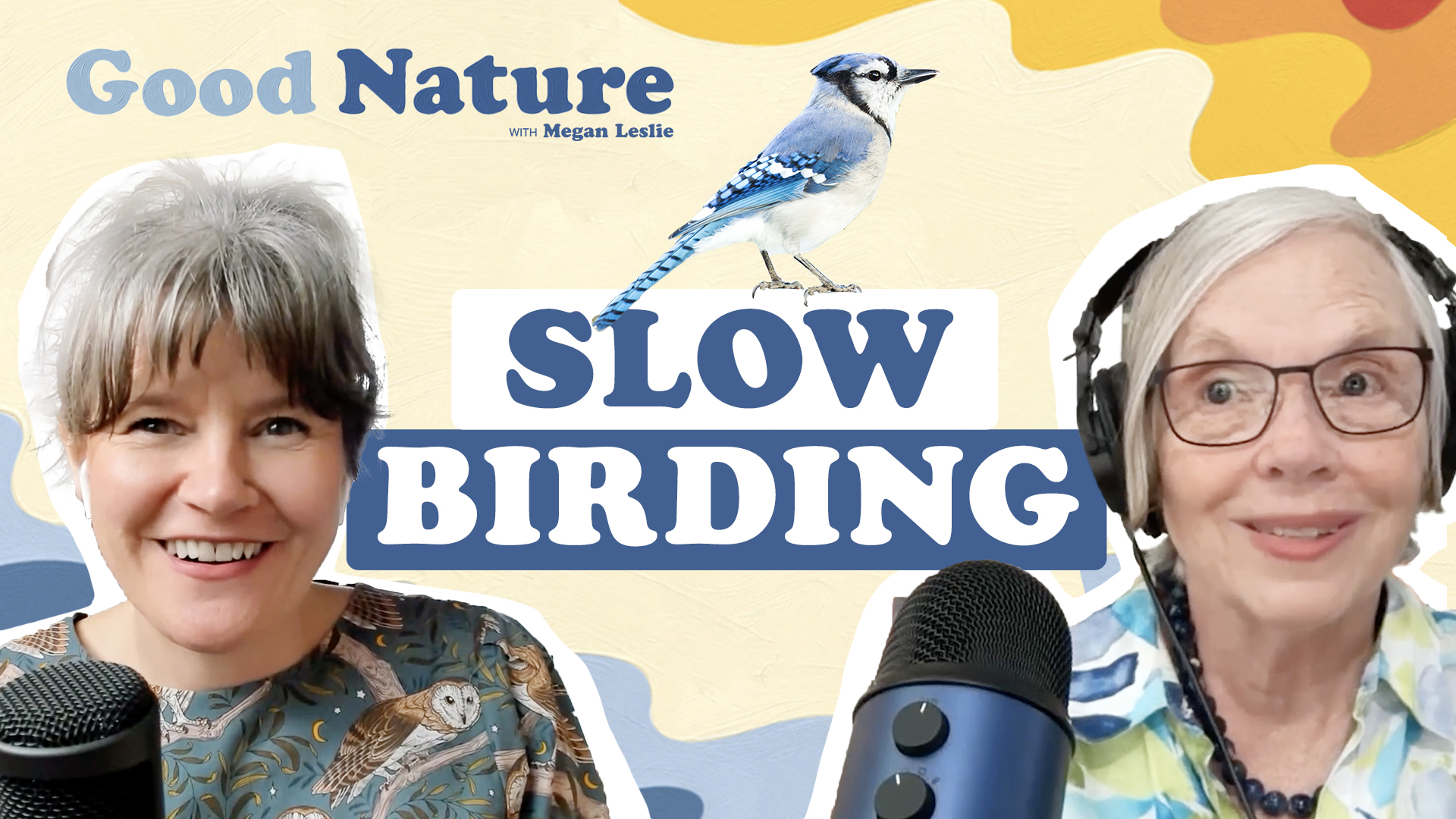
MEGAN LESLIE: Hello, and welcome to Good Nature. I'm your host, Megan Leslie. In each episode of this podcast, we talk to the people who give me hope for the future of nature and wildlife. And today on Good Nature, it's the birding episode! I had the pleasure of sitting down for a conversation with Dr. Joan Strassman, the author of Slow Birding: The Art and Science of Enjoying the Birds In Your Own Backyard. I read Slow Birding last year and it really inspired me to pay attention to the birds living in my backyard. And as you'll hear in the interview, this book, honestly, it changed my life. Now we know that birds don't really see international, national, provincial borders the same way that we humans do. But here at WWF-Canada, we've been quite vocal about some Ontario legislation that removes provincial responsibility for some at-risk birds, leaving them even more vulnerable. Now, bird species, they live on longer timescales than political cycles and meaningful protection depends on how closely and carefully we are willing to pay attention. So how do we close that gap between our cultural love of birds and advancing the protections they need? Well, aside from calling for legislative changes, which we do a lot of over here at WWF-Canada, maybe it also starts with really getting to know these species that live all around us and learning what they need to survive and thrive.
MEGAN LESLIE: Today on Good Nature, we're joined by Dr. Joan Strassman. Joan is an evolutionary biologist studying conflict and cooperation in the natural world, and I came to her work through her book Slow Birding. Last year, she released another book on this subject called The Social Lives of Birds. Joan, I am so excited to meet you and not only because it gives me a chance to wear my barn owl dress. But thank you for giving me this opportunity to show it off. But also because this book, Slow Birding: The Art and Science of Enjoying the Birds in Your Own Backyard, your book. I am not exaggerating to say that this book changed my life. So I think birding is kind of having a moment right now, especially since the pandemic. I think there's been an explosion of interest in what once was. You know, it was a pretty niche hobby. Why do you think birding in particular has gained so much popularity recently? I
DR. JOAN STRASSMAN: I don't know. I think it's always been there at some level and people say the pandemic kept us at home and brought us outside, so maybe that had something to do with it.
MEGAN LESLIE: And maybe it introduced everybody unwittingly to slow birding. 'cause we couldn't go anywhere.
DR. JOAN STRASSMAN: Well, I wish I'd sold a copy of Slow Birding to everyone that got, uh, exposed to the pandemic.
MEGAN LESLIE: I'm doing my best for your sales right now. I tell everybody about this book, like I said, it really impacted me. Joan, you've mentioned before and in some other interviews that birds inspire hope for conservation. Why do you think that it's birds in particular that can draw this kind of attention to conservation or maybe play this kind of role?
DR. JOAN STRASSMAN: The thing about birds is that they're mobile.
MEGAN LESLIE: Oh, yeah.
DR. JOAN STRASSMAN: And they're diurnal, so we see them in the daytime. Mammals are mostly at night, and plants are wonderful, but they don't move around too much. So if we have destroyed a certain area, we just won't see the plants that used to be there. So I, I, I just think that birds put themselves in our environment. And that's what really can bring them to us. And then we can, I don't know, there's something exciting about migration that they're not here and now they are. So we humans like a certain amount of change and anticipation. And so, you know, right now, I've got my first warbler in the neighborhood. There's more out in the country and it's just something exciting and it's…it also has a certain negative side to it because birds have been declining and, and people want to do something to understand that and to help. So it also gives us some agency for things that we can do to help the situation.
MEGAN LESLIE: I love that perspective of, yeah, it, it's giving us some agency over what we care about and what we can take action on. That's a great observation. Um. Here at WWF-Canada, we have a native plant program to encourage people to turn their yards and balconies into small habitats. It's called re:grow, kind of like reduce, reuse, recycle, re:grow.
MEGAN LESLIE: Now, with re:grow, really the kinds of plants that birds are attracted to, of course, they're gonna vary from region to region, but do you have any general tips on how to make your yard or balcony a better habitat for birds? What kind of things could we be looking at?
DR. JOAN STRASSMAN: My yard is all wild except for my vegetable garden. And I hate to say it, even though I'm in a pretty liberal neighborhood, I do get a citation just about every year—
MEGAN LESLIE: [gasp] Stop!
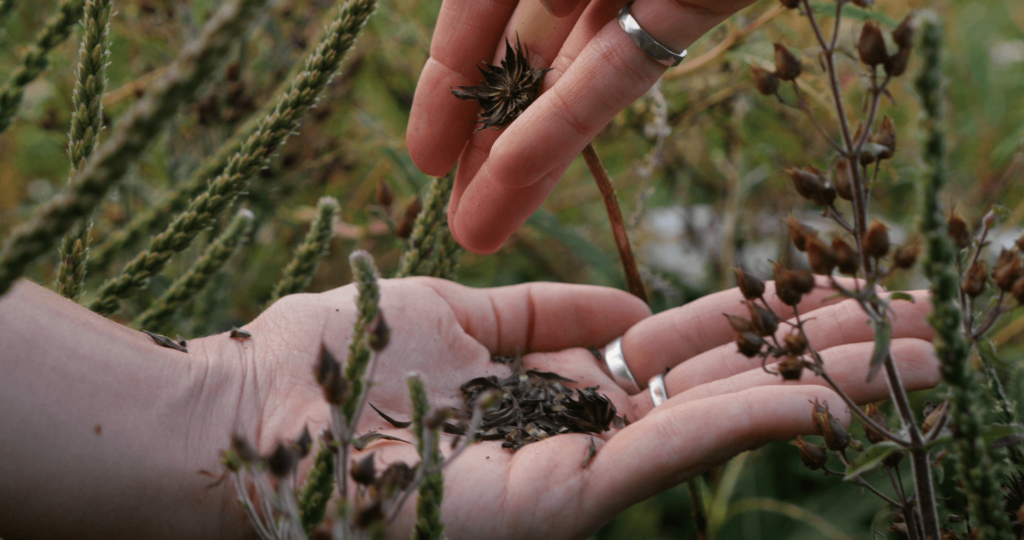
DR. JOAN STRASSMAN: —which I fight. You know, I just got one last week complaining that I hadn't cut down all the dead stems.
POP UP: Joan leaves the dead stems on her plants because they contain seeds that can feed the local birds—plus they make great nests for overwintering bees!
DR. JOAN STRASSMAN: So, yeah, I'm just a proponent of getting native plants and planting them. And here in St. Louis, we have, Audubon Society and the Missouri Botanic Gardens have big programs for getting native plants.
MEGAN LESLIE: So for folks who are listening who might not, this might be the first time they've even thought about birds and the relationship with native plants, can you tell us a little bit about why native plants are so important for birds?
DR. JOAN STRASSMAN: Well, birds are used to the native plants. These are the plants they depend on for food. They may eat the berries, they may tap into the stems for nectar, and then above all, that's where the insects lay their eggs and the insects do well. So it's just the natural pace of things. The birds fly north. They depend on the caterpillars being there at the time that they need to feed their babies. And native plants keep us in sync. Also, you know, they're good. I'm on a little city lot. It's just a few meters wide, but it's got a kind of steep hill in the front, and I've planted prairie plants on it. Well, those prairie plants have very deep roots, and so if there's a huge rainstorm or something and other people's front yards start to slump down because sod, you know, our worst, you know, invasive species of all is the grass that everyone plants, that doesn't have deep roots, but my plants have very deep roots and will, you know, stabilize it.
MEGAN LESLIE: Wow. So yeah, you're bringing up the point of, it's not just about birds, it's also climate resilience for our communities. That's amazing.
DR. JOAN STRASSMAN: Right.
MEGAN LESLIE: Now if I think about what birding is, in my humble opinion, I think if you look at a bird, even fleetingly, then you're a birder. 'Cause we need to have solidarity. We're all birders. But when did you know that you were a birder? What's your birding origin story?
DR. JOAN STRASSMAN: So I'm not a serious birder in the way that some people might be.
MEGAN LESLIE: Come on, Joan. Yes you are!
DR. JOAN STRASSMAN: Just try me with the second year gulls, and you will understand what I'm talking about.
MEGAN LESLIE: Oh come on, no one can do that. No one can do that.
DR. JOAN STRASSMAN: Well, so my father was a German, part-Jewish refugee and came to the US when he was 11. And I honestly think that Germany has a really strong tradition of nature walks and wild foraging. We picked mushrooms. We picked berries. I grew up in Michigan. Birding was just part of it with his big old German binoculars, but it wasn't any more a part of it than all the other things. Yeah, so that's my, my first love of birds. And as time went on, I picked my research organisms more for the ease of answering what I felt were important conceptual questions. And the wasps really got me outside. When we started working on social amoebas, we still got outside, but not nearly as much because all the experiments were in the lab. And like so many people, I have a need to be outside. It's not, it's mental health. It's, yeah, it's just really important. And so it was then, maybe around 2000, that I started spending more time with the birds.
MEGAN LESLIE: And your work isn't—or at least the way you present in this book and what I've seen, it's not just about birding in general. You really are focused on this idea of “slow birding”, that power of prolonged intentional time observing animals in nature. And it really reminds me of a value or an ethic that's important in conservation. The fact that it's not just about appreciation. It's patience, it's care, and those are, to me, those are the foundation of what we think of as stewardship. So I wanna ask you, was the slowness always your approach to birding, or is that something that you figured out over time?
DR. JOAN STRASSMAN: Well, I always liked to bird sort of along with, say, a walk in nature. And so that's, almost by definition, slower than a lot of people. And then, you know, you wanna see what they're doing and if you know what they're doing, you'll be more likely to see certain birds. So for example, brown creepers I see with some regularity here, right in my little city park. But they're not a bird anybody would just notice because they're right there on the tree trunks. They're very well hidden. They have a soft little trilling voice. So the more you pay attention, the more you see. And if you wanna go out for a big day and get as many birds as possible, you're gonna be motor birding. You're gonna go to this spot and get these birds and that spot and get those. And just seeing the bird doesn't really get it under my skin.
MEGAN LESLIE: Yeah. Joan, you also, in your book, you have a wonderful chapter, it's just a short chapter, for folks living in urban settings, and it's about going down to their local park to observe birds. And you talk about, you know, maybe you walk the same path over and over again. See, do the birds change over time? Or you even suggest bringing a chair and parking yourself there for a few hours. And you point out that probably, you're not gonna see a rare bird, probably it's gonna be some pretty common birds, but to just, it's really meaningful to sit and watch and learn from their birds. And Joan, I wanted to tell you that I loved this idea so much that this year, that's what I did for my birthday.
DR. JOAN STRASSMAN: Oh! That's adorable.
MEGAN LESLIE: Well, my spouse and I got up really early in the morning on my birthday morning and I made us some breakfast sandwiches and coffee. We put it in our panniers and I live in Ottawa, so we biked down to the Ottawa River and we found a bench and we had breakfast with the birds! And it was mostly red wing blackbirds and Canada geese. But there were a few other cuties kind of flitting around in the bushes. Pretty sure there were some female goldfinches there. But it was one of the best birthday mornings of my life. So thank you for that suggestion, and I would love for you to tell us about your city park and some of the experiences that you've had birding there.
DR. JOAN STRASSMAN: The closest park to my house, where I bird every morning is just really small, maybe, I don't even know if it's a hectare. And it's got an elementary school and tennis courts and that kind of thing. It's got no bushes. It seems like people are afraid of bushes and they're so important for birds. And I just walk the dog there with a certain route every morning. And I always record my observations on eBird because I just think eBird lets us all be citizen scientists and help with the big data set of what's where.
POP UP: eBird is a free mobile app from the Cornell Lab of Ornithology. It’s a great way for birders to quickly track bird sightings and find nearby bird hotspots.
MEGAN LESLIE: Yeah. And what are you seeing?
DR. JOAN STRASSMAN: Well, the first city warbler we've got is the Yellow-rumped, the Myrtle Warbler. We have a field station I go to, and out there we also have Louisiana Water Thrushes already. It's a little warbler. It's along the water bodies. So there's a little stream and you can hear their really loud calls along the stream. The Dark-eyed Juncos, I haven't seen in two days. They're probably still around, but they're leaving. They're going up to you.
MEGAN LESLIE: I think the Juncos are in my yard as we speak, so they made it!
DR. JOAN STRASSMAN: Yay!
MEGAN LESLIE: Now Joan, in the world of conservation, we talk a lot about charismatic species. So the ones that get the most attention because they might be particularly beautiful or ferocious, or maybe they're just kind of cool, but your writing is really about paying attention to the ordinary and the local. How can slowing down and noticing ordinary wildlife—I'm almost hesitant to say 'cause they're all extraordinary, but maybe every day wildlife—how can that change the way that people relate to nature and conservation?
DR. JOAN STRASSMAN: You're not gonna see the super fancy charismatic birds every day, unless you're willing to embrace the Cardinals and Blue Jays, which are spectacular even though they're common. Or the Red-tailed Hawks, or even the Cooper's Hawks that you feed with your feeders in a different way.
MEGAN LESLIE: Yep.
DR. JOAN STRASSMAN: So, I don't know, I just feel like the common is what we have, and if you watch them carefully, they will really surprise you. And, you know, you look at some of the great conservation writing, you know, from Thoreau to Aldo Leopold to all of these people. They're not really writing about charismatic places or birds.
MEGAN LESLIE: You’re right. You're right. Yeah, so it's like this idea that you've cultivated of slow birding and then, and thinking about the everyday or the more common, I do think it can help people feel more connected to their local ecosystems. Can it maybe even inspire people to act for conservation?
DR. JOAN STRASSMAN: Well, I hope so.
MEGAN LESLIE: Me too.
DR. JOAN STRASSMAN: Because that's our big challenge in the ornithological world is making people aware of how dire things are and how much change just in my lifetime has happened. Without having them give up hope or feel like there's nothing they can do. And so I also feel by keeping things more local or smaller, or even if you're going on a trip, figuring something out, it just can help. And so I'll tell you a story. I’m on Facebook, and there were a couple of Colombian birders who put on Facebook on one of those pages that they were gonna take this trip through the eastern United States and here was their route. And if you lived on that route, would you put them up and take them birding? So I looked, and St. Louis was on their route, so I emailed them and said, come stay with me, and what fun that would be. And they did. And it was really fun. So that’s just the prologue. What they told me about was that they did a big year in Columbia. So a big year is normally where a birder will decide in a certain area, say the continental United States, or I'm sure they have them in Canada…
MEGAN LESLIE: Columbia?
DR. JOAN STRASSMAN: Columbia. They will spend the year from January 1st to the end of the year trying to see as many birds as possible and ideally to beat the previous record.
MEGAN LESLIE: Right, right, of course.
DR. JOAN STRASSMAN: But so what Niky and Mauro did in Columbia, they did a big year, but the way that they did it was that they only birded by making connections with communities.
MEGAN LESLIE: Love.
DR. JOAN STRASSMAN: And then when they made the connection with the community, they went into the schools and they taught the children about their local birds and about how to pay attention to the birds. And took something that tended to be a lone man running all over thing and into the most wonderful community conservation, bring the next generation along. So I mean, that's how we should be because the future is with the children.
MEGAN LESLIE: Yep. That brings tears to my eyes. That's the whole, you're right, that's the whole point. Our program, re:grow that I was telling you about, getting people to plant native species, you know, we offer grants to—very, very small, but just a little bit of money, especially to schools that might wanna do it in their school yard. And it's really incredible to see these kids and they're thinking about birds and they're thinking about pollinators and bees and they're creating habitat. So they're looking at the world differently and they're coming together as a community. That's what it's all about. Can I ask you, and maybe you've already answered this question with this discussion, I just wanted to ask you, what do you hope people take away from your work?
DR. JOAN STRASSMAN: I hope people pay more close attention to the birds, and I hope that people understand that there's a lot more out there than just counting them. I hope they use eBird. I think eBird—
MEGAN LESLIE: Tell us quickly what eBird is.
DR. JOAN STRASSMAN: So eBird is a free resource where you can count your birds. You can have it on your phone and I use it every morning when I walk the dog and I just note what birds I see, how many, if they're carrying nesting material or something like that, I'll note that. And then it asks if you have a complete or an incomplete list, and I try to make my lists complete. And so then it helps the researchers, but it also helps me 'cause then I have a record of everywhere that I've been where I birded and you know, you don't have to have any other kind of bird list. So that, and then Merlin will help you learn what you're hearing. It's not always correct, but it's usually correct. And—
MEGAN LESLIE: And Merlin’s another app that helps with identification.
DR. JOAN STRASSMAN: Another free app, yeah. And they're both kind of spreading worldwide and they're just bringing together the researchers and the ordinary people like me that can just go out and watch a few common birds.
MEGAN LESLIE: We're all citizen scientists.
DR. JOAN STRASSMAN: Exactly.
MEGAN LESLIE: Now on this show, we like to end every interview with [00:25:00] a lightning round series of questions that we call The Trail Mix. So I'm gonna ask you some quick questions and you've gotta give me quick answers. You ready?
DR. JOAN STRASSMAN: Sure.
MEGAN LESLIE: Okay. What is the most underrated bird?
DR. JOAN STRASSMAN: Oh, I guess I'll say the Northern Flicker,
MEGAN LESLIE: Oh, okay.
DR. JOAN STRASSMAN: They live their whole lives eating ants. They're these big birds and what they eat is tiny ants!
MEGAN LESLIE: Okay. That is a surprise answer.
DR. JOAN STRASSMAN: They do the work of drilling cavities that then lots of other animals use.
MEGAN LESLIE: Let's go Northern Flicker. We love them. Okay, so this might be a controversial question for you, but what is the most overrated bird?
DR. JOAN STRASSMAN: I guess I'd say maybe Canada Goose.
MEGAN LESLIE: You know, that's okay. I don't know that very many Canadians would disagree with you. Okay. I'll offer my answer to the next one as well, but I'd like to ask you, which bird has the best call?
DR. JOAN STRASSMAN: To be loyal, I'd have to say Northern Mockingbird, but to be truthful, I'd have to say Winter Wren.
MEGAN LESLIE: Okay. Tell me the difference between loyal and truthful.
DR. JOAN STRASSMAN: I have done very little bird research. But I did just publish a research paper on mockingbirds. And I lived many years in Texas where that's what we had.
MEGAN LESLIE: That's fair.
DR. JOAN STRASSMAN: Truthful, I'm sure you've heard a Winter Wren and their, oh my God, their song. It's just ethereal.
MEGAN LESLIE: I will, you know, what I have open is, I have my Merlin app open. And first, because I've got it queued up, I wanna play you my best call, which I think is the White-throated Sparrow.
DR. JOAN STRASSMAN: Oh yeah!
MEGAN LESLIE: Because it's call is “Oh Sweet. Canada, Canada, Canada.”
DR. JOAN STRASSMAN: I know that as Pure Sweet Canada, Canada, Canada.
MEGAN LESLIE: Oh, pure sweet Canada! Um, so I'm looking up the Winter Wren. Let's see if we can do this.
MEGAN LESLIE: That's beautiful. I’ll bookmark this and listen to the Winter Wren for the rest of the afternoon. What is your dream bird to see in the wild?
DR. JOAN STRASSMAN: Oh geez. You know, I've never been to far northern Canada and I really need to go sometime, although the birds are at their peak when the mosquitoes and black flies are.
MEGAN LESLIE: Yes, and that's a challenge.
DR. JOAN STRASSMAN: I have not seen Atlantic Puffins.
MEGAN LESLIE: Ah, well, we have an episode about the Atlantic Puffin with Jill Taylor, a puffin expert. And she’s a great resource for all your puffin needs. So maybe it'll inspire you to come up north and then head east and go see some puffins.
DR. JOAN STRASSMAN: Thank you.
MEGAN LESLIE: And finally, what's one thing that everyone can do to help protect and conserve their local birds?
DR. JOAN STRASSMAN: Well, if you have a garden, you can plant native. You can vote for conservation issues. If you have a balcony, when I lived in Berlin, I had only a balcony. We fed the birds. I don't know if that helped them, but yeah. Honestly, habitat preservation is a lot of the story. Ride your bike instead of your car. Was that one thing?
MEGAN LESLIE: Those are all good actions. Yeah, no, they're all good actions. And you're right, it comes down to Habitat and maybe looking at the world differently. Like, this could all be habitat. How do we bring it back? How do we do our part?
DR. JOAN STRASSMAN: Yeah, exactly.
MEGAN LESLIE: Joan, I just really wanna thank you. Thank you for writing this book and thank you for putting your ideas about slow birding out there. And also thank you so much for joining us for a conversation!
DR. JOAN STRASSMAN: Oh, it's my pleasure. I love to talk about birds.
MEGAN LESLIE: Me too.
MEGAN LESLIE: Okay, it's time for us to call up one of my WWF-Canada colleagues on the orca phone so they can tell us about the things happening in their world that give them hope for the future. And today, we're calling our Toronto office to check in with WWF-Canada's soil expert, Cathal Doherty. Hey, Cathal, tell me something good.
CATHAL DOHERTY: Good afternoon, Megan. I have some good news for you.
MEGAN LESLIE: Give it to me.
CATHAL DOHERTY: Okay. I wanna tell a story about peatland restoration success.
MEGAN LESLIE: Okay.
CATHAL DOHERTY: So this has been a quiet, slow-moving restoration story that began in the 1990s, and over the past 30 years, for the first time ever, scientists and researchers have successfully restored a degraded peatland to a fully functioning wetland ecosystem as if it were never disturbed.
MEGAN LESLIE: Those take a long time, right?
CATHAL DOHERTY: So for a peatland to form itself can take thousands, even multiple thousands of years to form over time. And just in thirty years, the Peatland Ecology Research Group has taken a fully degraded peatland and have brought it back to something that is almost indistinguishable from a pristine, undisturbed peatland just right next door.
MEGAN LESLIE: Holy smokes. Okay, tell me more.
CATHAL DOHERTY: Okay. So this was spearheaded by the Peatland Ecology Research Group out of the University of Laval, and they developed what's called the moss layer transfer technique, where they take a donor site, like a healthy peatland, and they move some of the plant material over to what would've been a disturbed, fully drained peatland, you know, fifty years ago, and it's just been sitting there, and it hasn't come back on its own. It really needs intervention. And through this technique that they developed, the plants start slowly growing back, and these are mosses, so they grow very slowly over time. But, you know, ten years later, full moss layer has completely enveloped the entire area. Fifteen years later, the hydrology is back, and then you start having more diversity in plants. The other, you know, bog species come back. And now, twenty-five years later, full bird populations that weren't there have now fully come back. And the best part about this is, is that often restoration was thought to take hundreds, thousands of years for wetlands.
MEGAN LESLIE: Yeah. Exactly, yeah.
CATHAL DOHERTY: These are now net carbon sinks, so they're now accumulating seventy-eight grams of carbon per meter square per year, which is equivalent to a completely undisturbed habitat.
MEGAN LESLIE: This is major restoration news, isn't it?
CATHAL DOHERTY: This is one of the coolest stories that's happening, and the best part is, is that, while things are happening, this will, for centuries and millennia, keep benefiting nature and climate the entire time for as long as, as long as you can think of.
MEGAN LESLIE: Well, that really is good news. Thanks so much.
CATHAL DOHERTY: Thank you.
MEGAN LESLIE: Thanks again to today's guests, Dr. Joan Strassman and Cathal Doherty. And thanks to all of you for joining us today on Good Nature. You can stay up to date on Good Nature and everything else happening at WWF-Canada by signing up for our excellent and brand new newsletter, the Living Planet News. If you're interested in Canada's wildlife—and if you watched this episode, I think you probably are—then this is a great addition to your inbox. The link is in the episode description, and if you have any thoughts on the show, ideas for episodes or questions to share, please leave a comment! Or, or you can leave me a voice message. Just go to speakpipe.com/wwfGoodNature. The link will be in the episode description and we can't wait to hear from you. We'll see you next time.